Clear Sky Science · en
Macro-micromorphological, anatomical, and phytochemical characterization of Cucumis melo var. agrestis Naudin: a potential source of natural antioxidants
Why a wild melon matters for everyday health
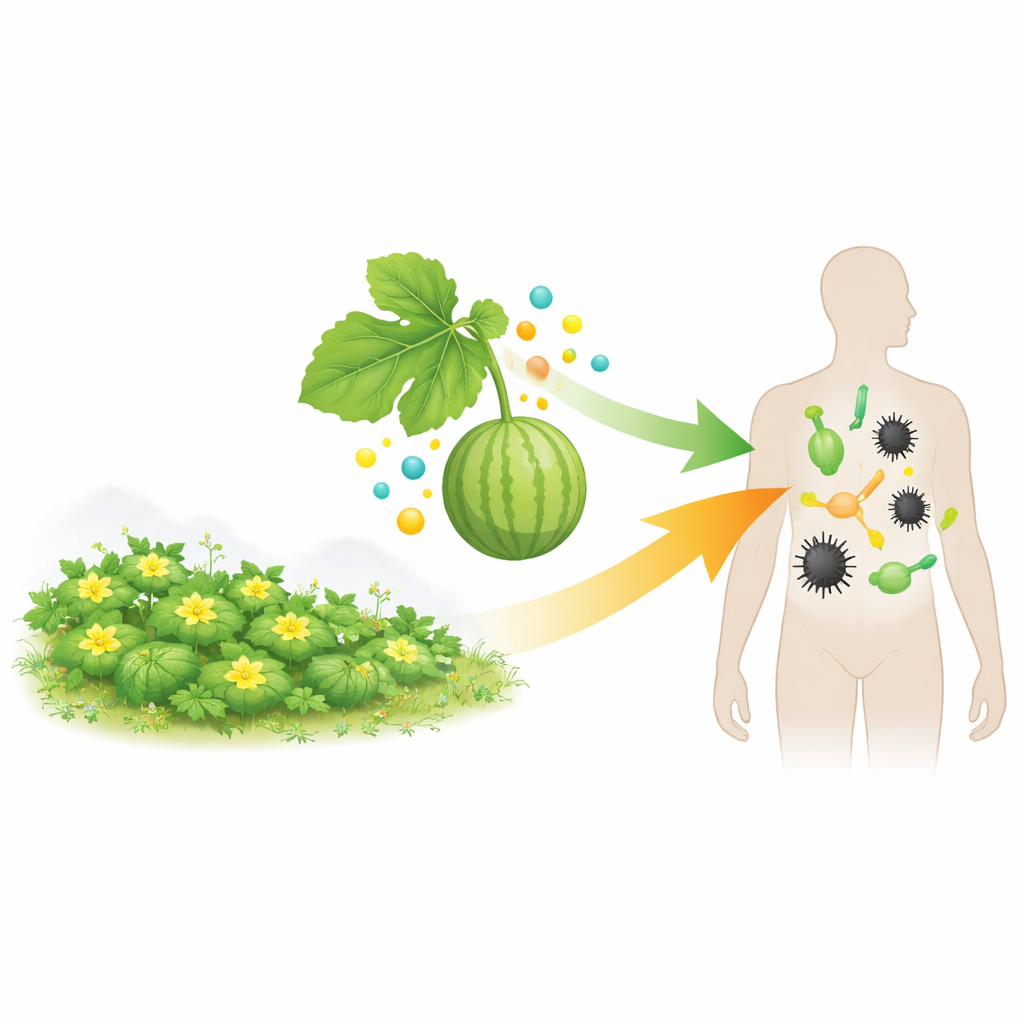
Many of us know melons as sweet summer fruits, but their wild relatives quietly store an impressive arsenal of natural chemicals. This study looks at a small, non-sweet wild melon, Cucumis melo var. agrestis, that grows in fields and along canals. The researchers asked two big questions: how can we recognize this plant with certainty, and does it truly contain powerful natural antioxidants that might help protect our cells from damage linked to aging and disease?
Getting to know the wild melon plant
The team began by carefully describing the whole plant, from its vines to its fruits. This wild melon is a low, trailing herb with hairy stems and simple, unbranched tendrils that help it cling to the ground or nearby plants. Its leaves are hand-shaped and slightly rough, and it bears yellow flowers. The fruits are small, round to oval, and start off fuzzy before becoming smooth and yellowish at maturity. Inside, they hold many pale cream seeds. These visible traits, recorded from numerous field specimens, help distinguish this wild form from the larger, sweeter cultivated melons we find in markets.
Hidden structures: seeds, pollen, and inner tissues
To build a precise “fingerprint” for the species, the scientists also examined tiny structures that cannot be seen with the naked eye. Using light and scanning electron microscopes, they studied the shape and surface patterns of pollen grains and seeds. The pollen turned out to be three‑pored and finely netted, while the seeds showed a distinctive honeycomb-like surface pattern with hexagonal cells. Thin slices of stem, leaf stalk, and leaf blades revealed how tissues are arranged inside: circular stems with two rings of vascular bundles (the plant’s plumbing), oval petioles with a groove, and leaves whose central vein forms a U‑shaped region. The presence and types of hairs on the surfaces added more diagnostic clues. Together, these features provide reliable markers for botanists to identify this wild melon and separate it from close relatives.
What the plant is made of inside
Next, the researchers turned to the plant’s chemistry. They prepared extracts from dried leaves and fruits using 70% ethanol, then performed standard tests to see which families of natural compounds were present. Both organs contained a rich mix: tannins, flavonoids, alkaloids, saponins, glycosides, terpenoids, steroids, fatty acids, phenolics, and coumarins. Two groups were especially abundant in the leaves: total phenolic compounds and flavonoids, both well known for their ability to neutralize harmful molecules called free radicals. More detailed analysis by high‑performance liquid chromatography identified twelve specific phenolic compounds in each of the leaf and fruit extracts. Leaves were particularly rich in gallic acid and ellagic acid, while fruits concentrated ellagic acid and several other protective molecules.
How well the wild melon fights free radicals
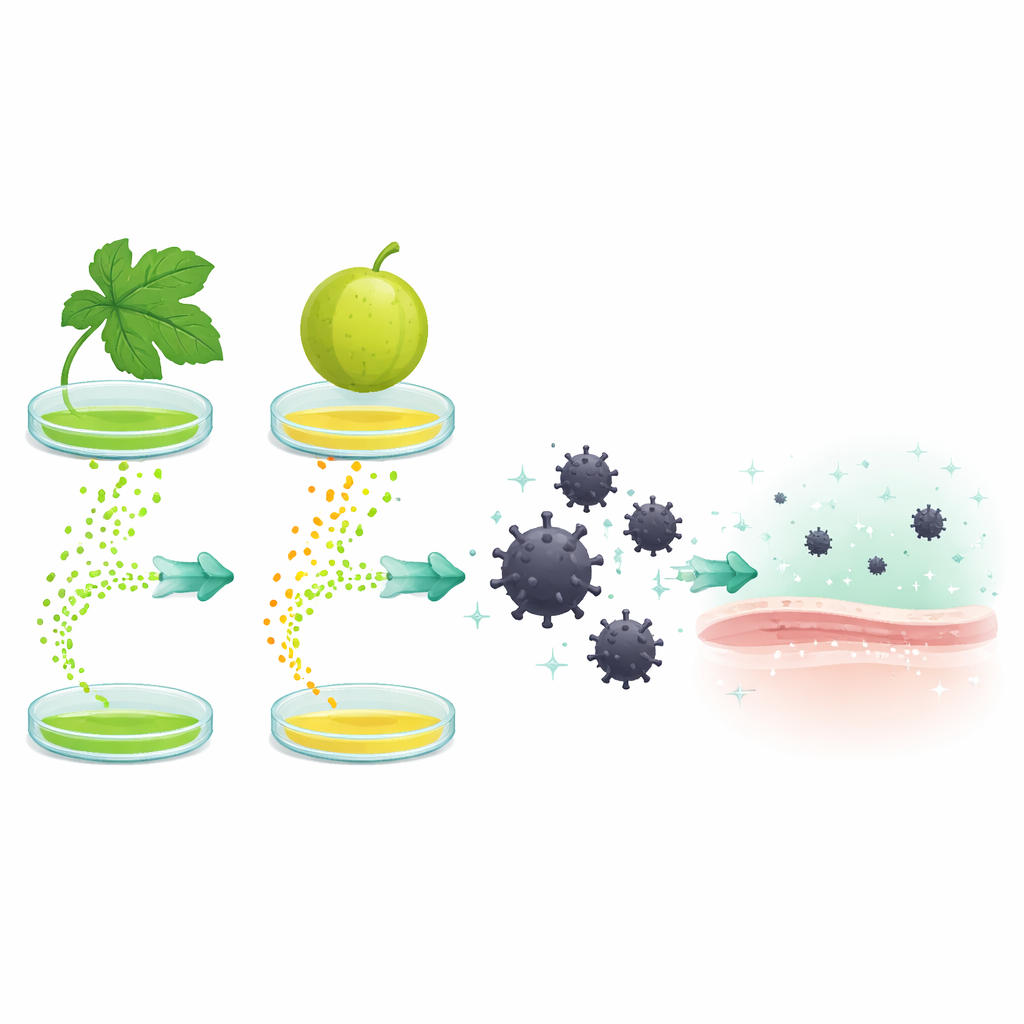
To test whether these chemicals actually behave as antioxidants, the team used four different laboratory assays that measure how effectively a sample can quench or reduce reactive molecules. Leaf and fruit extracts were compared with vitamin C, a classic antioxidant used as a reference. Across all tests—using potassium permanganate, methylene blue, DCPIP, and DPPH dyes—the extracts showed strong capacity to scavenge free radicals, and the leaf extract consistently performed best. In several assays, the leaf extract acted more powerfully, at lower doses, than vitamin C itself. The close match between high phenolic and flavonoid content and strong antioxidant performance suggests that these natural compounds are doing the heavy lifting.
What this means for future natural remedies
In everyday terms, this work shows that a humble, wild, not‑very‑tasty melon harbors a dense cocktail of plant chemicals that can mop up reactive molecules linked to cell damage. The careful description of its visible and microscopic features gives botanists a solid ID guide, while the chemical and antioxidant data point to real promise as a source of natural antioxidant ingredients. While this is laboratory work, not a clinical trial, it strengthens the case for exploring Cucumis melo var. agrestis in future nutritional supplements, herbal preparations, or pharmaceutical research aimed at protecting the body from oxidative stress.
Citation: Shehata, F.A., Hamdy, R., Garf, I.E. et al. Macro-micromorphological, anatomical, and phytochemical characterization of Cucumis melo var. agrestis Naudin: a potential source of natural antioxidants. Sci Rep 16, 12711 (2026). https://doi.org/10.1038/s41598-026-47246-7
Keywords: wild melon, natural antioxidants, plant phenolics, medicinal plants, Cucurbitaceae