Clear Sky Science · en
Impact of various storage media and time on mechanical properties of bovine root dentin
Why Tooth Storage Matters
When dentists and researchers test new fillings, root canal treatments, or dental materials, they often rely on extracted teeth that have been sitting in jars for weeks or months. This study asks a simple but crucial question: does the liquid these teeth are stored in quietly change how the tooth root actually behaves—making it softer, weaker, or more prone to damage? Understanding this hidden factor helps ensure that laboratory tests truly reflect what happens in a real mouth.
Using Cow Teeth to Stand In for Human Teeth
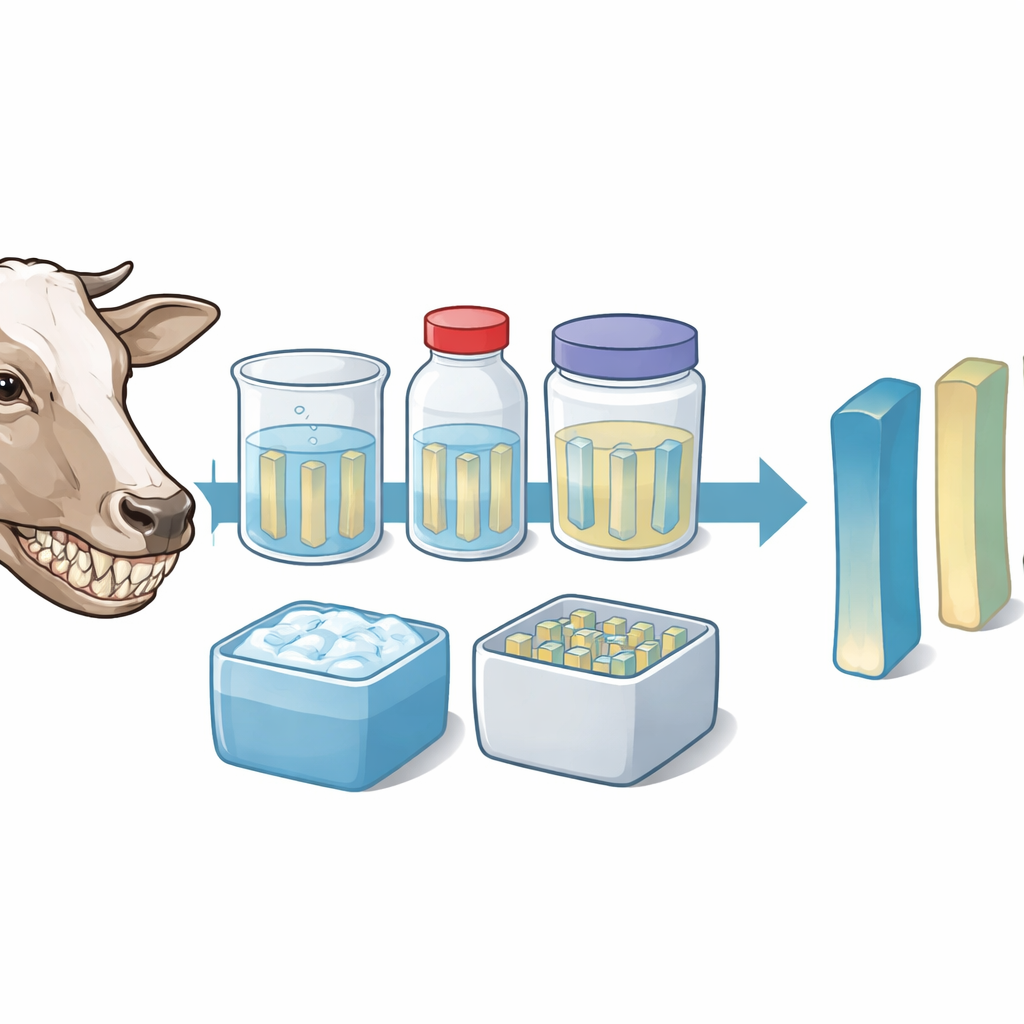
To explore the impact of storage, the researchers used teeth from young cattle, a common stand‑in for human teeth because they are easier to obtain in large numbers and tend to be more uniform. From the roots of these teeth, they cut small, identical bars of dentin—the tough, mineralized tissue that makes up most of the tooth beneath the enamel. These bars allowed them to measure changes very precisely, while avoiding the wide variation in age, disease history, and prior dental work often seen in extracted human teeth.
The Four Liquids Under the Microscope
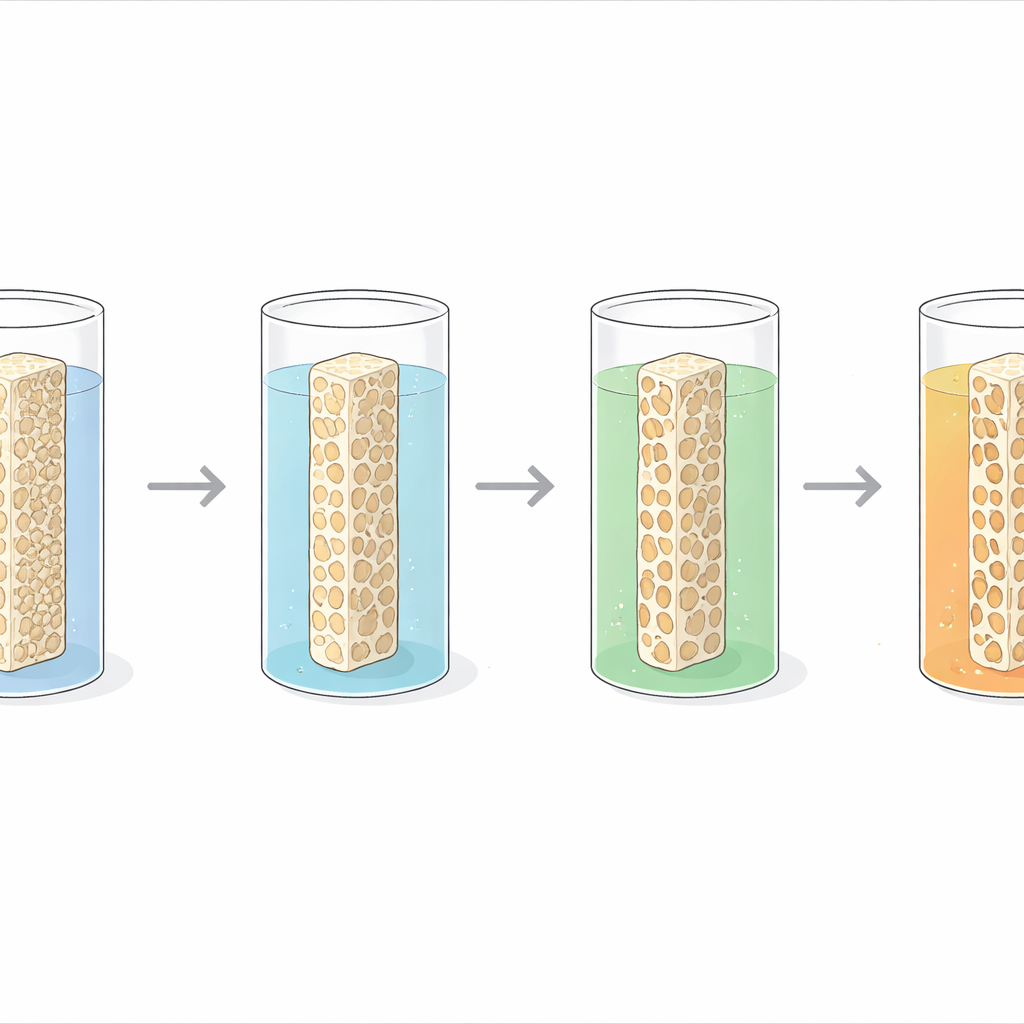
The team compared four storage liquids that are widely used in dental labs: pure distilled water and three disinfecting solutions based on chloramine‑T, thymol, and formalin. Each tiny dentin bar was stored in one of these liquids at cool temperature for up to six months. Before storage and then after one, three, and six months, the researchers gently pressed a diamond tip into the surface of each bar and recorded how deep it went and how the material responded as the pressure was applied and released. From these measurements, they calculated how hard and how stiff the dentin was, and how much it continued to deform under a constant load—an indicator of how “creepy” or time‑dependent its behavior becomes.
How Quickly Dentin Loses Its Strength
Across all four liquids, the tooth material became noticeably softer over time. Within three months at the latest, the dentin’s resistance to indentation dropped sharply, in some cases by roughly half compared with the initial values. Its stiffness—the ability to spring back after being pressed—also declined, especially by the six‑month mark. These changes are not just statistical fine‑print: earlier work suggests that such declines in hardness go hand‑in‑hand with reduced fracture resistance, meaning that stored dentin may break more easily under stress than fresh dentin would.
Some Storage Liquids Are Gentler Than Others
Although every liquid altered the dentin, they did not all do so to the same degree. Chloramine‑T consistently caused the smallest drop in hardness and stiffness, especially after three and six months, making it the least damaging of the options tested. Distilled water, thymol, and especially formalin were harsher on the tissue. In formalin, the dentin not only became softer but also showed more time‑dependent deformation, suggesting complex chemical changes to its mineral and collagen components. Even simple distilled water, which contains no disinfectant chemicals at all, gradually pulled minerals out of the dentin, weakening its structure near the surface.
What This Means for Dental Research and Practice
This study shows that the way extracted teeth are stored—both the choice of liquid and the length of storage—can quietly but substantially change how tooth root tissue behaves. For researchers, that means storage conditions must be carefully chosen, standardized, and reported, or else results from different studies may not be directly comparable. For clinicians interpreting laboratory findings, it is a reminder that teeth tested after months in a jar may not perfectly match freshly treated teeth in the mouth. Still, because cow dentin behaves similarly to young adult human dentin, these findings strongly suggest that human teeth would be affected in much the same way, underscoring the need to treat storage as a key part of experimental design rather than an afterthought.
Citation: Herzog, J., Klümke, M.L., Stawarczyk, B. et al. Impact of various storage media and time on mechanical properties of bovine root dentin. Sci Rep 16, 12182 (2026). https://doi.org/10.1038/s41598-026-47214-1
Keywords: dentin hardness, tooth storage, dental materials, bovine teeth, root dentin