Clear Sky Science · en
Optimized CAP cut-offs for metabolic dysfunction associated steatotic liver disease in patients living with obesity: a large biopsy-based prospective study
Why this matters for everyday health
Many people carry extra weight and may never feel a thing from their liver—until trouble appears late. This study tackles a simple but important question: how can doctors better tell who truly has unhealthy fat in the liver, and who does not, without doing a painful biopsy? By fine‑tuning a widely used ultrasound‑based test for people with obesity, the researchers show it is possible to cut down on false alarms, avoid unnecessary worry and treatment, and focus care on those who really need it.
Fat in the liver and a growing health problem
Fatty liver disease now affects about one in four adults worldwide and is tightly linked to obesity and metabolic problems such as type 2 diabetes. The condition, now often called metabolic dysfunction–associated steatotic liver disease (MASLD), can quietly damage the liver for years. In some people it progresses to scarring, cirrhosis, or even liver cancer, sometimes before any obvious symptoms appear. Finding liver fat early matters, but the traditional gold standard—taking a piece of liver tissue with a needle or during surgery—is invasive, uncomfortable, and not practical for routine checks or repeated monitoring.
A noninvasive test in need of tuning
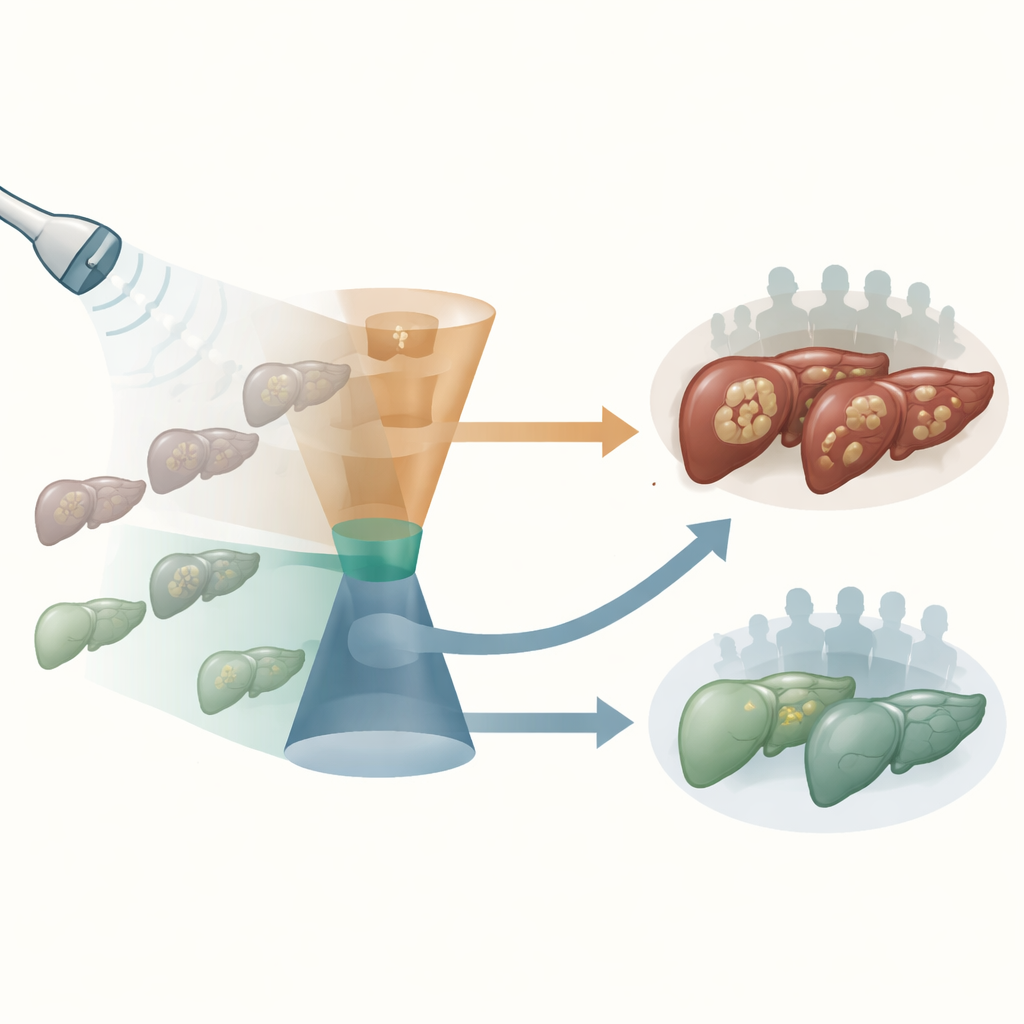
Doctors increasingly rely on the Controlled Attenuation Parameter (CAP), a measurement obtained during a quick scan with a device called FibroScan, which sends painless vibrations and ultrasound waves through the liver. CAP reflects how much the ultrasound signal is dampened as it passes through liver tissue; more fat usually means more dampening. Over the past decade, expert groups have suggested CAP “cut‑off” values to classify people as having mild, moderate, or severe liver fat. However, studies from different countries have reported very mixed accuracy, especially in people with obesity. If the thresholds are set too low, many people are wrongly labeled as having fatty liver; if they are set too high, real disease may be missed. With new drugs for MASLD now approved and treatment decisions often hinging on CAP values, getting those cut‑offs right has become urgent.
What this large Egyptian study did
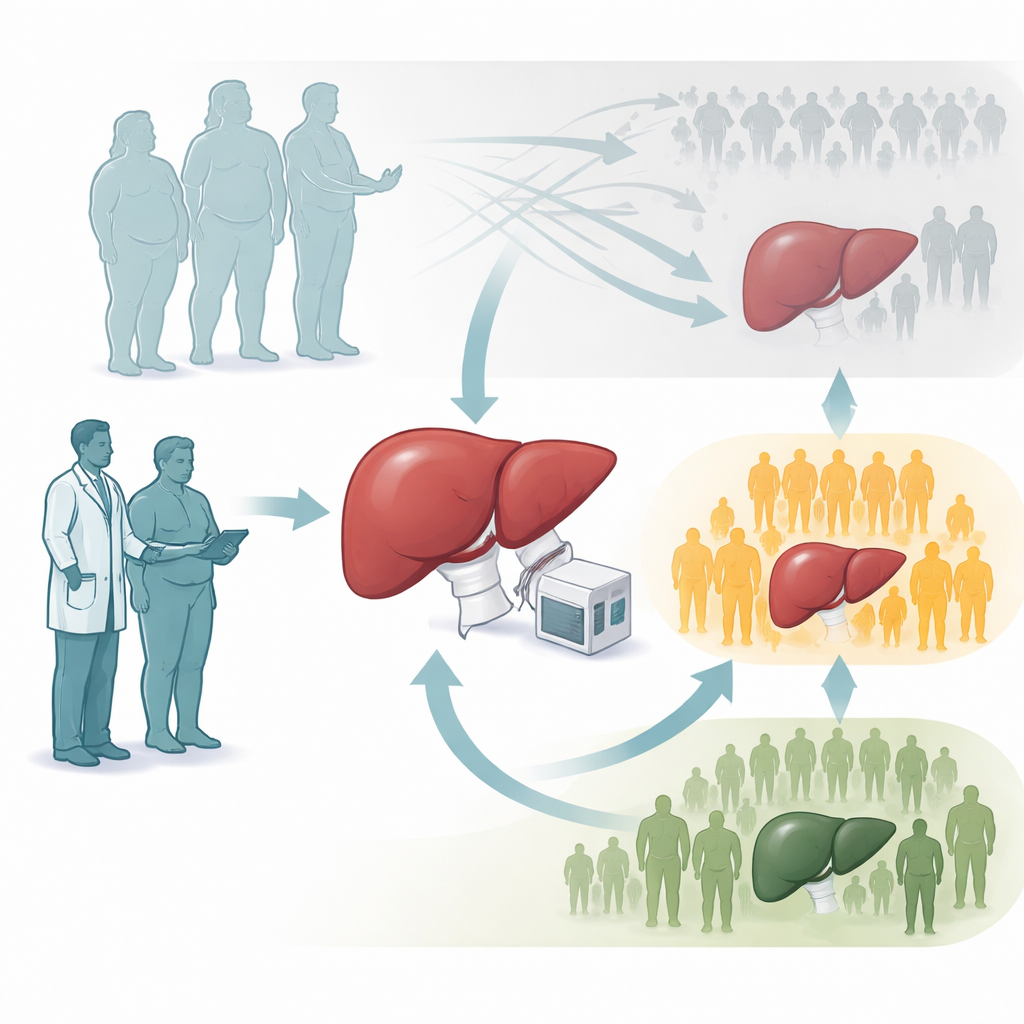
The research team in Egypt prospectively enrolled 798 adults undergoing planned keyhole surgery—mostly gallbladder removal, with a smaller group having sleeve gastrectomy for weight loss—between 2019 and 2024. All participants had a CAP scan shortly before surgery using a probe designed for people with higher body mass. During the operation, surgeons took a small wedge of liver tissue, which two independent pathologists examined under the microscope without knowing any scan results. They graded how much of the liver was filled with fat and how much scarring was present. The scientists then compared the CAP readings to these direct tissue findings and tested a wide range of possible cut‑offs to see which best distinguished truly fatty livers from those that were mostly normal.
Sharper thresholds for people with obesity
Most patients in this surgical group had little or no fat in the liver, but a substantial minority showed mild or more marked fat build‑up. When the authors applied widely used international CAP thresholds, they found that many people were incorrectly classified as having fatty liver—specificity, the ability to correctly identify healthy livers, was only about half. By shifting the cut‑offs upward, to 290 decibels per meter for any meaningful fat and 317 for more advanced fat accumulation, they greatly improved the test’s ability to avoid false positives while still catching most true cases. For the higher grade of fat, the new threshold kept sensitivity reasonably high and pushed the chance of a genuinely fatty liver being missed very low, as reflected in a negative predictive value above 97%. Advanced statistical checks and decision‑curve analysis suggested that these new settings would offer better real‑world benefits than existing recommendations, especially when deciding who should enter clinical trials or receive new medications.
What this means for patients and trials
Fine‑tuning CAP thresholds may sound technical, but it has clear practical effects. With the older cut‑offs, a large share of people with little or no liver fat would likely be told they had fatty liver disease, triggering unnecessary follow‑up scans, biopsies, or even drug treatment. The new, obesity‑tailored thresholds proposed in this study reduce such overdiagnosis by roughly a quarter to a third in key groups, making clinical trial groups more uniform and treatment decisions more precise. Because the study used high‑quality surgical biopsies, blinded expert readings, and a large number of participants from a region heavily affected by obesity, its findings provide robust evidence that CAP can be made more reliable when properly calibrated.
Take‑home message
The authors conclude that modestly higher CAP cut‑offs—290 and 317 units with the probe used in people with obesity—offer a better balance between catching true fatty liver and avoiding false alarms than the widely used international standards. For patients, that means fewer people with healthy or near‑healthy livers are mislabeled as sick. For doctors and researchers, it means a more trustworthy, noninvasive tool for screening MASLD and selecting the right candidates for new treatments and clinical trials, moving liver care closer to the ideal of precise, personalized medicine.
Citation: Soliman, R., Elbasiony, M., Helmy, A. et al. Optimized CAP cut-offs for metabolic dysfunction associated steatotic liver disease in patients living with obesity: a large biopsy-based prospective study. Sci Rep 16, 12894 (2026). https://doi.org/10.1038/s41598-026-47209-y
Keywords: fatty liver disease, obesity, noninvasive liver imaging, controlled attenuation parameter, MASLD screening