Clear Sky Science · en
Controlled heating between 100 and 500 degrees celsius improves enamel resistance to erosion in vitro
Why protecting our teeth from everyday acids matters
Sour drinks, fruit juices, and even stomach acid can slowly wear away the hard outer shell of our teeth, a process called dental erosion. Unlike cavities, which can often be stopped or reversed early, erosion steadily thins the enamel itself. This study explores a surprising idea: could carefully applied heat make enamel tougher against acid, and even work better than today’s leading protective mouth rinses?
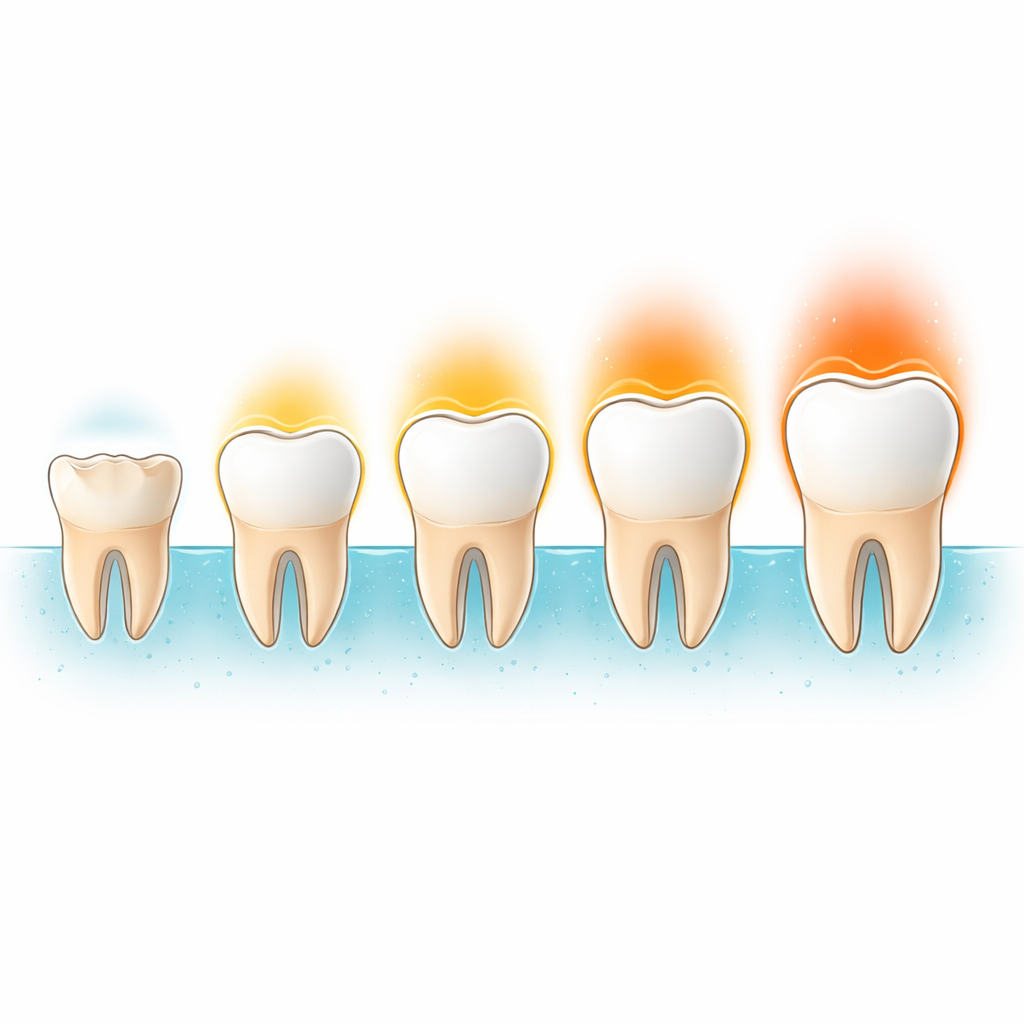
Everyday wear and tear on tooth enamel
Dental erosion is becoming more common in both young and older people as acidic foods and drinks, reflux problems, and lifestyle factors become more frequent. Once enamel is lost, it does not grow back, so slowing or preventing this wear is crucial. At present, one of the best ways to protect enamel is by using special fluoride and tin-based solutions, which form a thin shield on the tooth surface. These products can cut enamel loss in half, but they must be used regularly and correctly, and they still do not fully stop erosion.
A bold idea: hardening enamel with heat
Researchers have long noticed that certain dental lasers, which briefly heat the enamel surface, can make it more resistant to decay and acid. However, it was unclear how much of this benefit came from the rise in temperature itself and what range of temperatures would be most protective. To answer this, the team used polished pieces of cow tooth enamel and heated them in an oven to different temperatures between 100 and 500 degrees Celsius. Other samples were either left untreated or given a daily bath in a standard tin‑containing fluoride solution. All of the samples were then repeatedly exposed to a citric acid solution, similar in strength to acidic drinks, for six days, with periods of mineral-rich solution in between to mimic the natural repair that happens in the mouth.
What the experiment revealed about heat and enamel strength
Using a very precise 3D laser measuring system, the scientists tracked how much enamel was lost over time. The untreated enamel showed the deepest erosion. All of the heated samples performed better than this negative control, meaning they lost less surface material. Heating to 300, 400, and 500 degrees Celsius gave especially strong protection, reducing enamel loss far more than the daily fluoride‑tin treatment. At the highest temperatures, enamel loss was cut by roughly three quarters to almost nine tenths compared with no treatment, while the fluoride solution reduced loss by about half. When the team looked at the enamel and underlying dentin under the microscope, they saw that higher temperatures caused visible structural changes, including surface cracks and changes in color and shape, especially in the inner tooth material.
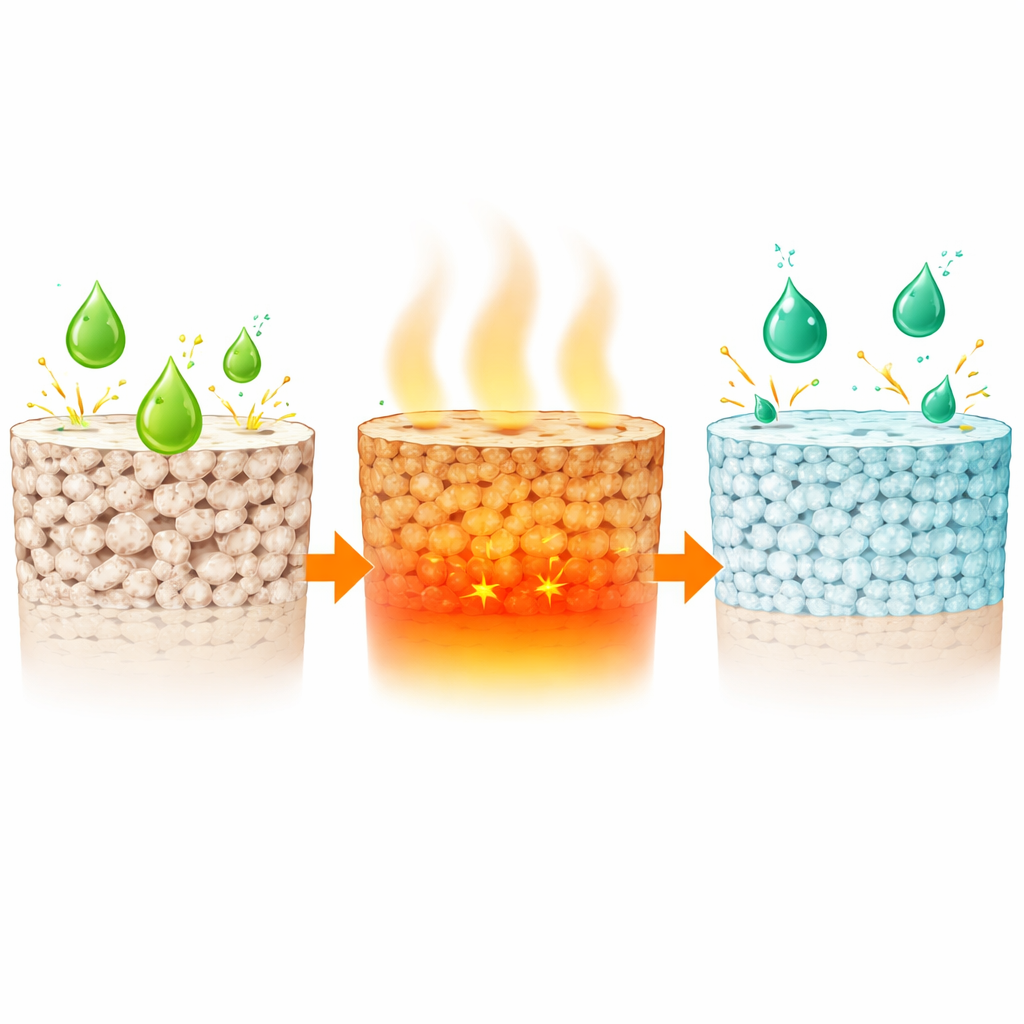
How heat changes the tooth surface at a deeper level
The study and previous research suggest that heating enamel triggers several subtle but important changes inside its mineral structure. Heat can drive out loosely held water, reduce tiny pores, break down some proteins, change the chemical makeup of the crystals, and form new mineral phases that dissolve less easily in acid. Together, these changes seem to make the outer layer of enamel denser and less permeable, so acids have a harder time dissolving it. While the oven experiment exposed the whole tooth sample to long periods of high temperature—much more extreme than anything that would ever be done in a patient—it provided a clear, controlled way to map how higher temperatures relate to improved resistance.
From laboratory ovens to future laser treatments
Of course, no dentist will ever bake a patient’s teeth at hundreds of degrees. The real value of this work lies in guiding safer, real‑world technologies such as carbon dioxide (CO₂) lasers, which can briefly heat only the outermost micrometers of enamel in tiny bursts lasting millionths of a second. The temperature range that worked best in the oven—roughly 300 to 500 degrees Celsius—gives laser researchers a target: create short, localized heating that reaches those levels at the surface without harming the living tissue inside the tooth. Future studies will need to confirm these effects in human teeth, in the presence of saliva and chewing forces, and to explore how such treatments might be combined with gentler fluoride use. Still, this study shows that carefully controlled heat could one day offer a minimally invasive, long‑lasting way to toughen enamel against the acids we encounter every day.
Citation: Wierichs, R.J., Rad, S.A.B., Glöckler, J. et al. Controlled heating between 100 and 500 degrees celsius improves enamel resistance to erosion in vitro. Sci Rep 16, 12032 (2026). https://doi.org/10.1038/s41598-026-47191-5
Keywords: dental erosion, tooth enamel, laser dentistry, fluoride protection, acid wear