Clear Sky Science · en
Foliar application of humic acid improves growth, yield, and nutritional quality of mungbean (Vigna radiata L.) genotypes under newly reclaimed soil conditions
Why this crop story matters
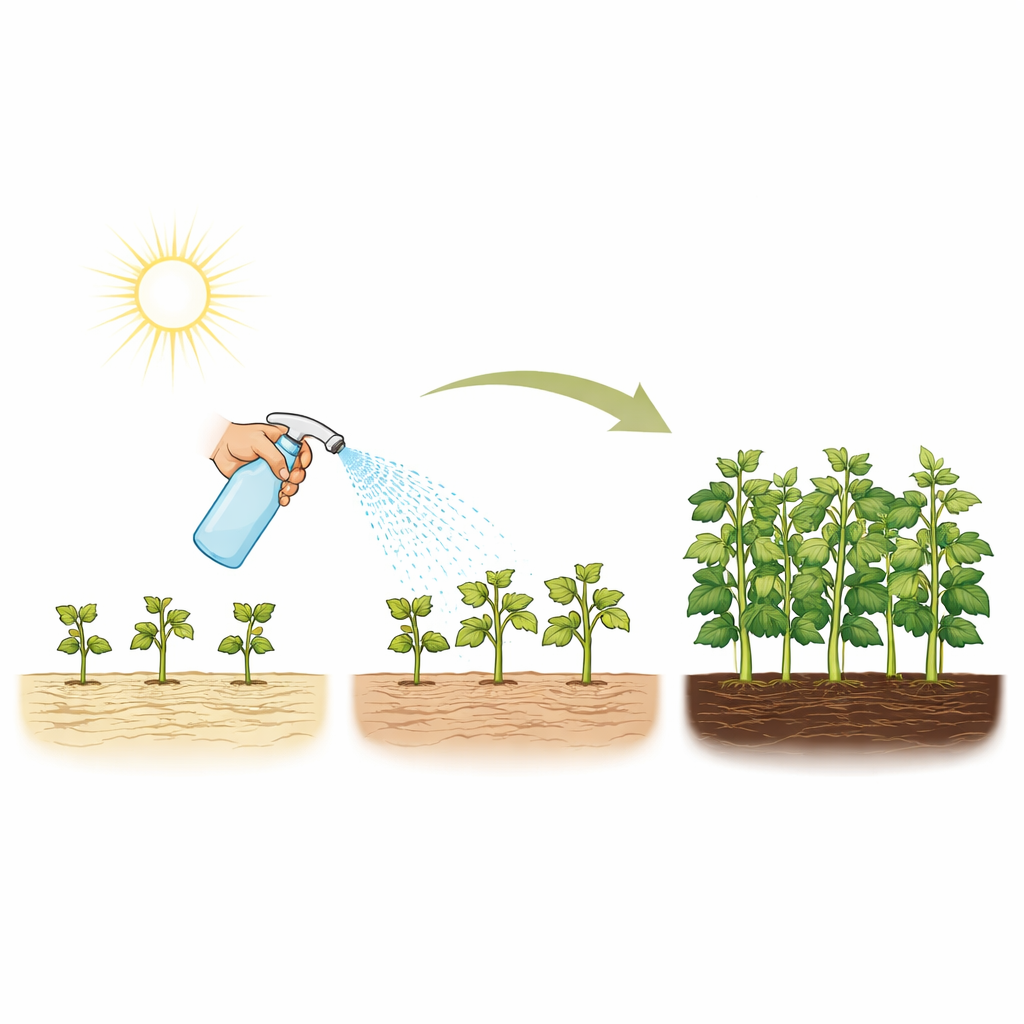
For many people in hot, dry regions, beans are a crucial and affordable source of protein. Egypt, for example, struggles to supply enough edible pulses during the summer. This study looks at a promising way to grow more nutritious mungbeans—a small green bean widely eaten across Asia—on newly reclaimed sandy soils, using a natural, soil‑derived substance called humic acid sprayed onto the leaves.
A new home for a protein-rich bean
Mungbean is a short-season summer crop rich in protein, valuable amino acids such as lysine, and important minerals. It also helps the soil by fixing nitrogen and providing residues that can be used as animal feed or green manure. These traits make it an attractive option for newly reclaimed lands, which often have poor fertility and low organic matter. However, such soils can limit plant growth and yield unless farmers find ways to boost nutrient availability and plant health without relying solely on costly mineral fertilizers.
What humic acid brings to the field
Humic acid forms naturally as plant and animal remains break down in soil. It contains carbon, nitrogen, phosphorus, and trace elements, and is known to improve soil structure, increase root growth, and make nutrients easier for plants to absorb. It can also act like plant hormones that encourage cell division and root development, and it helps plants tolerate stresses such as salinity and water shortage. In this study, researchers tested whether spraying humic acid directly onto mungbean leaves at two strengths could improve growth, yield, and seed nutritional quality in five different mungbean types grown on sandy reclaimed soil in Egypt.
How the experiment was set up
Over two summer seasons, five mungbean genotypes—named Kawmy‑1, King, AVM125, VC1354, and VC3896—were grown in experimental plots under standard drip irrigation and fertilizer practices. Within each genotype, plants received one of three foliar treatments: plain water (control), a moderate dose of humic acid, or a higher dose. The spray was applied twice, about one and a half months after sowing. Researchers measured plant height, number of branches and pods, seed size, and total seed, straw, and biological yields. They also analyzed seed protein, carbohydrates, key nutrients such as nitrogen, phosphorus, and potassium, and a detailed profile of essential and non‑essential amino acids that determine nutritional quality.
What happened to growth, yield, and nutrition
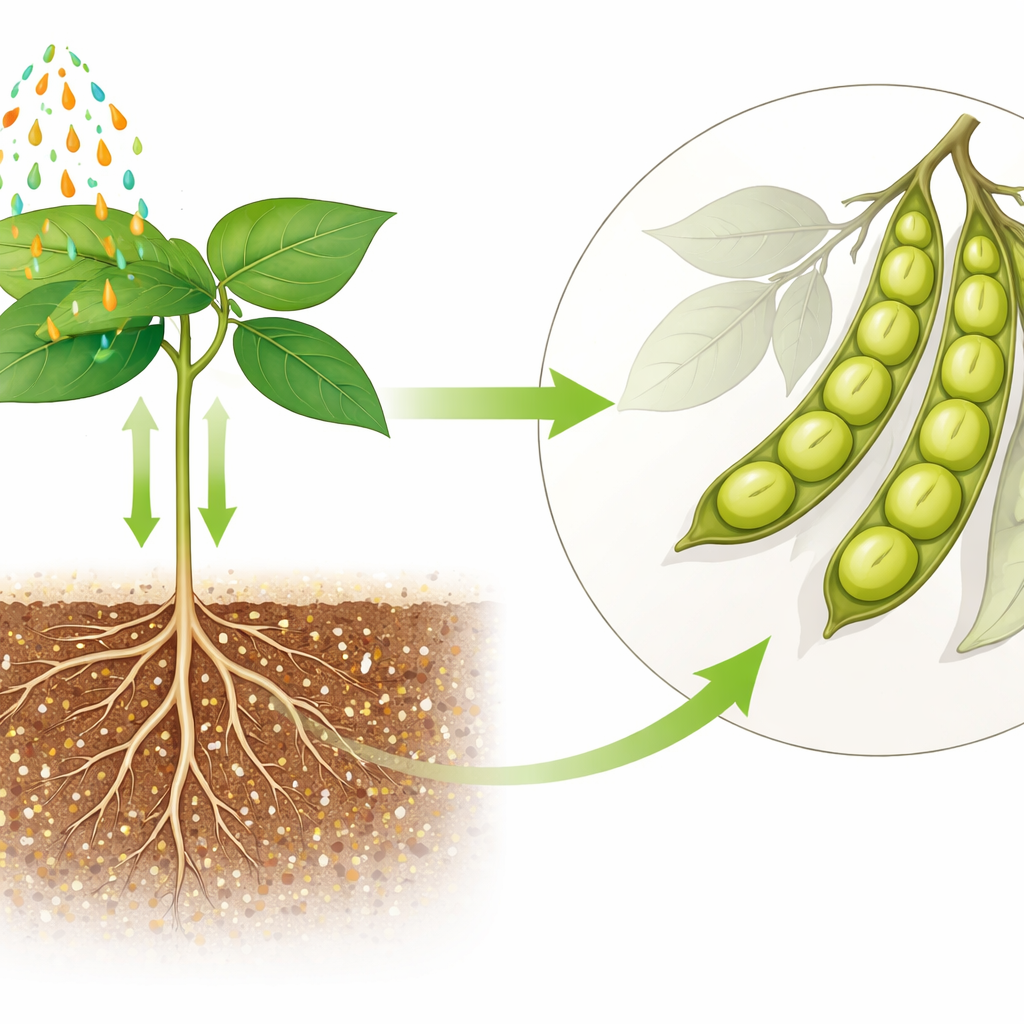
Spraying humic acid clearly improved plant performance compared with unsprayed plants. The higher dose generally produced taller plants with more branches, more pods, and greater fresh weight, especially in the King and VC3896 genotypes. These traits translated into higher seed and biological yields; for example, King sprayed with the moderate dose produced the highest seed yield and protein yield, while Kawmy‑1 treated with the higher dose gave the greatest straw and total biomass. Humic acid also boosted seed nutrient content. The higher dose led to the greatest phosphorus and potassium and more total carbohydrates, while the moderate dose slightly favored maximum protein levels, suggesting a balance between building protein and storing energy. Across genotypes, King excelled in nutrient accumulation and carbohydrates, AVM125 reached the highest protein percentage, and VC1354 lagged in most nutritional measures.
Better amino acids for better food
The seed amino acid profiles showed that humic acid did more than just increase yield; it enriched the quality of the protein. Essential amino acids such as lysine, methionine, leucine, valine, and phenylalanine were generally higher under humic acid treatments, particularly at the higher dose, indicating more complete and valuable proteins for human diets. Non‑essential amino acids that are important for metabolism, like glutamic acid, aspartic acid, and arginine, also increased, reflecting more active nitrogen processing in the plants. The size of these improvements depended on the mungbean genotype, confirming that genetics and foliar treatment work together to shape both yield and seed quality.
What it means for farmers and diets
In simple terms, this research shows that lightly spraying mungbean plants with humic acid can help them grow taller, set more pods, and produce seeds richer in protein and key amino acids, even on poor, sandy soils. The most suitable combination in this study was the King genotype with a moderate spray level, which gave the best balance of high yield and high protein, while a higher dose favored overall plant growth and biomass. Although the experiments were done in one location and with only two humic acid strengths, the results suggest that this natural, soil‑derived substance could become a practical tool to boost both the quantity and nutritional value of mungbean harvests in newly reclaimed lands, supporting food security and healthier diets.
Citation: Sabra, D.M., Badr, E.A., Mohamed, M.H. et al. Foliar application of humic acid improves growth, yield, and nutritional quality of mungbean (Vigna radiata L.) genotypes under newly reclaimed soil conditions. Sci Rep 16, 12726 (2026). https://doi.org/10.1038/s41598-026-47151-z
Keywords: mungbean, humic acid, foliar spray, reclaimed soils, seed nutrition