Clear Sky Science · en
Post-exercise auricular vagus nerve stimulation modulates autonomic and recovery responses in physically inactive young adults: a randomized controlled trial
Why a gentle ear stimulus after exercise matters
Many people know the drained, lightheaded feeling that can follow even a simple workout, especially if they are not very active in daily life. This study explored whether a gentle, noninvasive electrical stimulus delivered to the outer ear right after exercise can help the body calm down more quickly, lower blood pressure, clear metabolic waste from the blood, and make people feel less tired. The work focuses on young adults who are physically inactive, a group for whom safe and easy recovery tools could make exercise more comfortable and sustainable.
The body’s brakes after a workout
Our nervous system has two main branches that keep the body in balance. One, often called the “fight or flight” branch, speeds things up during effort, raising heart rate, blood pressure, and breathing. The other, sometimes described as “rest and digest,” helps the body slow down and recover once the effort ends. After exercise, good recovery depends on how quickly this calming branch turns back on. If it reacts slowly, the heart and circulation can stay strained longer, and people may feel more wiped out than they need to.
Using the ear as a gateway
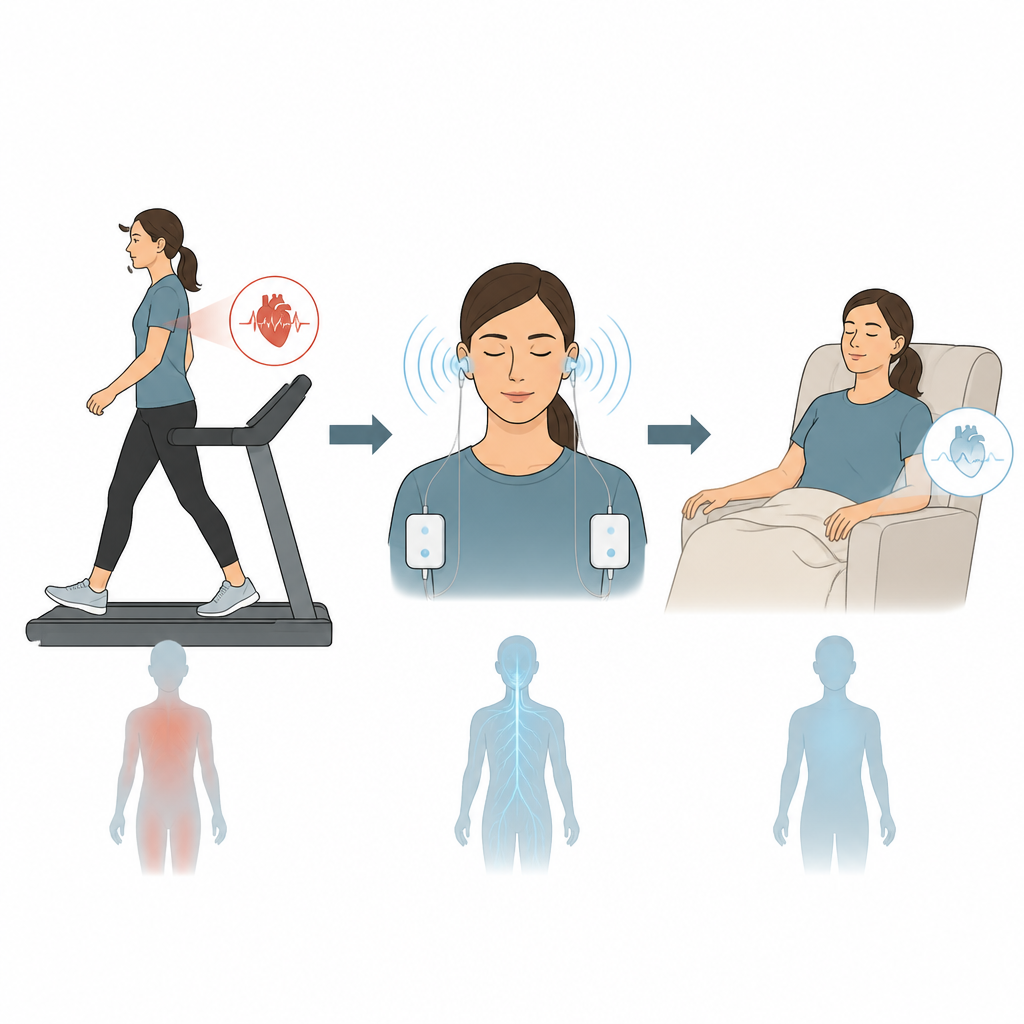
The vagus nerve is a major pathway for the calming branch of the nervous system. While it usually lies deep inside the body, small fibers of this nerve reach the outer ear. That makes it possible to stimulate the vagus nerve from outside the body by placing soft electrodes on specific parts of the ear and delivering a mild electrical signal through the skin. This method, called auricular transcutaneous vagus nerve stimulation, or taVNS, has already been tested for pain, mood, and heart regulation at rest. The current study asked whether applying taVNS right after exercise could speed the body’s natural recovery.
How the study was carried out
Researchers recruited sixty healthy adults aged 18 to 35 who did not exercise regularly. Everyone completed the same simple workout: a 30 minute walk on a treadmill at a steady, comfortable speed. Immediately afterward, half of the participants sat quietly while receiving 20 minutes of taVNS through electrodes placed on both ears, with the intensity adjusted to feel noticeable but not painful. The other half sat and rested for the same amount of time without electrical stimulation. Before and after this recovery period, the team measured heart rate, blood pressure, breathing, blood levels of lactate (a marker of metabolic stress), and how tired participants felt, along with several detailed indicators of nervous system activity based on tiny beat-to-beat changes in heart rhythm.
What changed with ear stimulation
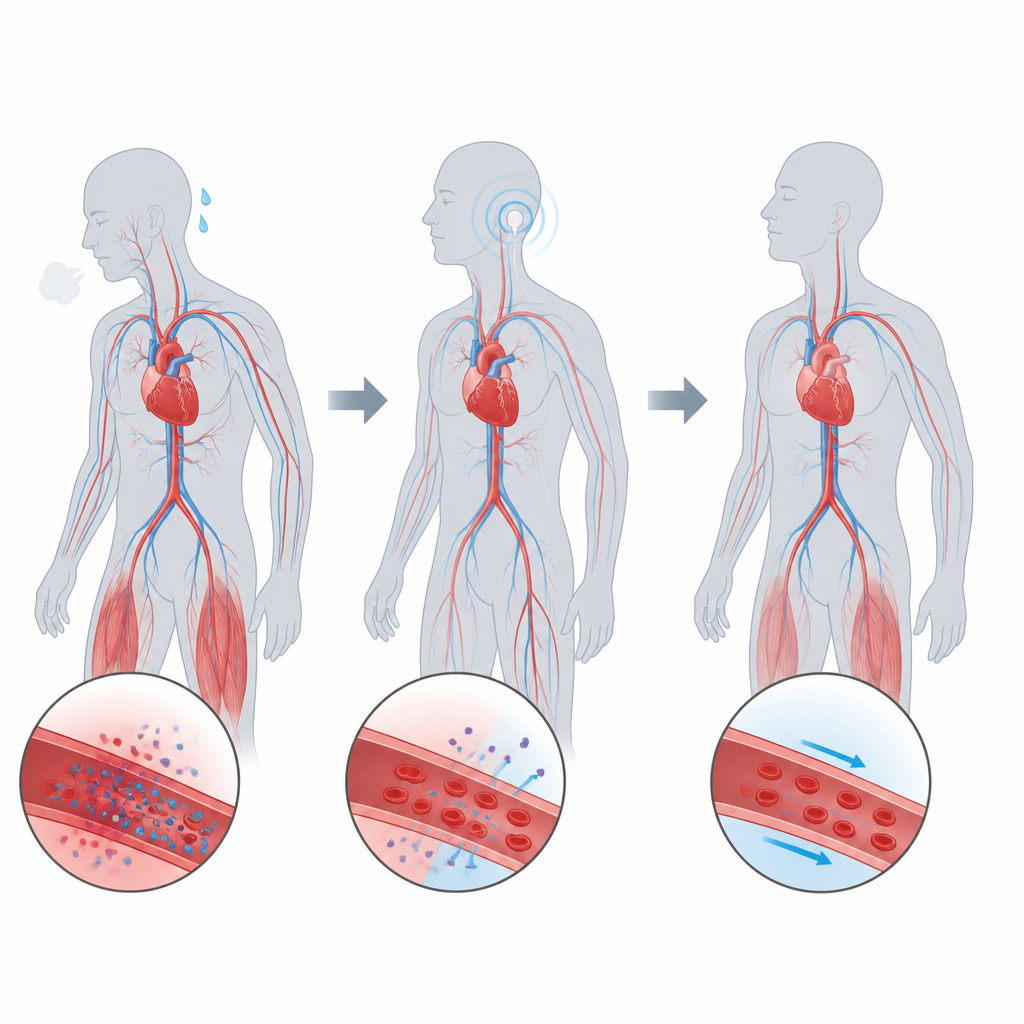
Both groups naturally recovered to some extent after the walk, with heart rate, breathing, blood pressure, and fatigue scores all dropping as time passed. However, those who received taVNS showed several clear advantages. Their systolic and diastolic blood pressure fell more than in the rest-only group, suggesting a stronger calming effect on the heart and blood vessels. A composite index reflecting the activity of the body’s calming branch rose more in the taVNS group, pointing to greater reactivation of recovery signals. Blood lactate levels, which were higher right after the walk, dropped much more sharply with taVNS, indicating faster metabolic cleanup. Participants who received ear stimulation also reported a larger reduction in how fatigued they felt. Interestingly, some standard heart rhythm measures changed in similar ways in both groups, hinting that traditional markers may not capture all aspects of how this gentle nerve stimulus helps the body rebound.
What this could mean for everyday exercisers
For young adults who are out of shape, even moderate exercise can feel challenging, and slow recovery may discourage them from staying active. This study suggests that a simple, noninvasive ear stimulation session right after a workout can nudge the body’s own calming systems, helping blood pressure normalize, metabolic byproducts clear faster, and tiredness ease more quickly than with rest alone. While the research focused on a single session in inactive but otherwise healthy people, and more work is needed to test different exercise types, long term use, and effects in athletes or clinical groups, the findings point to taVNS as a promising add-on tool to make post-exercise recovery smoother and more comfortable without drugs or invasive procedures.
Citation: Ertürk, Ç., Mutuş, R. Post-exercise auricular vagus nerve stimulation modulates autonomic and recovery responses in physically inactive young adults: a randomized controlled trial. Sci Rep 16, 15814 (2026). https://doi.org/10.1038/s41598-026-47143-z
Keywords: vagus nerve stimulation, post-exercise recovery, heart rate variability, blood pressure, fatigue