Clear Sky Science · en
Effect of active vitamin D supplementation on muscle mass and function in peritoneal dialysis patients with sarcopenia: a randomized controlled trial
Why muscle health matters in kidney disease
People with severe kidney disease who rely on peritoneal dialysis often feel weak, tire easily, and struggle with everyday tasks like walking or getting out of a chair. This loss of muscle, known as sarcopenia, raises the risk of falls, hospital stays, and even early death. Because many of these patients also lack vitamin D, a nutrient that affects both bones and muscles, researchers asked a simple question with big implications: could taking an active form of vitamin D help rebuild strength and muscle in this vulnerable group?
A closer look at dialysis and weak muscles
Peritoneal dialysis is a life-sustaining treatment that cleans the blood when the kidneys fail, but it does not fix the many stresses the body faces. Inflammation, poor appetite, disturbed metabolism, and long-term illness all chip away at muscle mass and power. At the same time, damaged kidneys struggle to activate vitamin D, which is needed not only for calcium balance and bone health but also for healthy muscle cells. Earlier studies on vitamin D and muscle have shown mixed results, and almost none have focused specifically on people on dialysis who already have clear signs of sarcopenia.
How the study was set up
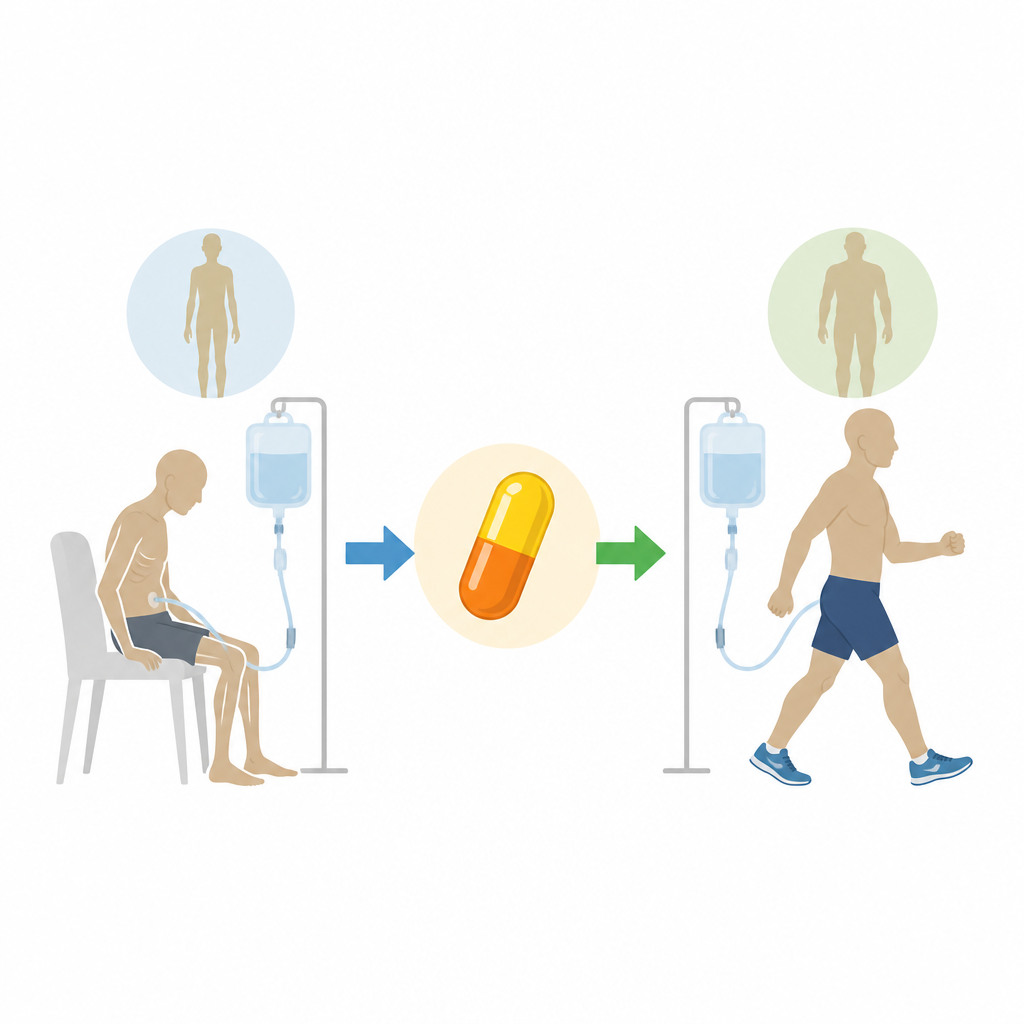
To explore this question, researchers in China conducted a 48-week clinical trial at a single hospital. They enrolled 50 adults with end-stage kidney disease who were receiving peritoneal dialysis, had low vitamin D levels, and met established Asian criteria for sarcopenia based on muscle size, grip strength, and walking or chair-stand tests. Participants were randomly assigned to one of two groups. One group took a small daily dose of an active vitamin D drug called alfacalcidol, while the other group did not receive any active or regular vitamin D supplements. Everyone continued their usual dialysis and medical care, and the team carefully monitored their muscle measures, blood tests, and any side effects over the course of a year.
What changed with daily active vitamin D
The main question was whether people showed at least a five percent improvement in any key muscle measure, such as limb muscle mass, handgrip strength, walking speed, or time to stand up from a chair five times. By the end of the study, about one in three participants overall showed such improvement, but the difference between groups was striking. Nearly half of those taking alfacalcidol improved, compared with only around one in eight in the control group. Men in the vitamin D group showed especially clear gains in limb muscle size and handgrip strength. Walking and chair-stand times also tended to improve in the treatment group while worsening slightly in those who did not receive vitamin D. Statistical analyses that accounted for age and starting vitamin D levels supported a strong link between supplementation and better muscle outcomes.
Safety, limits, and unanswered questions
The researchers also tracked blood calcium, phosphate, parathyroid hormone, and vitamin D levels, because excessive vitamin D can disturb these and harm bones or blood vessels. As expected, the active vitamin D lowered parathyroid hormone and slightly raised calcium, but no serious laboratory-related problems occurred. Only one participant in the treatment group left the study because of high calcium, which quickly returned to normal after stopping the drug. Still, the authors caution that their work has important limits. The trial was open-label, meaning patients and clinicians knew who was getting vitamin D, and it included only 50 people at one center, most with mild to moderate sarcopenia. The way “improvement” was defined was exploratory rather than based on long-term clinical thresholds, and the findings may not apply to people with more severe weakness or to non-Asian populations.
What this means for patients and future research
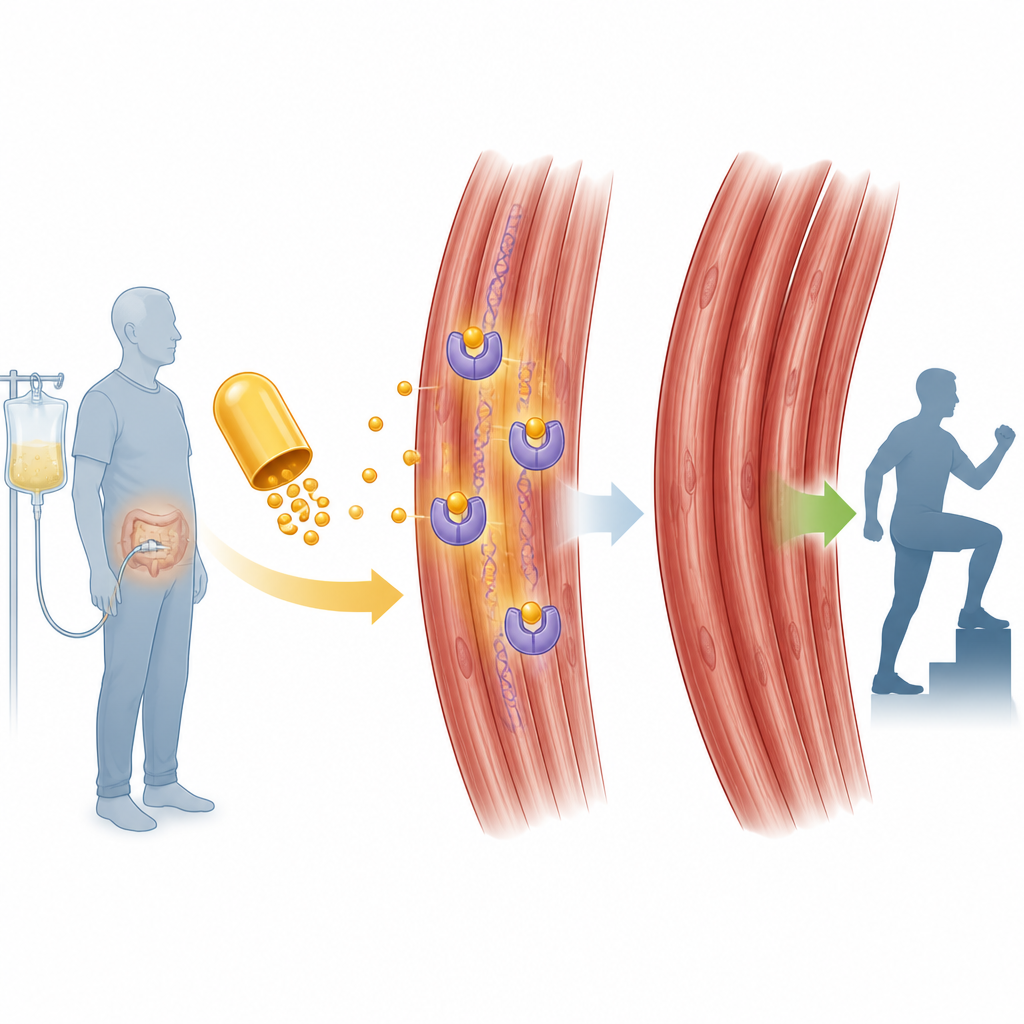
In plain terms, this study suggests that a modest daily dose of active vitamin D may help some peritoneal dialysis patients with low vitamin D and sarcopenia gain muscle and move more easily, without clear short-term harm. However, the authors stress that the study is small and not blinded, so its results should be viewed as an early signal rather than final proof. Larger, carefully blinded trials with more diverse patients and longer follow-up are needed to confirm whether active vitamin D should become a standard tool to support muscle health in people living with kidney failure.
Citation: Wang, L., Zhu, B., Xue, C. et al. Effect of active vitamin D supplementation on muscle mass and function in peritoneal dialysis patients with sarcopenia: a randomized controlled trial. Sci Rep 16, 15902 (2026). https://doi.org/10.1038/s41598-026-47141-1
Keywords: vitamin D, sarcopenia, peritoneal dialysis, muscle strength, end stage renal disease