Clear Sky Science · en
Lung dose and pulmonary function decline after postoperative radiation therapy for non-small cell lung cancer: a predictive model approach
Why this study matters for lung cancer survivors
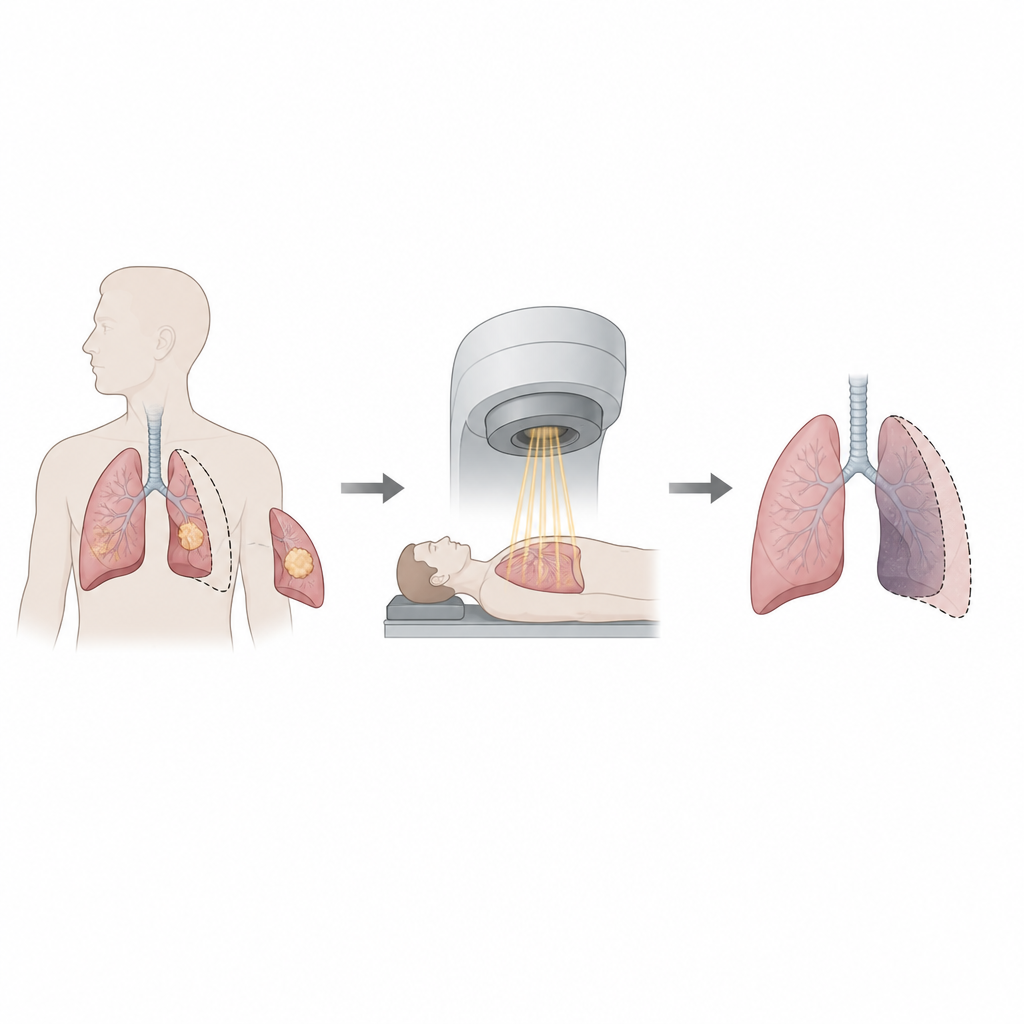
Many people who undergo surgery and radiation for lung cancer wonder how these treatments will affect their breathing years later. This study looks closely at how much radiation the lungs receive after surgery and how that dose relates to gradual loss of lung capacity over time. By turning these observations into a simple prediction tool, the research aims to help doctors and patients weigh cancer control against long term breathing comfort.
How lung surgery and radiation were studied
The researchers focused on people with non small cell lung cancer who had surgery to remove part or all of a lung, followed by radiation to the chest to reduce the chance of the cancer returning. Out of 227 patients treated between 2002 and 2017, 61 had detailed breathing tests at three or more key times: before surgery, after surgery but before radiation, and during follow up after radiation. These tests measured how much air a person can blow out in one second, a standard marker of lung function. The team also calculated how much radiation each remaining lung received, using planning software that maps dose throughout the chest.
Tracking breathing changes over the years
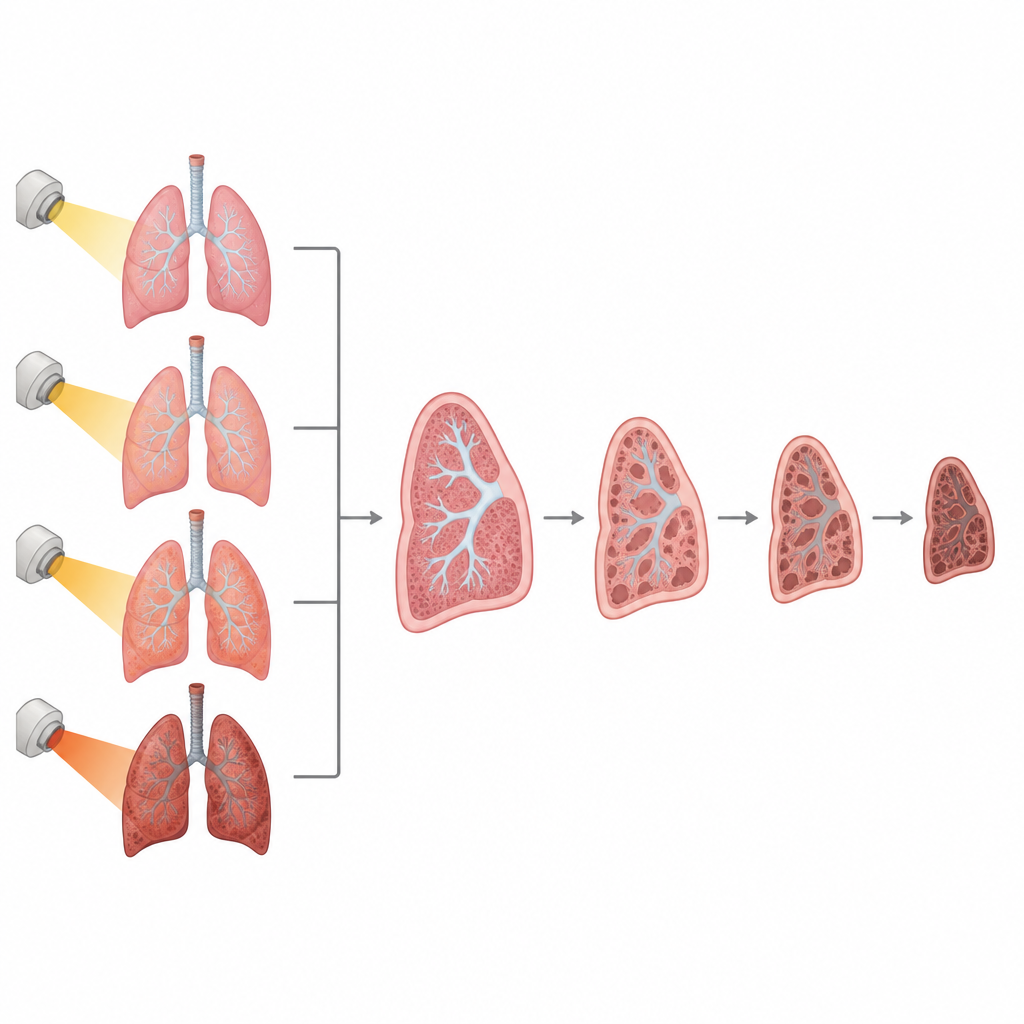
Instead of looking at just one before and after snapshot, the study followed breathing test results over months and years. For most patients, lung function did not suddenly collapse but drifted downward in a roughly straight line after radiation. The researchers compared these changes with several factors, including the average radiation dose to the lungs, the portion of lung exposed to different dose levels, the type of surgery (removal of one lobe versus an entire lung), and the time that had passed since radiation. They used a statistical approach suited for repeated measurements, allowing each person to serve as their own timeline while still highlighting overall patterns.
What higher lung dose and surgery type meant
The analysis showed that people whose remaining lung received higher radiation doses tended to lose more breathing capacity over time. This pattern held across multiple dose measures, such as the average dose to the lung and the share of lung exposed to modest or high doses. Patients who had an entire lung removed before radiation experienced steeper declines than those who lost only a lobe, reflecting their smaller reserve to begin with. In contrast, chemotherapy given after surgery did not appear to add to the long term drop in lung function. Importantly, patients who started with stronger breathing tests before any treatment generally kept better lung performance during follow up.
A simple tool to estimate future lung function
Using these findings, the researchers built straightforward mathematical formulas that estimate a patient’s future breathing test values based on four pieces of information: the breathing test result before radiation, whether they had part or all of a lung removed, how much radiation the lungs will receive, and how many months will pass after treatment. For example, the model suggests that every small step up in average lung dose and every passing month are each linked to a slight but measurable drop in breathing capacity. The model performed consistently when tested within the same group of patients, suggesting it can reasonably describe typical patterns in this setting.
What this means for patients and doctors
For people facing decisions about chest radiation after lung cancer surgery, this work offers a way to turn complex dose maps and test numbers into a clearer picture of how breathing may change over time. While the tool still needs to be checked in larger and more diverse groups, it highlights that careful control of lung radiation dose and attention to starting lung health are key to preserving everyday breathing. In practice, such models could help tailor treatment plans, guide follow up testing, and identify patients who might benefit from added support, such as pulmonary rehabilitation, as they recover from cancer care.
Citation: Noh, O.K. Lung dose and pulmonary function decline after postoperative radiation therapy for non-small cell lung cancer: a predictive model approach. Sci Rep 16, 15977 (2026). https://doi.org/10.1038/s41598-026-47130-4
Keywords: lung cancer, radiation therapy, pulmonary function, dose response, predictive model