Clear Sky Science · en
Synergistic effects of platelet-rich plasma and teriparatide on osteoporotic fracture healing in OVX rats
Why weak bones matter
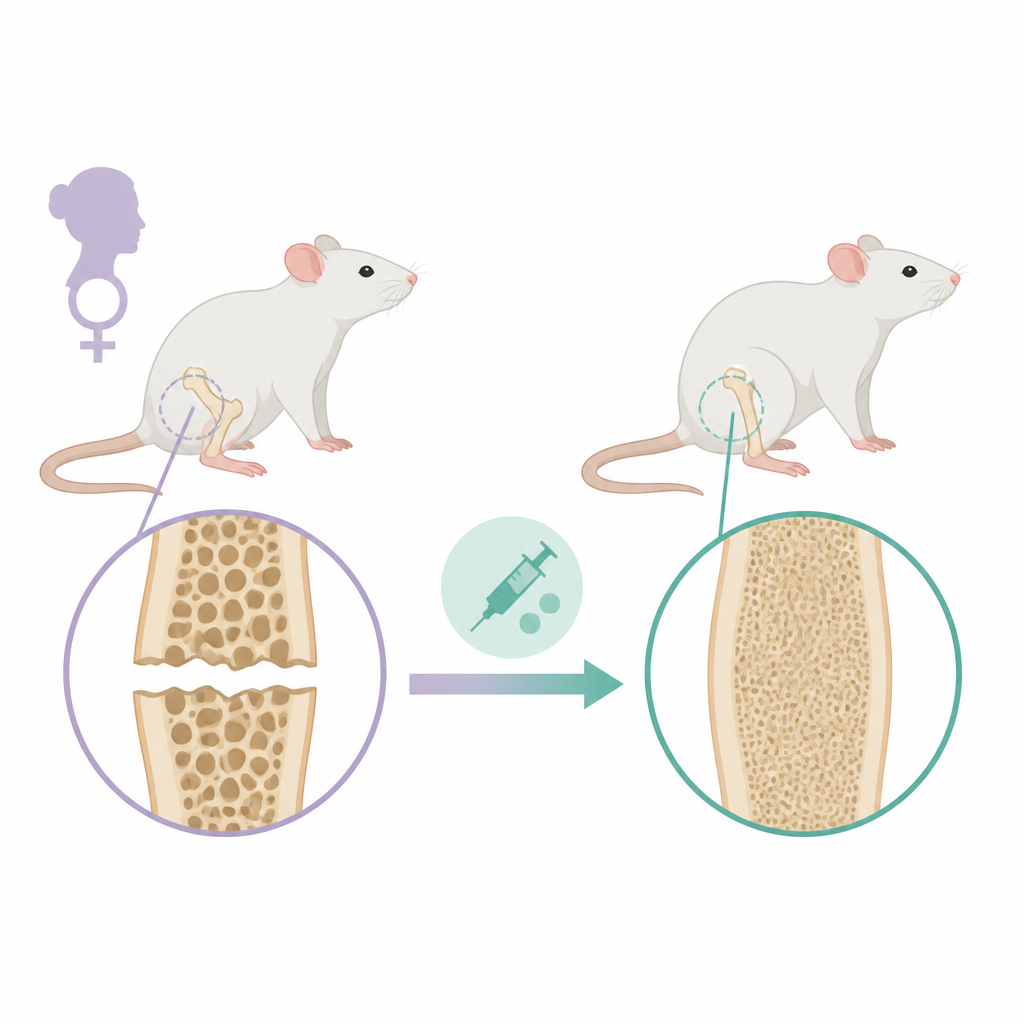
As people age, especially women after menopause, their bones can become thin and fragile, a condition known as osteoporosis. When these weakened bones break, they often heal slowly and may never fully recover their former strength. This study in rats explores whether combining two existing medical tools one made from the patient’s own blood and one already used to treat osteoporosis could help brittle bones mend faster and stronger.
Two helpers for broken bones
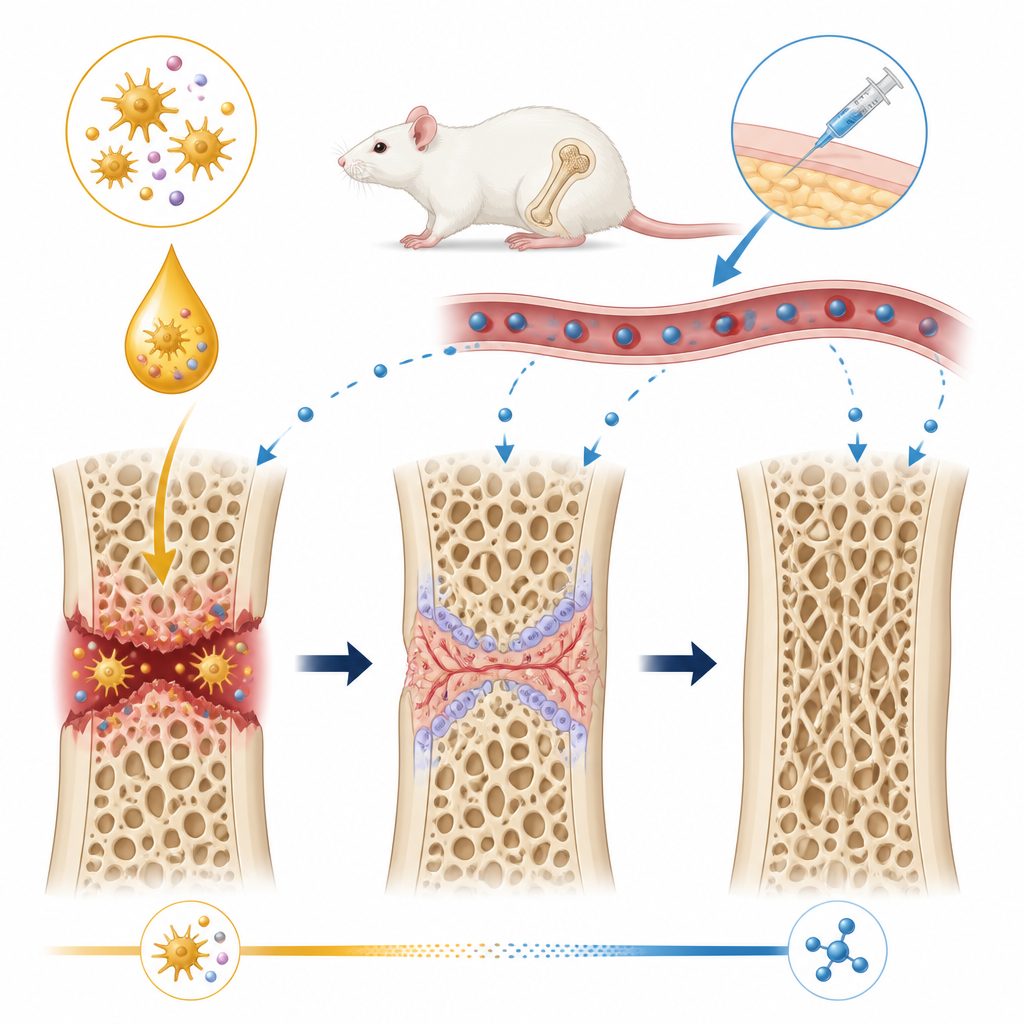
The researchers focused on two treatments. The first, platelet rich plasma, is prepared by spinning a small amount of blood to concentrate platelets, tiny cell fragments packed with natural healing factors. When injected at a fracture site, this plasma can encourage nearby cells to grow and form new tissue. The second treatment, teriparatide, is a drug based on a natural hormone that tells the body to build more bone and is already prescribed to some people with severe osteoporosis. On their own, each treatment helps bone in a different way one locally at the break, and the other throughout the skeleton.
A rat stand in for fragile human bone
To mimic fragile bones in older women, the team used female rats whose ovaries had been removed, a standard way to create osteoporosis in the lab. After eight weeks, when their bones had become weaker and more porous, each rat received a carefully controlled break in the thigh bone that was stabilized with a thin metal pin. The animals were then divided into groups some got no special treatment, others received only platelet rich plasma at the break, others only teriparatide by daily injection, and one group received both for six weeks.
Watching bones heal from the inside out
Over the following weeks, the scientists tracked healing using tools similar to those used in human clinics. Blood tests measured proteins linked to bone building. X rays showed how quickly a bridge of new bone formed across the break. High resolution scans created three dimensional pictures of the fine spongy network inside the bone, while mechanical tests pressed on the healed leg bones to see how much weight and bending they could withstand. Tissue slices under the microscope revealed the balance between sturdy bone and soft fatty tissue filling the marrow space.
Stronger together than alone
The combination treatment outperformed either therapy alone on nearly every measure. Rats that received both platelet rich plasma at the fracture and teriparatide injections had higher levels of bone building signals in their blood, more complete bridges across the break on X rays, and bone that looked denser and more continuous on scans. Their healed bones held far more weight and were almost as stiff as those of healthy control animals, while bones treated with only one therapy lagged behind. Microscopy showed that combined treatment produced thicker, better connected bone strands with fewer fat cells filling the marrow space, hinting at a healthier internal structure.
What this could mean for patients
For people with osteoporosis, fractures can be life changing, often leading to pain, loss of independence, and new breaks. This rat study suggests that pairing a simple, blood derived injection at the break with an established bone building drug could help fragile bones heal faster and regain more strength than with either approach alone. While rats are not humans and more work is needed in larger animals and clinical trials, the results point toward a future in which doctors might use combined treatments that support both local repair at the break and overall bone health throughout the body.
Citation: Shuwei, L., Zhi, W., Kaidong, W. et al. Synergistic effects of platelet-rich plasma and teriparatide on osteoporotic fracture healing in OVX rats. Sci Rep 16, 15644 (2026). https://doi.org/10.1038/s41598-026-47111-7
Keywords: osteoporosis, fracture healing, platelet rich plasma, teriparatide, bone regeneration