Clear Sky Science · en
Digital twin-assisted blockchain IoT security model using contrastive and causal learning techniques
Why safer connected machines matter
Homes, factories, and power grids are filling up with internet-connected gadgets, from smart thermostats to industrial sensors. This connected world brings convenience and efficiency, but it also opens countless digital doors for hackers. The paper introduces a new security approach, called Causio-TwinChain, that aims to spot attacks early, explain what is really going wrong, and record everything in a way that cannot be secretly changed.
Watching machines through a virtual mirror
At the heart of the system is the idea of a digital twin, a detailed virtual copy of each physical device or process. Every second, real machines stream data about their state to these twins, which run in a safe sandbox. Clever filtering keeps the virtual copy tightly in step with the real device, and any growing mismatch becomes an early warning sign. Because the twin can be probed and tested without risking actual hardware, it offers a controlled space to explore suspicious behavior and trial possible fixes before applying them in the real world. 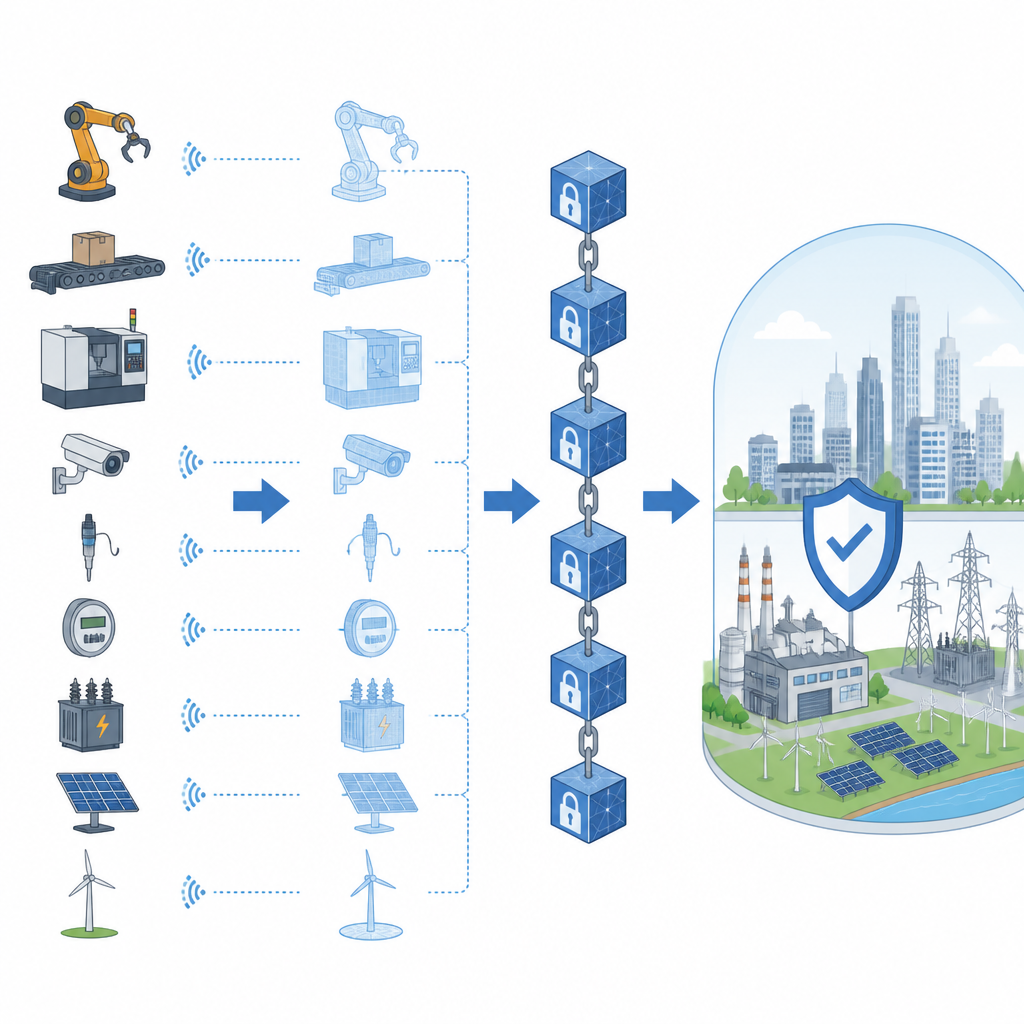
Locking the record with a shared chain
To make sure that attackers cannot quietly erase their tracks, Causio-TwinChain uses a permissioned blockchain, a shared digital ledger maintained by selected trusted parties. Every important event from the digital twins, such as state changes, anomaly alerts, and responses, is bundled into signed transactions and grouped into blocks. These blocks are linked together using cryptographic hashes so that any attempt to alter past records would break the chain and be immediately visible. A fast agreement protocol keeps all participants in sync while still delivering quick logging suitable for industrial environments.
Teaching the system what looks odd
The framework relies on two kinds of machine learning that work together. First, a contrastive learning module trains only on normal behavior, learning a compact pattern of what healthy devices “look like” in terms of their data streams. It does this by comparing many slightly altered views of the same benign data and pulling them close together in an abstract space, while pushing different patterns apart. Later, if new data fall far outside this normal cluster, the system flags them as anomalies, including attack types it has never seen before. Tests on a large IoT botnet dataset show a major improvement in detecting such novel attacks and a sharp drop in false alarms compared with standard intrusion detection tools.
Finding the real cause and predicting the fallout
Detection alone is not enough; operators also need to know why an event happened and what could break next. Causio-TwinChain uses structural causal learning to model cause-and-effect relationships between key variables, such as traffic levels, device states, and control commands. When an anomaly appears, the causal module asks targeted “what if” questions on the digital twin: What if this signal had stayed normal? Which components would have behaved differently? By comparing these imagined outcomes with reality, the system isolates likely root causes and estimates how trouble might spread across devices or subsystems. These insights then drive automatic responses tailored to the measured risk. 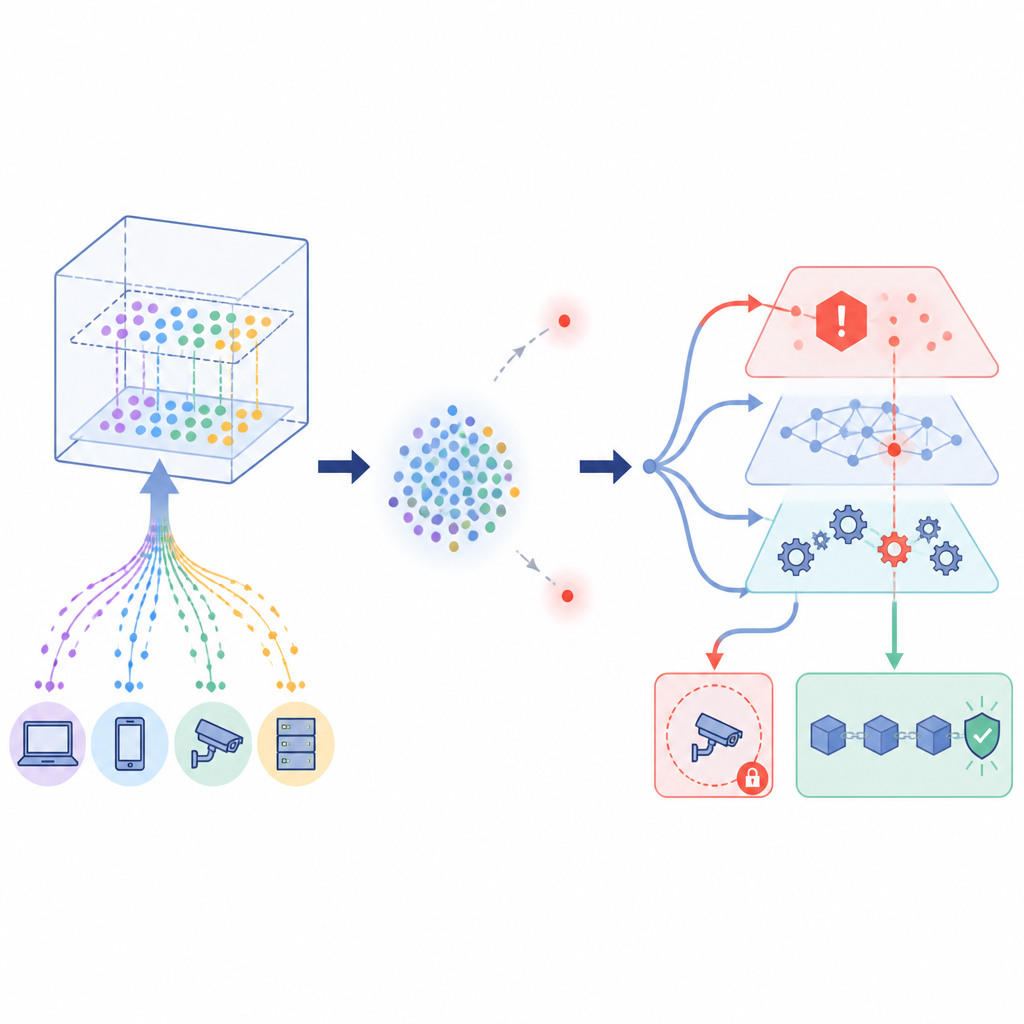
Closing the loop with smart responses
Once the system has identified a probable cause and its expected impact, predefined policies translate that knowledge into action. Depending on severity, the framework can quarantine a device, slow its network traffic, or simply alert human operators, always logging its decisions on the blockchain. Each incident also becomes new training material: the anomaly detector and causal model are updated to better recognize similar situations in the future. In trials, this closed loop cut the average diagnosis time by more than two thirds and improved both accuracy and robustness under noisy data, suggesting a path toward self-healing IoT security that can keep vital services running safely.
What this means for everyday systems
In plain terms, the study shows how pairing virtual replicas, shared tamper-proof records, and learning algorithms can turn today’s reactive defenses into an active, explanatory shield for connected devices. Instead of just sounding an alarm when something seems off, Causio-TwinChain works to understand what is really happening, how it started, and how to stop it spreading, all while preserving a trustworthy history of events. This kind of approach could help keep smart grids, factories, and other critical systems running smoothly even as cyber threats grow more complex.
Citation: Dutta, A.K., Anjum, M., Min, H. et al. Digital twin-assisted blockchain IoT security model using contrastive and causal learning techniques. Sci Rep 16, 15732 (2026). https://doi.org/10.1038/s41598-026-47104-6
Keywords: industrial IoT security, digital twins, blockchain, anomaly detection, causal learning