Clear Sky Science · en
Decoding CTCs in osteosarcoma: the molecular journey from initial tumor to metastasis
A New Window into Childhood Bone Cancer
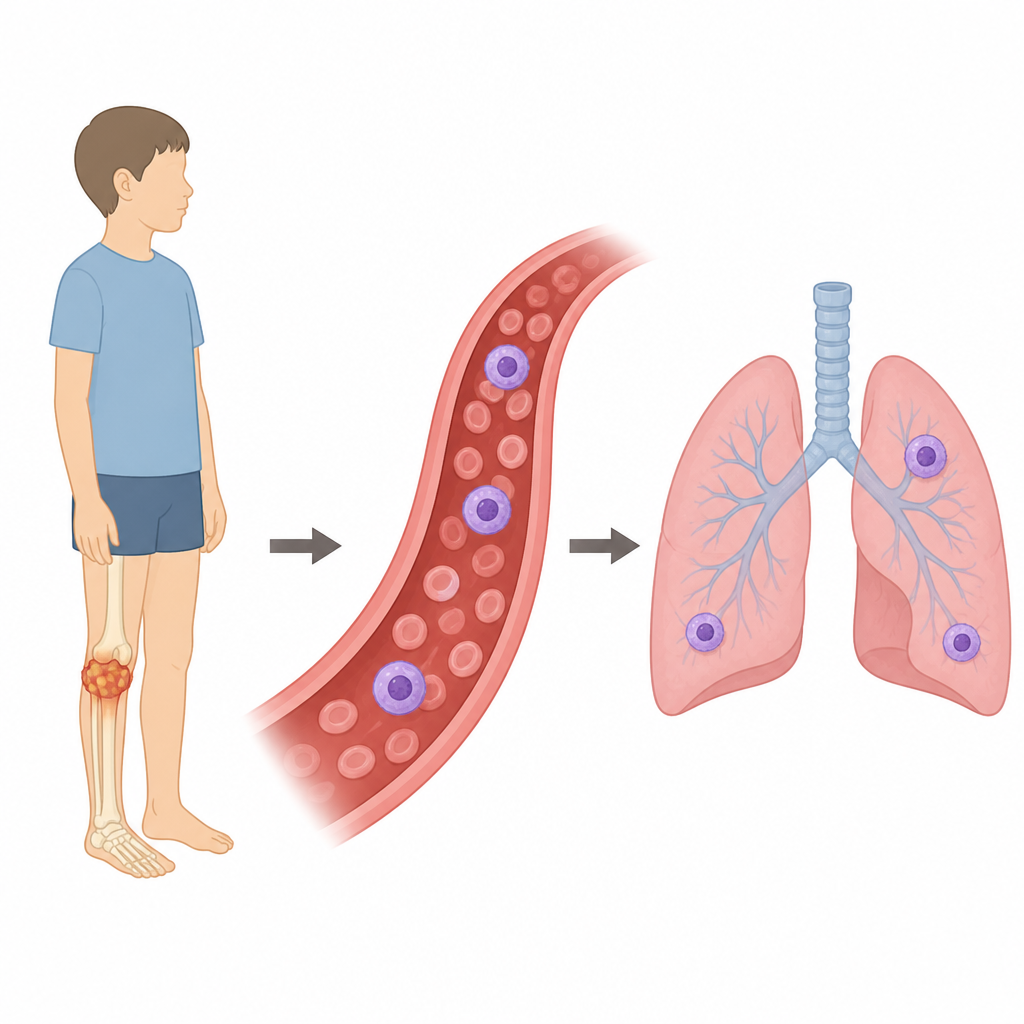
For families facing osteosarcoma, a rare but aggressive bone cancer that strikes children and teenagers, one of the scariest threats is that the disease will return or spread to the lungs even after surgery and chemotherapy. Standard scans can miss tiny clusters of cancer cells, leaving doctors unsure who is truly in the clear. This study explores whether a simple blood draw could reveal those hidden cancer travelers and offer a gentler way to follow the disease over time.
Cancer Cells on the Move in the Blood
Osteosarcoma often spreads through the bloodstream, sending out wandering cells that can seed new tumors, especially in the lungs. These circulating tumor cells, or CTCs, are rare but valuable clues: if doctors can capture and study them, they gain a live snapshot of the tumor without another biopsy. The challenge is that osteosarcoma does not behave like more common cancers of the breast or lung, which show clear surface markers that make their CTCs easier to catch. Instead, osteosarcoma cells tend to look more like the body’s own support cells, making them harder to recognize and isolate.
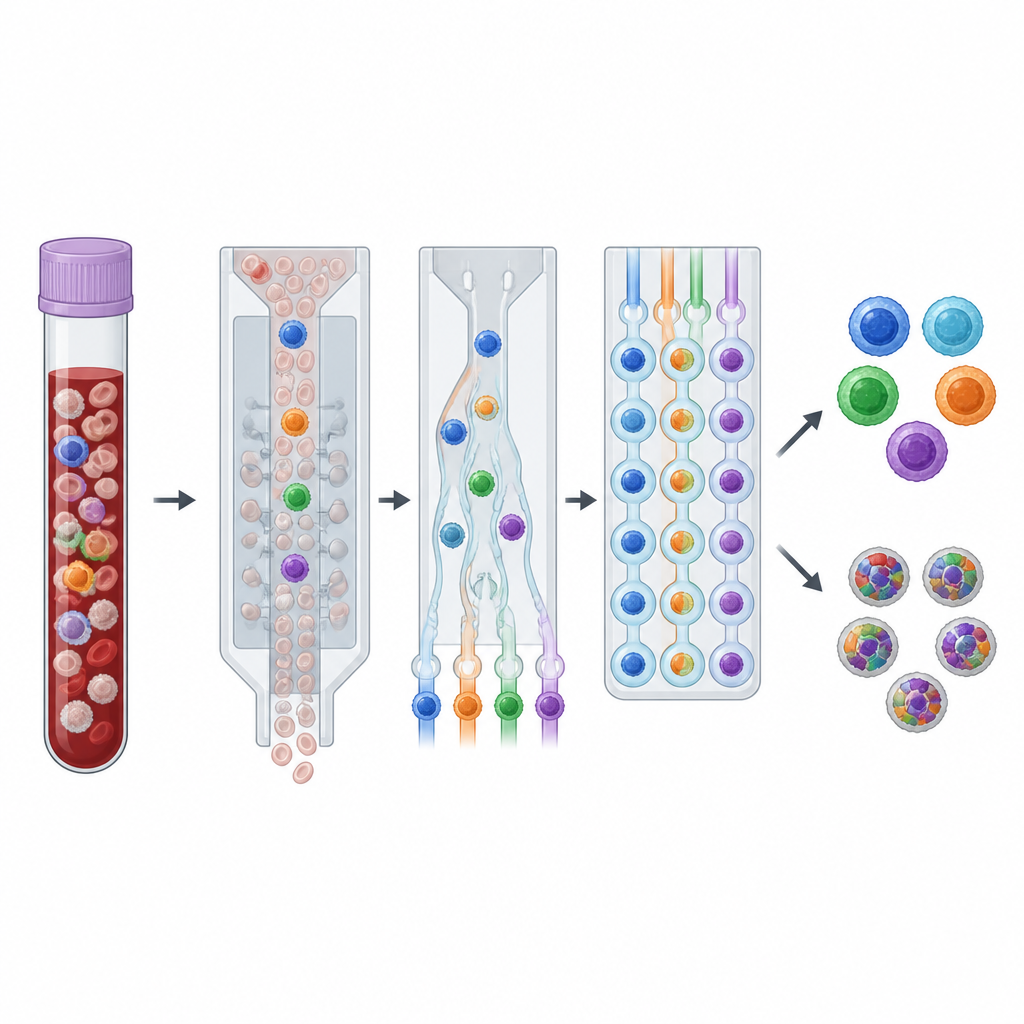
Catching and Sorting Cancer Cells from a Blood Sample
The research team developed a stepwise process to find and study CTCs in blood from six young osteosarcoma patients. First, they enriched the sample using a device that separates cells by size and physical properties. Then they stained the remaining cells with glowing tags that highlight two broad personalities: cells with epithelial traits, which tend to stick together, and cells with mesenchymal traits, which tend to be more mobile. Using a high-precision instrument, they picked out single cells and grouped others into small pools for deeper genetic testing. In total, they identified 908 CTCs, most with the more mobile mesenchymal profile and a smaller set with epithelial features.
Proving the Cancer Origin and Hidden Diversity
To show that the captured cells truly came from the cancer, the team performed whole-exome sequencing in one patient, comparing DNA from the primary tumor, a lung metastasis, and the pooled CTCs. They found overlapping mutations and similar patterns of chromosomal gains and losses across all three sources, confirming that the blood-borne cells were not harmless bystanders but genuine tumor offshoots. When they zoomed in on single cells from across the group, an unexpected pattern emerged: epithelial CTCs carried more genetic damage and complex changes than the more numerous mesenchymal CTCs, suggesting that the rarer subgroup might be especially unstable and potentially more dangerous.
Linking Blood Clues to Treatment Response
The investigators also asked whether the behavior of these blood-borne cells reflected how well chemotherapy worked in the main tumor, as measured by the amount of dead tissue seen under the microscope after surgery. In this small group, they noticed a hint of a relationship: patients whose tumors showed more destruction after chemotherapy tended to have an increase in epithelial CTCs, while those with poorer tumor killing often had fewer of these cells in the blood. One striking case showed excellent tumor death in the leg but a rise in epithelial CTCs, whereas another patient with widespread disease and poor response showed the opposite pattern. Although the numbers are too small for firm conclusions, these findings suggest that blood signals and local tumor response may tell different parts of the story.
What This Could Mean for Future Care
This work shows that it is technically feasible to capture, sort, and genetically profile circulating tumor cells in children and young adults with osteosarcoma, and that these cells truly mirror the primary and metastatic tumors. It also reveals that not all CTCs are alike: a smaller, more genetically damaged subset may play a special role in disease spread. While larger studies are needed, this approach points toward a future in which a routine blood test helps doctors track cancer activity, understand each patient’s unique disease, and adjust therapy more precisely without repeated invasive procedures.
Citation: Di Gangi, A., Morelli, M., Ipponi, E. et al. Decoding CTCs in osteosarcoma: the molecular journey from initial tumor to metastasis. Sci Rep 16, 15838 (2026). https://doi.org/10.1038/s41598-026-47094-5
Keywords: osteosarcoma, circulating tumor cells, liquid biopsy, pediatric cancer, metastasis