Clear Sky Science · en
Development and validation of glucose trajectory subphenotypes in critically ill patients on early enteral nutrition: a retrospective cohort study
Why blood sugar swings matter in the ICU
When people are critically ill in an intensive care unit, they often cannot eat on their own and receive liquid food through a feeding tube. At the same time, their bodies are under intense stress, which can push blood sugar levels dangerously high or low. These swings are more than just numbers on a monitor; they are linked to infections, longer hospital stays, and even the risk of death. This study asks a simple but important question: do patients follow recognizable patterns of blood sugar change when tube feeding begins, and can we predict these patterns early enough to guide safer care?
Different blood sugar paths in very sick patients
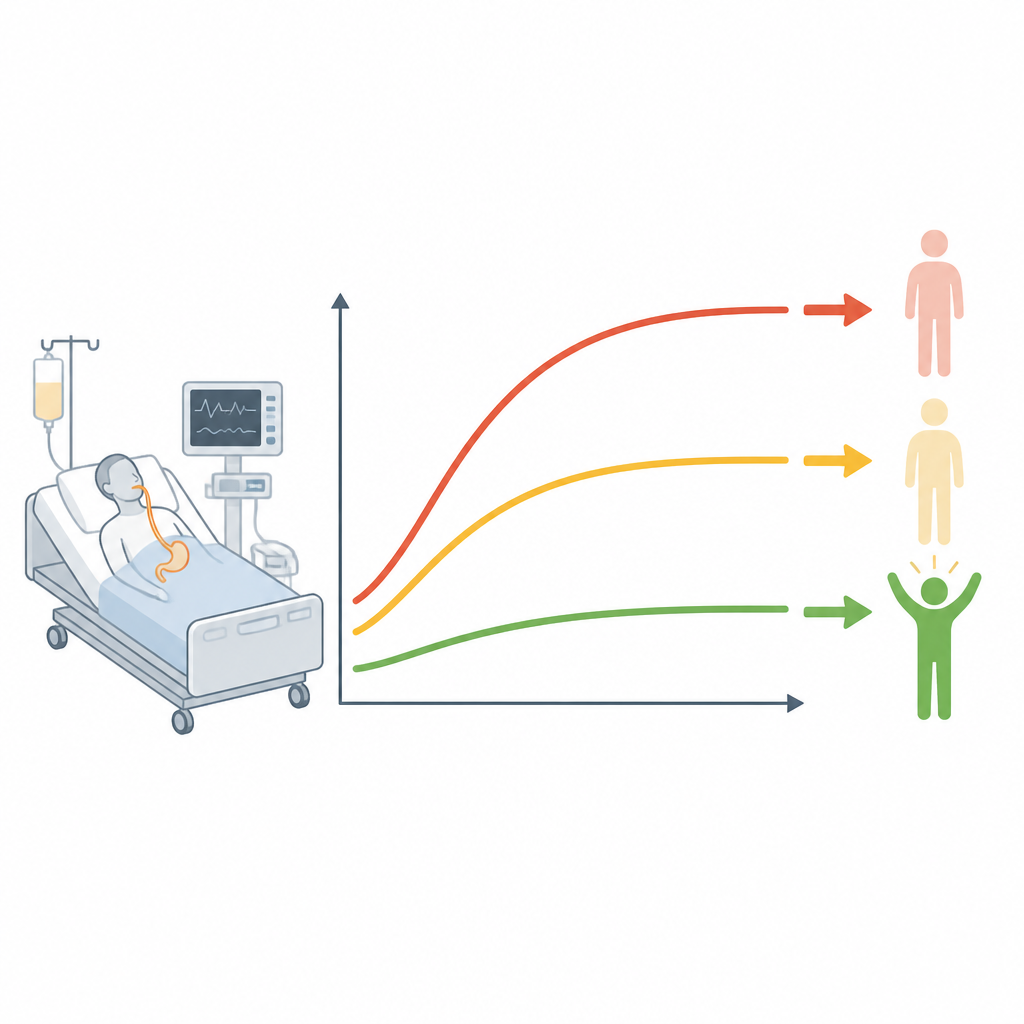
The researchers looked back at records from 478 adults who stayed in a large hospital ICU and received continuous tube feeding for at least two days. Every four hours during the first two days, staff had measured blood sugar using routine blood gas tests. Instead of treating each reading separately, the team used a statistical method that groups patients by the overall shape of their blood sugar change over time. This approach revealed that patients did not follow one shared pattern. Instead, three distinct paths or “trajectories” emerged, each describing how high blood sugar was at the start and how it behaved over the next 48 hours.
Three types of blood sugar patterns
The first group, called mild hyperglycemia stable in scientific terms, started with slightly high blood sugar that stayed fairly steady. The second group began at a moderate level and rose to a noticeable peak during the two days of feeding. The third group started with clearly high blood sugar and climbed even higher before leveling off. These groups were not random. Patients in the high and peaking group were more likely to have diabetes, receive strong insulin treatments, show signs of more severe illness, and use certain types of feeding formulas. This suggests that both underlying health and treatment choices shape how blood sugar behaves when tube feeding begins.
Link between blood sugar paths and survival
The study also examined how these three blood sugar paths related to survival in the first 28 days after ICU admission. After taking into account age, overall illness severity, diabetes history, and other medical factors, the researchers found that patients in the most severely elevated and peaking blood sugar group had a clearly higher risk of dying within 28 days than those in the mild, stable group. The group with moderate peaking blood sugar showed a possible increase in risk, although this was less certain. These findings support the idea that not just a single high reading, but the pattern of blood sugar over time, carries important information about a patient’s outlook.
Using machine learning to see trouble early
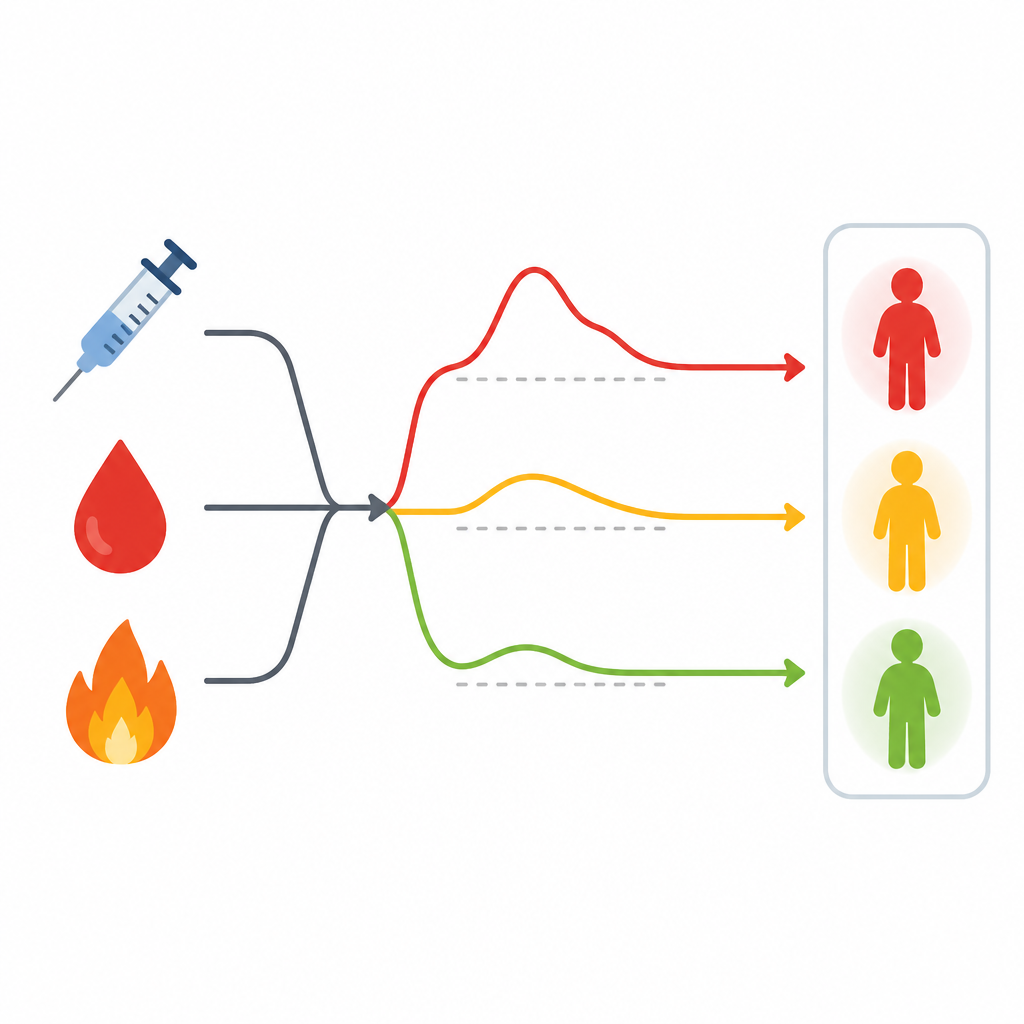
To move from observation to practical use, the team built a computer model using a machine learning method known as XGBoost. They fed the model routine information that is usually available when tube feeding starts: age, medical history, lab tests, severity scores, and drugs being given, including insulin and steroids. The model learned to predict which of the three blood sugar paths a new patient would likely follow. When tested on unseen data, it showed good ability to tell the groups apart and generally accurate alignment between its predictions and what actually happened. The most influential inputs included whether insulin was being used, whether the patient had diabetes, and levels of inflammation markers such as C-reactive protein and interleukin-6.
What this means for patients and caregivers
For families and caregivers, the message is that early tube feeding in the ICU does not affect every patient’s blood sugar in the same way. Some follow a relatively calm path, while others experience sharp peaks that are tied to worse outcomes. By recognizing these distinct paths and using tools that can predict them from routine data, clinicians may be able to tailor feeding plans and insulin treatment more carefully. The study does not prove that changing therapy based on these patterns will improve survival, and it was carried out in a single hospital. Still, it offers a roadmap for turning raw blood sugar readings into clearer risk signals that could help keep critically ill patients safer during a very fragile phase of their care.
Citation: Weng, C., Su, J., Wang, H. et al. Development and validation of glucose trajectory subphenotypes in critically ill patients on early enteral nutrition: a retrospective cohort study. Sci Rep 16, 15841 (2026). https://doi.org/10.1038/s41598-026-47083-8
Keywords: critical illness, blood glucose, enteral nutrition, intensive care, machine learning