Clear Sky Science · en
Multi-objective sizing and performance optimization of islanded hybrid renewable microgrids: a case study in yanbu, Saudi Arabia
Power for Remote Homes
Reliable electricity is still a challenge for many isolated communities, especially in hot, dry regions where extending the national grid is too costly. This study looks at how small, self-contained power systems—called hybrid microgrids—can use sunshine, wind, batteries, and a small diesel generator to keep homes in Yanbu, Saudi Arabia, supplied with electricity around the clock, and how to size each component so that power is both dependable and affordable.
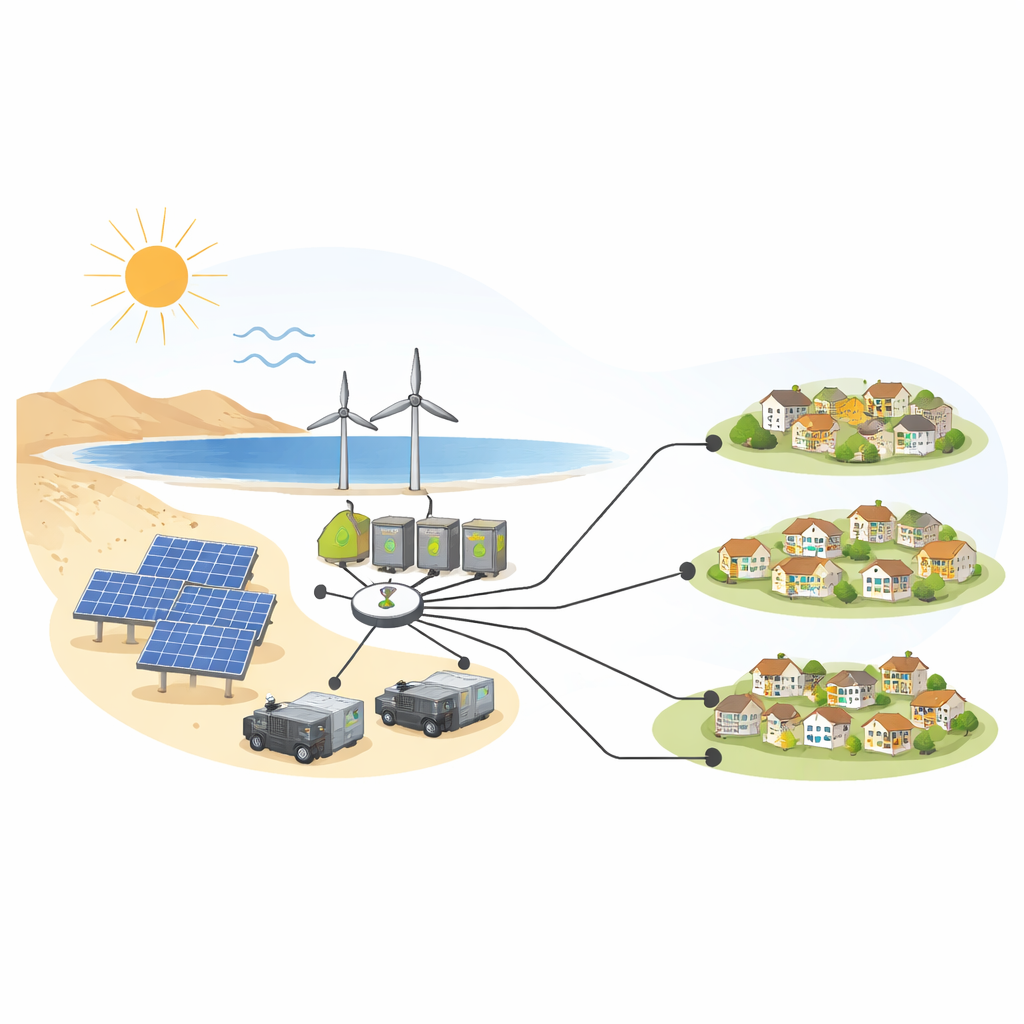
Small Grids Built Around Sun and Wind
The microgrid examined in this work is designed for groups of five, ten, or fifteen houses living far from the main grid. At its heart are solar panels and wind turbines that harvest the area’s strong sun and decent coastal winds. These are connected to a battery bank that stores excess energy and a diesel generator that steps in only when renewable power and stored energy are not enough. Together they form a stand‑alone system that can operate like a tiny, local utility, providing electricity for lighting, appliances, and other household needs.
Balancing Cost, Reliability, and Clean Energy
Designing such a system is not as simple as installing as many panels and batteries as possible. Too large a system is unnecessarily expensive; too small a system leads to blackouts. The authors therefore treat the design as a multi‑objective problem with three goals: reduce the average cost of electricity over the system’s lifetime, cut the chance that the microgrid cannot meet demand, and increase the share of power that comes from renewable sources rather than diesel. Instead of choosing one goal and compromising the others, they search for combinations of equipment that strike different trade‑offs among all three.
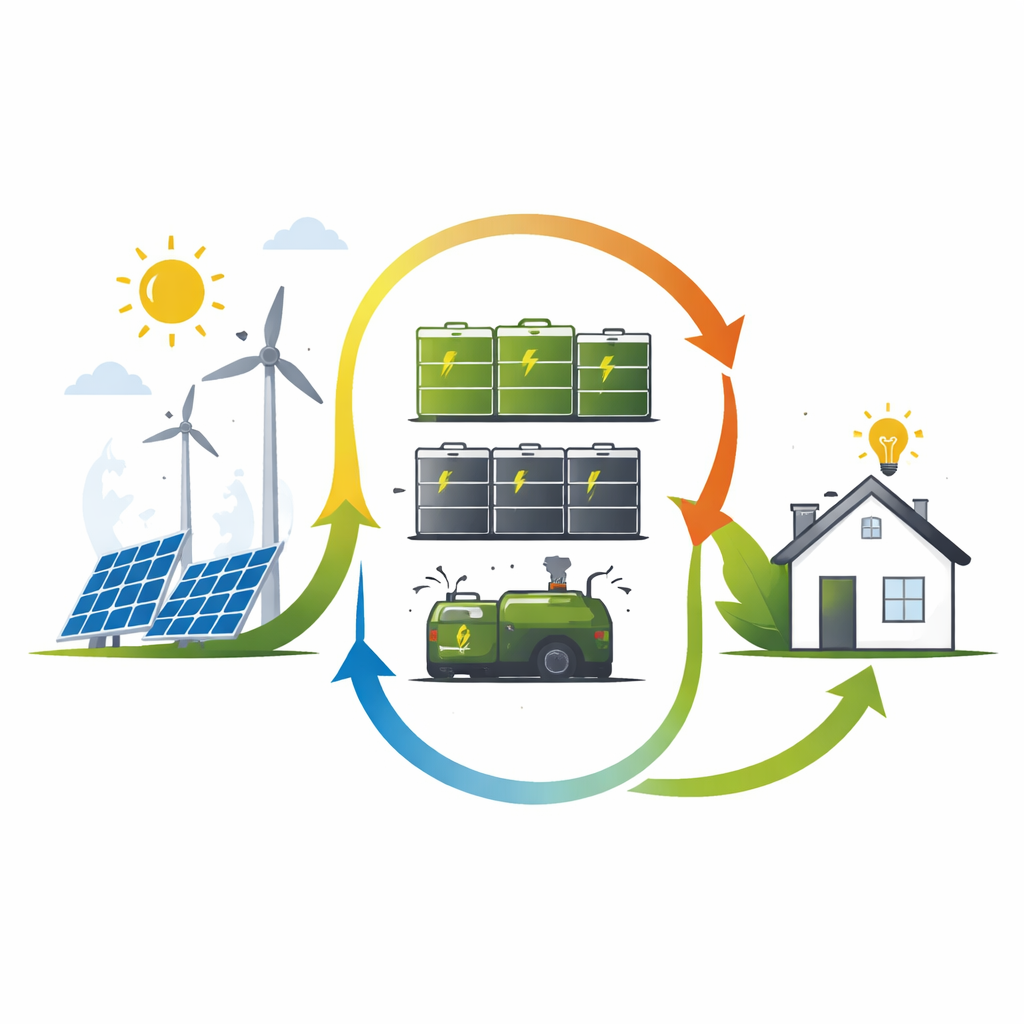
Nature-Inspired Search for Best Designs
To explore the many possible combinations of solar panels, wind turbines, batteries, and diesel units, the study uses two nature‑inspired computer algorithms. One imitates the way chains of tiny sea creatures called salps close in on food; the other is based on the spiral hunting patterns of humpback whales. In this context, each “creature” represents a candidate microgrid design. As the simulated swarm or pod moves through the design space, it tests different equipment sizes using a detailed hourly model of weather, solar radiation, wind speeds, and household electricity demand in Yanbu. Over many iterations, poorer designs are discarded and better ones are refined, building a family of solutions that balance cost, reliability, and renewable use in different ways.
What Happens as Communities Grow
The researchers compare systems with and without diesel backup for the three community sizes. When only solar, wind, and batteries are used, electricity is cheaper but the risk of power shortfalls is higher, particularly for larger loads or during stretches of cloudy, calm weather. Adding a diesel generator raises the cost somewhat but greatly improves reliability and reduces the risk of blackouts to very low levels. Interestingly, as the number of houses increases from five to fifteen, the optimized designs tend to lean more heavily on solar and wind and less on diesel. Larger communities can justify more renewable capacity, which pushes the renewable share above 80–90 percent while keeping the average cost per kilowatt‑hour competitive with many conventional off‑grid solutions.
How the Algorithms Compare
Both search methods find strong design options, but they excel in slightly different ways. The salp‑based approach produces a wider variety of high‑quality solutions, giving planners more flexibility to choose among different mixes of cost, reliability, and renewable share. The whale‑based method often finds designs with very attractive costs, though sometimes with a somewhat narrower range of choices. By studying how the solutions from both methods spread out along the trade‑off curve, the authors show that combining advanced optimization with realistic models of weather, equipment performance, and household use can reveal patterns that would be hard to uncover by trial and error.
What It Means for Remote Communities
In practical terms, this work provides a roadmap for designing stand‑alone power systems that keep remote homes reliably supplied using mostly sun and wind, with diesel as a carefully sized backup. The study shows that, especially as communities grow, hybrid microgrids can reach high levels of clean‑energy use without driving up energy bills or sacrificing reliability. For planners and policymakers in arid coastal regions like Yanbu—and in many similar locations worldwide—the framework offers a way to turn local renewable resources into stable, scalable neighborhood‑level power systems that support modern living while reducing dependence on fossil fuels.
Citation: Saleh, A.A., Magdy, G. Multi-objective sizing and performance optimization of islanded hybrid renewable microgrids: a case study in yanbu, Saudi Arabia. Sci Rep 16, 12743 (2026). https://doi.org/10.1038/s41598-026-47028-1
Keywords: hybrid microgrid, renewable energy, solar and wind power, off-grid electrification, energy storage