Clear Sky Science · en
Thermal buffering with medium-temperature PCM for enhanced solar still performance in hot Egyptian conditions
Turning Sunlight into Safe Drinking Water
The world is running short of clean water just as many sunny regions, from North Africa to the Middle East, are awash in unused solar energy. This study explores how to turn that abundant sunlight into safe drinking water more efficiently using simple rooftop-sized “solar stills.” By adding special heat-storing materials and, in a more advanced version, a hot‑water loop, the researchers show how a low‑tech device can make much more fresh water from salty or brackish supplies while cutting costs and climate impact.
Why Clean Water from the Sun Matters
Billions of people lack reliable access to safe drinking water, and conventional desalination plants are expensive, energy‑hungry, and often tied to fossil fuels. Solar stills offer a gentler alternative: they shallow‑fill a dark basin with salty water, cover it with a transparent lid, and let the sun drive evaporation. The vapor condenses on the underside of the cover and drips into a collection channel as fresh water. These devices are simple and robust, but a major drawback has held them back: under real outdoor conditions, a standard solar still usually produces only a few liters of water per square meter per day, and stops working soon after sunset.
Storing Daytime Heat for Nighttime Work
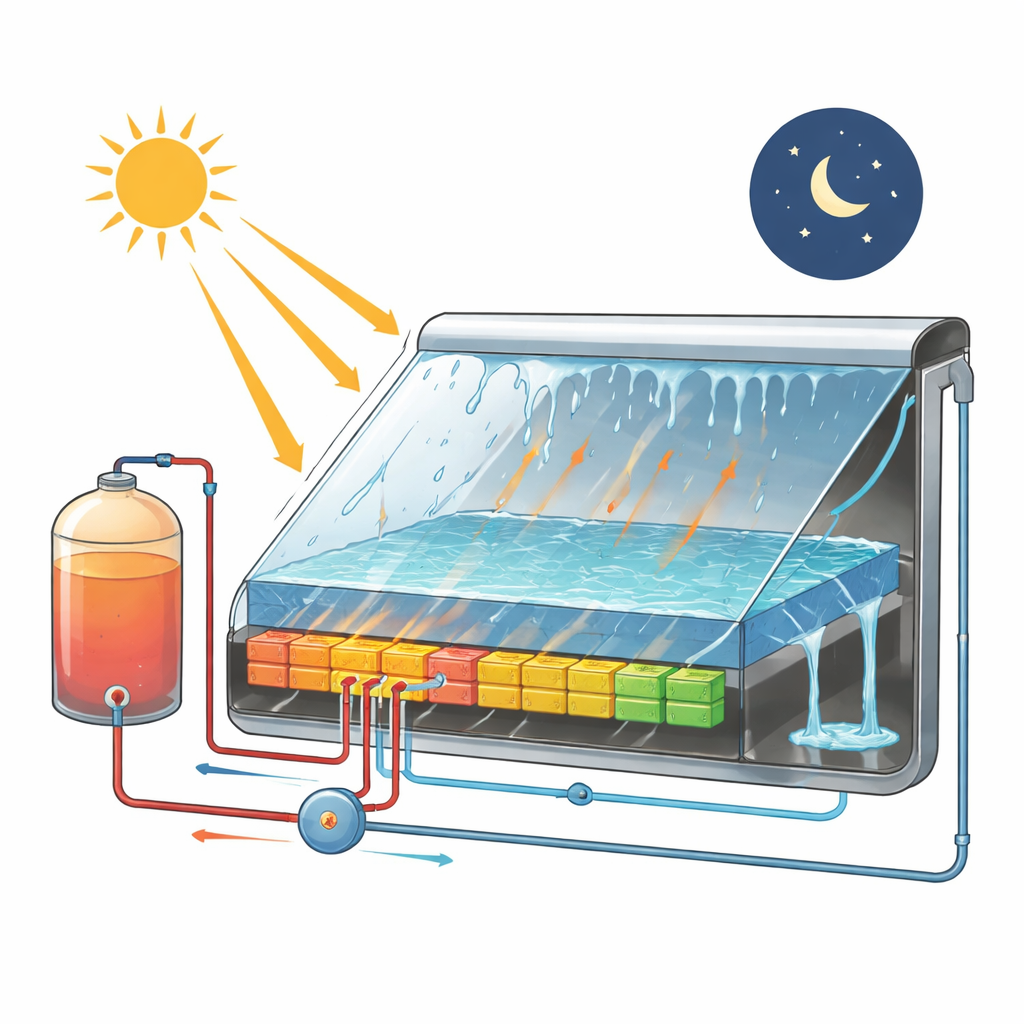
To stretch the working day of a solar still, the team turned to phase change materials, or PCMs. These substances soak up large amounts of heat as they melt and release it slowly as they solidify, much like an ice pack in reverse. The researchers chose a commercially available salt‑based PCM that melts at about 48 °C, a temperature commonly reached inside solar stills in hot Egyptian summers. They installed metal‑clad PCM packs beneath the basin of one still so that, while the sun shone, the material would quietly charge with heat and later give it back to the water after sunset, keeping evaporation going longer into the evening.
Testing Three Paths to More Fresh Water
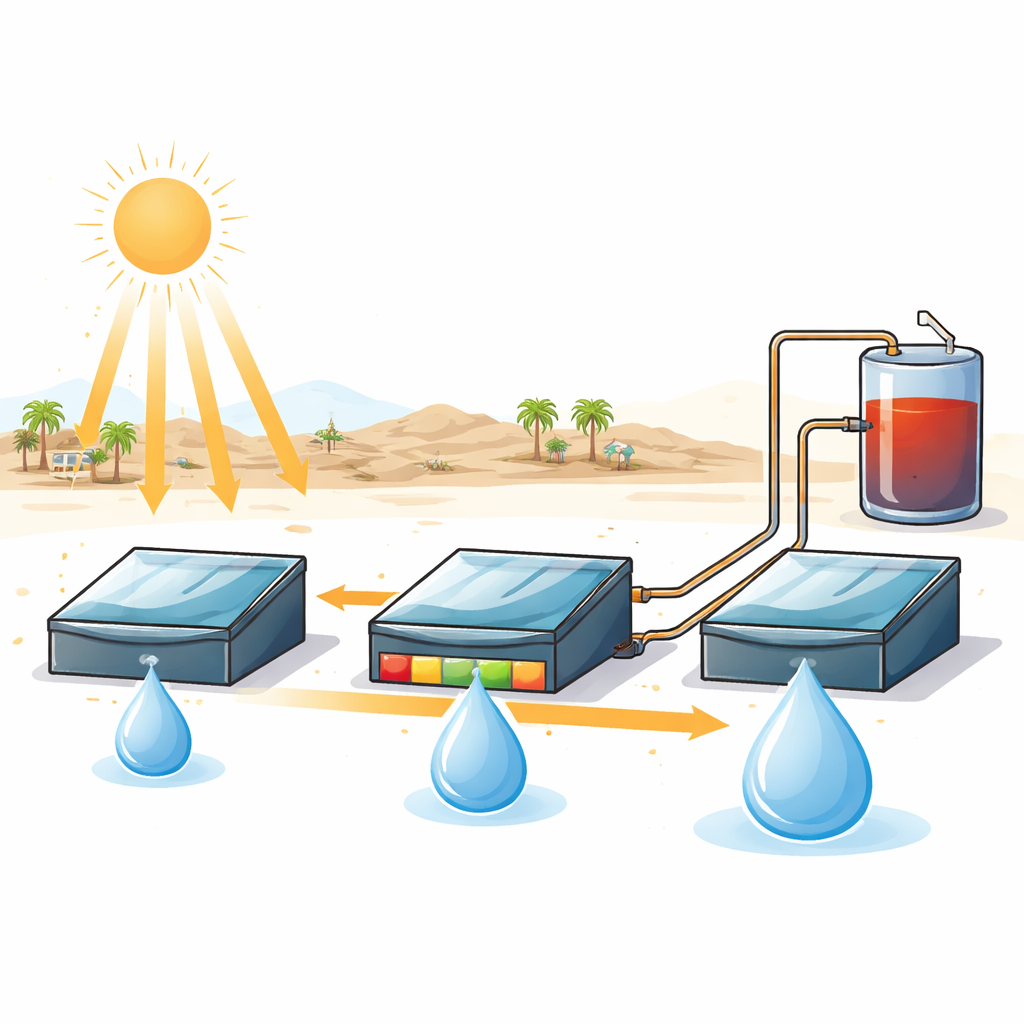
Outdoors in 10th of Ramadan City, Egypt, the team ran three nearly identical stills side by side: a basic design, a version with PCM under the basin, and a hybrid design that combined PCM with a hot‑domestic‑water loop and heat exchangers. They systematically varied how much PCM was added and carefully logged solar radiation, temperatures, and the volume of distilled water. For the PCM‑only still, they found a sweet spot at 2.5 kilograms of PCM. At that loading, the basin stayed 6–10 °C warmer than the conventional unit for much of the day, especially late afternoon and early night, and the still produced about 2.48 liters of fresh water per square meter per day—roughly 74 percent more than the basic still.
From Efficiency Gains to Cost and Climate Benefits
The warmer basin and longer evaporation period translated into better use of the incoming solar energy. The optimized PCM‑assisted still reached an energy efficiency of nearly 25 percent and an exergy (or “useful work”) efficiency of about 7 percent, both noticeably higher than many earlier designs. Because the extra heat came from stored sunlight rather than from added fuel or electricity, the cost of each liter of water actually fell despite the additional material. Under the study’s assumptions, the price per liter dropped from about 6.8 cents for the basic still to 3.1 cents for the PCM‑enhanced version. Over a ten‑year life, the improved design could also avoid more than 40 tons of carbon dioxide emissions compared with a fossil‑powered alternative of similar output.
Pushing Further with a Hybrid Hot‑Water Loop
The hybrid system went one step further by circulating hot domestic water through heat exchangers inside the still, on top of the PCM layer. This extra source of warmth kept the basin even hotter late in the day and allowed a slightly larger PCM mass (around 3 kilograms) to be used effectively. In the best case, freshwater production jumped by more than 50 percent compared with PCM alone and more than doubled relative to the conventional still. However, this added complexity and upfront cost, and the economics depend strongly on how that hot water is generated in real‑world settings.
What This Means for Thirsty Sunny Regions
For communities in hot, sunny climates with limited infrastructure, the study shows that carefully chosen heat‑storage materials can turn a modest solar still into a far more capable freshwater source. A relatively simple PCM‑enhanced design, using a medium‑temperature material that is already commercially available, can deliver much more water each day at a lower cost and with meaningful reductions in greenhouse‑gas emissions. While the experiments covered only a short summer period and longer‑term tests in different seasons and locations are still needed, the results point toward practical, scalable solar‑driven desalination options that could help ease water stress in Egypt and similar regions.
Citation: Elsayed, M., Mansour, M.S., Yahya, H. et al. Thermal buffering with medium-temperature PCM for enhanced solar still performance in hot Egyptian conditions. Sci Rep 16, 12733 (2026). https://doi.org/10.1038/s41598-026-47006-7
Keywords: solar desalination, solar still, phase change material, thermal energy storage, clean water