Clear Sky Science · en
Nanocomposite of iron-junk derived goethite and α-MnO2 nanorod for efficient sequestration of total arsenic from aqueous medium
Turning Rust into a Clean Water Tool
Millions of people worldwide drink water laced with arsenic, a toxic element linked to cancers and other serious illnesses. This study explores a clever way to tackle that problem by transforming scrap iron waste into a tiny, high-tech sponge that can pull different forms of arsenic out of water in a single, simple step. The work blends pollution cleanup with waste recycling, showing how yesterday’s rusted metal can help safeguard tomorrow’s drinking water.
Why Arsenic in Water Is Hard to Remove
Arsenic naturally occurs in many underground rocks and can seep into wells and aquifers. In water it mainly appears in two forms: one that carries an electrical charge and another that does not. The charged form is easier to catch with common filter materials, while the neutral form moves more freely and is more harmful to health. Current treatment methods often require a separate chemical step to convert the dangerous neutral form into the easier-to-capture charged form, adding cost, complexity, and sometimes new pollutants. Researchers have been searching for a material that can handle both forms together, quickly and safely.
Building a Tiny Sponge from Scrap Metal
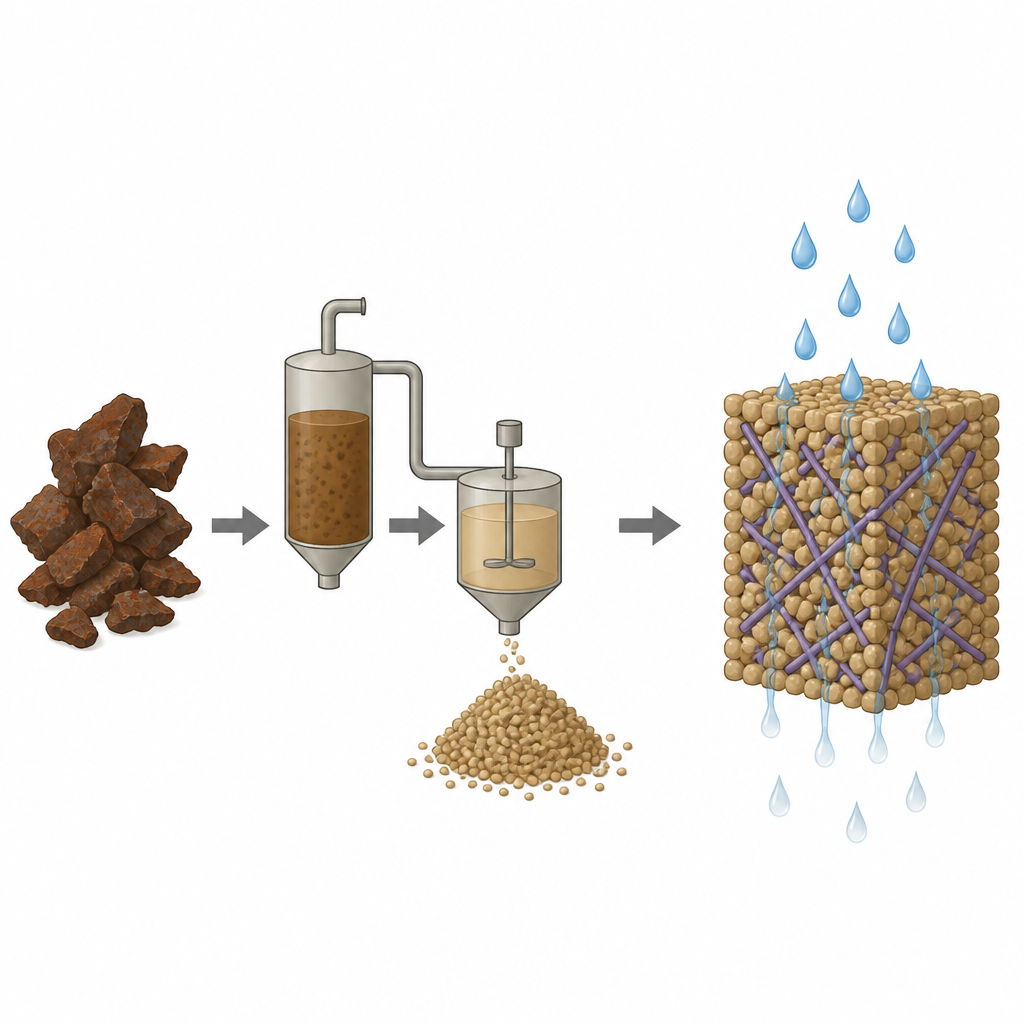
The team designed a new material by marrying two well-known ingredients. First, they collected iron junk from a campus scrap pile and treated it with acid and base to form goethite, a rust-like mineral with a large surface area and many reactive sites that attract the charged form of arsenic. Second, they synthesized slender rods made of a particular type of manganese oxide that is very good at changing the neutral arsenic form into the charged one. By grinding these two materials together, they created a nanocomposite: a dark brown powder made of mixed nanoparticles and nanorods, rich in pores and reactive spots where arsenic can stick.
Peering Inside the New Material
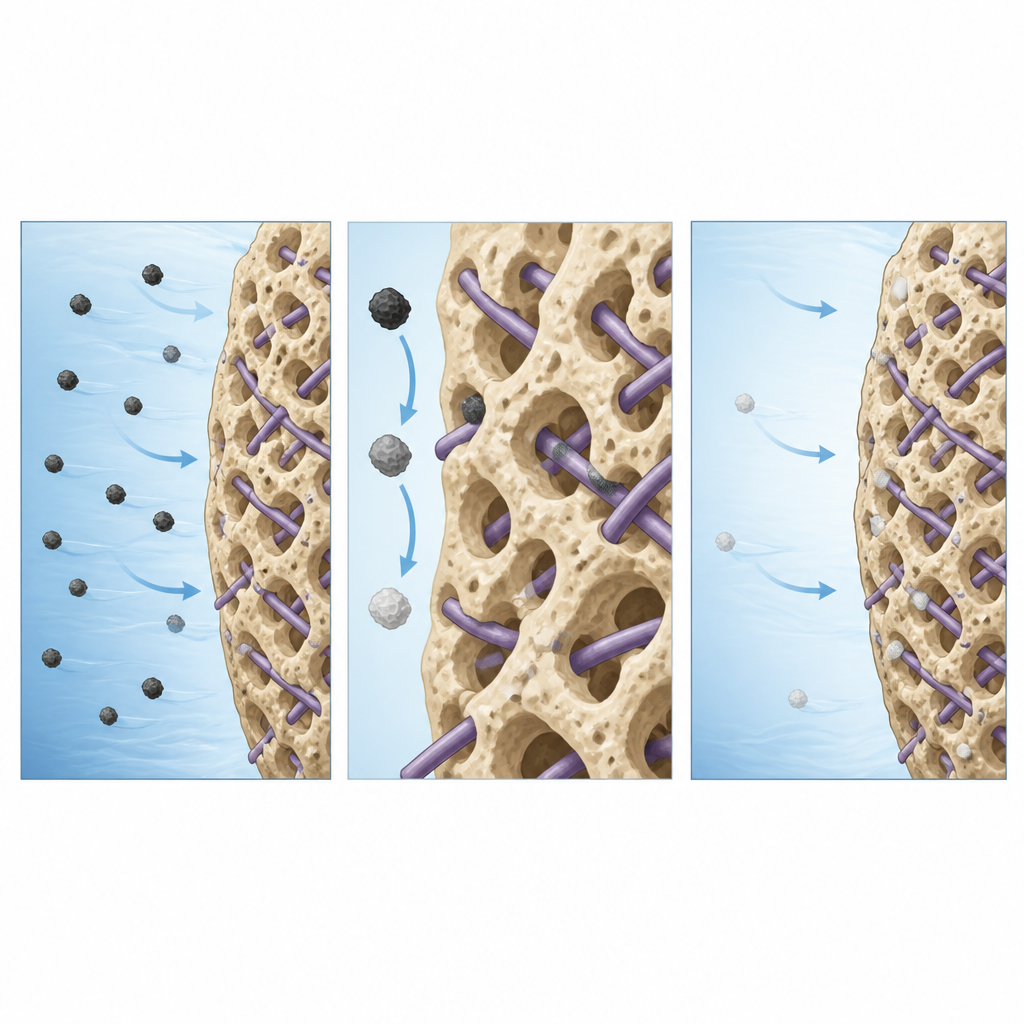
To confirm what they had made, the scientists used a suite of imaging and analytical tools that reveal the structure and composition of materials at the nanoscale. Electron microscopes showed that the scrap-derived goethite forms tiny, irregular grains, while the manganese oxide appears as interwoven rods. In the combined material, these features are intimately mixed, creating a porous network. Surface measurements revealed that the composite has a much larger internal area and pore volume than the original junk metal, giving arsenic ions many places to land. Spectroscopy tests before and after arsenic exposure showed that arsenic atoms appeared firmly attached to the surface and that the neutral form had been converted to the safer charged form during contact with the composite.
How Well It Cleans Arsenic from Water
In water-batch tests, a small amount of the powder removed over 80 percent of arsenic from mildly contaminated water in about 20 minutes, over a pH range similar to that of most natural waters. The material showed especially strong capacity for the charged form but also worked well on the neutral form because it first oxidized it and then trapped it. Mathematical models of the test data indicated that the process is controlled by chemical bonding rather than simple physical sticking, and that arsenic forms a layered coating on the surface over time. The composite still worked in the presence of other common water ingredients such as chloride, sulfate, and carbonate and reduced arsenic in real groundwater samples below the World Health Organization guideline level.
Using and Reusing the Arsenic Sponge
For any practical filter, reusability is crucial. The researchers tested several cycles in which the arsenic-laden powder was rinsed with a basic solution to strip off the contaminant and then reused. Even after five such cycles, the material retained more than four-fifths of its original performance for both forms of arsenic. This suggests that, with further engineering into filter cartridges or packed beds, the composite could provide a long-lasting option for small community systems or household units, especially in regions where both scrap iron and arsenic contamination are common.
What This Means for Safe Water
The study shows that waste iron can be upgraded into a powerful, reusable filter material that simultaneously converts and captures the main forms of arsenic found in groundwater, under typical drinking-water conditions. To a non-specialist, the key message is simple: rust and mineral chemistry can be harnessed to make well water safer, while also turning an industrial leftover into a valuable resource. With further testing outside the lab, this approach could contribute to more affordable and sustainable arsenic treatment in affected communities.
Citation: Panda, A.P., Kumari, P., Gilani, B.I. et al. Nanocomposite of iron-junk derived goethite and α-MnO2 nanorod for efficient sequestration of total arsenic from aqueous medium. Sci Rep 16, 15946 (2026). https://doi.org/10.1038/s41598-026-46992-y
Keywords: arsenic removal, groundwater, iron waste, nanocomposite adsorbent, water treatment