Clear Sky Science · en
Selective harmonic elimination in T-type multilevel inverter with reduced switch count using Sea-Horse Algorithm
Cleaner power from smarter switching
Every time electricity flows from solar panels, wind turbines, or industrial drives into the grid, it passes through electronic devices that reshape it. These devices, called inverters, can unintentionally add "electrical noise" to the grid, wasting energy and stressing equipment. This paper explores a new way to design and control a particular kind of inverter so that it delivers smoother, cleaner power while using fewer electronic parts, potentially making renewable and industrial systems both more efficient and more affordable.
Why modern inverters need an upgrade
Traditional inverters switch voltage up and down very quickly to mimic the smooth sine waves of grid electricity. Multilevel inverters improve on this by stacking several smaller voltage steps, which makes the output look much more like a true sine wave. That means better power quality, lower electrical interference, smaller filters, and less stress on components. However, the usual multilevel designs need many switches, driver circuits, and sometimes extra capacitors or isolated power sources. This added complexity increases cost, size, and the risk of faults, especially in high‑ and medium‑voltage systems such as large solar plants, wind farms, electric transport, and heavy industry.
A simpler hardware design with many levels
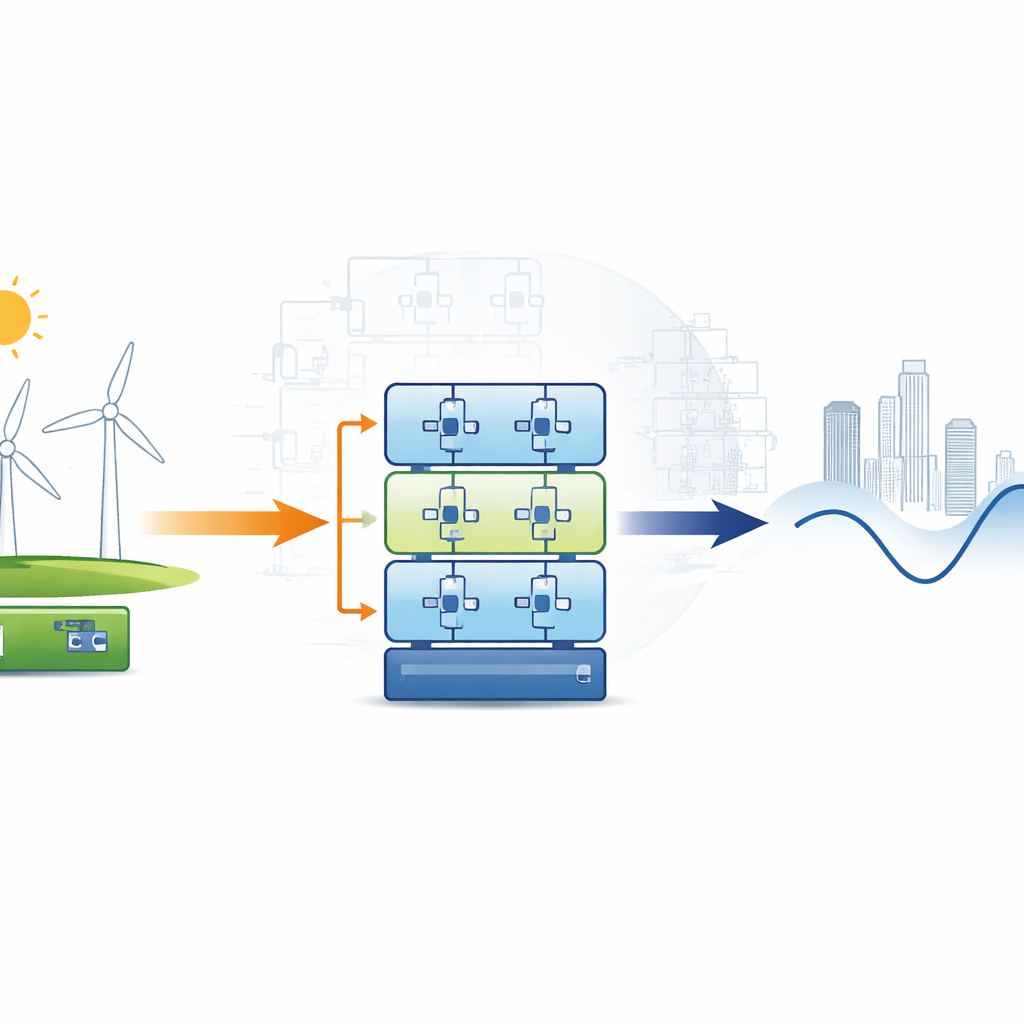
The authors focus on a specific architecture called a T‑type 9‑level inverter. Their version is a "reduced‑switch‑count" design, meaning it produces nine distinct voltage steps while using fewer power switches than conventional multilevel circuits. This cuts down on switching losses, control complexity, and required space, yet still delivers a finely stepped voltage waveform that can approximate a sine wave closely. Because of the way the circuit is arranged, each voltage level is produced by a unique combination of switches, and no extra components are needed to keep internal voltages balanced. This makes the hardware easier to build and operate while still targeting low distortion and high efficiency.
Targeting unwanted tones in the waveform
Even with many voltage steps, inverters generate harmonics—extra tones at higher frequencies than the main grid frequency. These harmonics can heat equipment, interfere with sensitive electronics, and reduce overall efficiency. The paper uses a strategy called selective harmonic elimination, which chooses the exact instants when switches turn on and off so that certain troublesome harmonics cancel out in the final output. Mathematically, this means solving a difficult set of nonlinear equations to find precise switching angles that keep the desired main voltage level while driving down a chosen set of harmonic components. Because these equations are hard to solve directly, engineers often turn to search and optimization methods to find good solutions.
A sea-horse inspired search for better settings
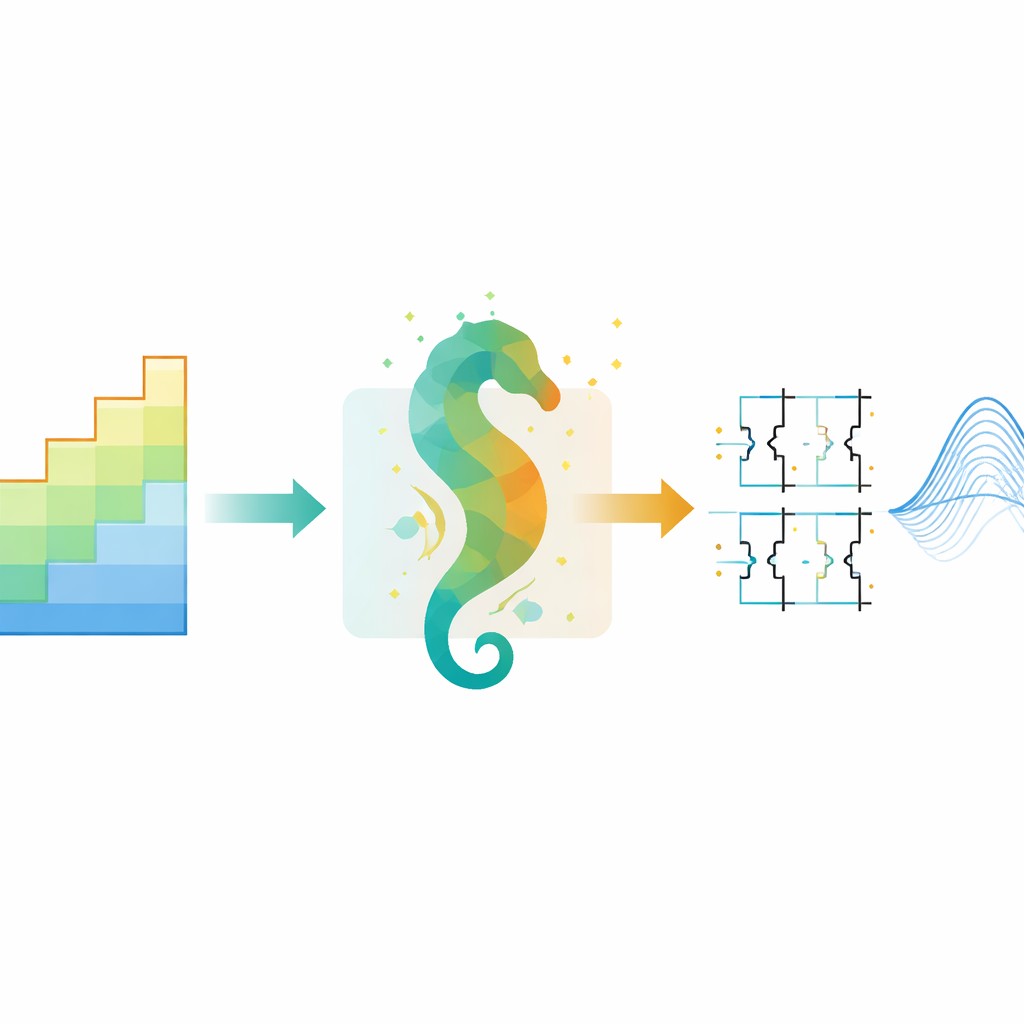
Here the researchers apply a relatively new optimization approach called the Sea‑Horse Optimizer. This algorithm mimics how seahorses move, hunt, and reproduce in the ocean: it mixes local spiraling searches, longer random excursions, and a structured way of combining promising candidates. In practice, each possible set of switching angles is treated like a seahorse in a population. Over many iterations, the algorithm nudges these candidates toward combinations that yield lower harmonic distortion and accurate output voltage. The team compares this method with two well‑known optimization techniques—Genetic Algorithms and Particle Swarm Optimization—across a wide range of operating conditions that reflect how inverters are used in real systems.
What the simulations reveal
The authors build a detailed computer model of a three‑phase 9‑level T‑type inverter and run it under many operating points, from very low to full output. For each operating point, they let the three algorithms search for switching angles that minimize harmonic distortion. The Sea‑Horse Optimizer consistently finds solutions with smoother waveforms, lower total harmonic distortion, and especially low levels of the key harmonics engineers care most about. At full output, its measure of selected troublesome harmonics is roughly one‑sixth to one‑tenth of the values achieved by the other methods, while still holding the main voltage very close to its target. It also reaches good solutions with fewer trial calculations, which means it could be faster and cheaper to use in design tools or embedded controllers.
What this means for future power systems
In plain terms, the study shows that a thoughtfully simplified inverter design, guided by a nature‑inspired search algorithm, can deliver cleaner electricity with fewer parts. The sea‑horse‑based optimizer helps the inverter shape its output so that unwanted electrical noise is greatly reduced, while the reduced‑switch layout keeps the hardware compact and efficient. Although the results are from simulation and still assume ideal switches, they point toward more reliable and cost‑effective power converters for renewable energy, transport, and industrial systems. With further testing, including hardware‑in‑the‑loop and real prototypes, this approach could help future grids handle more clean energy without sacrificing stability or equipment life.
Citation: Hussain, AS.T., Almulaisi, T., Desa, H. et al. Selective harmonic elimination in T-type multilevel inverter with reduced switch count using Sea-Horse Algorithm. Sci Rep 16, 13777 (2026). https://doi.org/10.1038/s41598-026-46979-9
Keywords: multilevel inverter, harmonic reduction, power electronics, metaheuristic optimization, renewable energy integration