Clear Sky Science · en
Nano-liposomal delivery of Gracilaria corticata bioactive peptides for improved stability and controlled gastrointestinal release
Why seaweed and tiny bubbles matter for your health
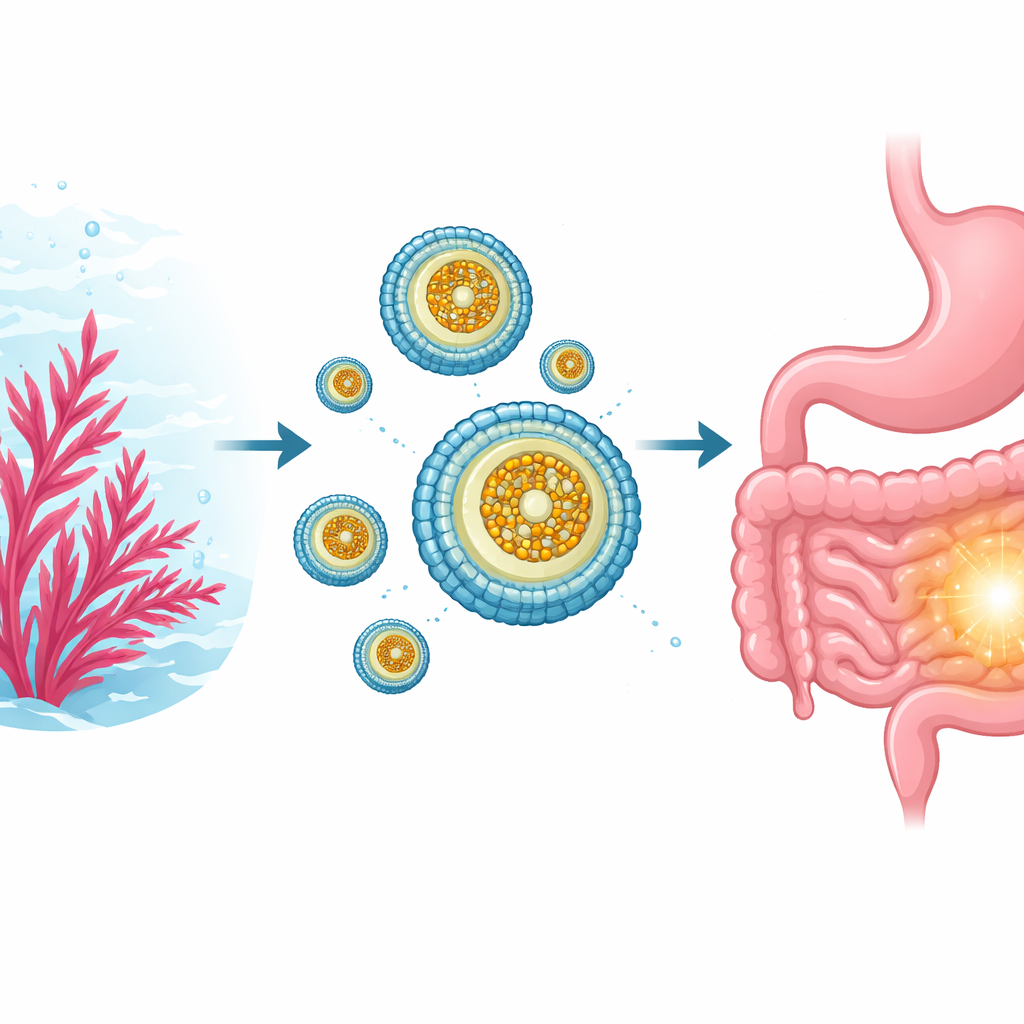
Many people are looking for "functional foods"—everyday foods that quietly support long-term health. Red seaweeds are an underused treasure in this search, rich in natural protein fragments called peptides that can act as antioxidants and may help protect our cells. The problem is that these fragile compounds can easily be destroyed during processing or digestion. This study explores a clever solution: packing seaweed-derived peptides inside microscopic fat bubbles so they can safely travel through the stomach and be released where the body can best use them.
Powerful ingredients hidden in red seaweed
The researchers began with Gracilaria corticata, a red seaweed common in tropical and subtropical coasts and already used in some food and gelling products. Analysis showed that this seaweed is particularly rich in protein, making it a promising source of health-boosting peptides. To unlock these peptides, the team treated the seaweed proteins with different digestive enzymes—alcalase, pancreatin, and trypsin—to chop them into smaller, more active fragments. Among these, alcalase produced the highest level of breakdown and led to peptide mixtures that were easier to encapsulate and showed strong antioxidant activity, meaning they were good at neutralizing harmful free radicals.
Building nano-sized carriers from food-grade fats
To protect the seaweed peptides, the scientists built nanoliposomes—tiny hollow spheres made from natural fats similar to those already used in foods. Using a standard thin-film method, they created vesicles about 70 nanometers across, thousands of times smaller than the width of a hair. When the peptide fractions were loaded into these structures, the bubbles stayed fairly uniform in size and carried a strong surface charge, which helps them repel each other and remain stable in liquid. Encapsulation efficiency was high—over 80% of the peptides ended up either inside or strongly associated with the fat shells—so very little of the valuable material was wasted.
Keeping antioxidant power while improving toughness
One concern with protective packaging is that it could block the very activity we want. Tests with two common antioxidant assays showed that the encapsulated peptides retained almost the same radical-fighting power as the free peptides. Microscopy images revealed mostly spherical, well-formed bubbles, and detailed infrared and thermal analyses confirmed that the peptides were not just stuck on the surface but interacting with the fat layer itself. These interactions made the nanoliposomes more thermally stable, meaning they could better withstand heating and processing without falling apart or degrading their cargo.
Surviving the stomach, releasing in the intestine
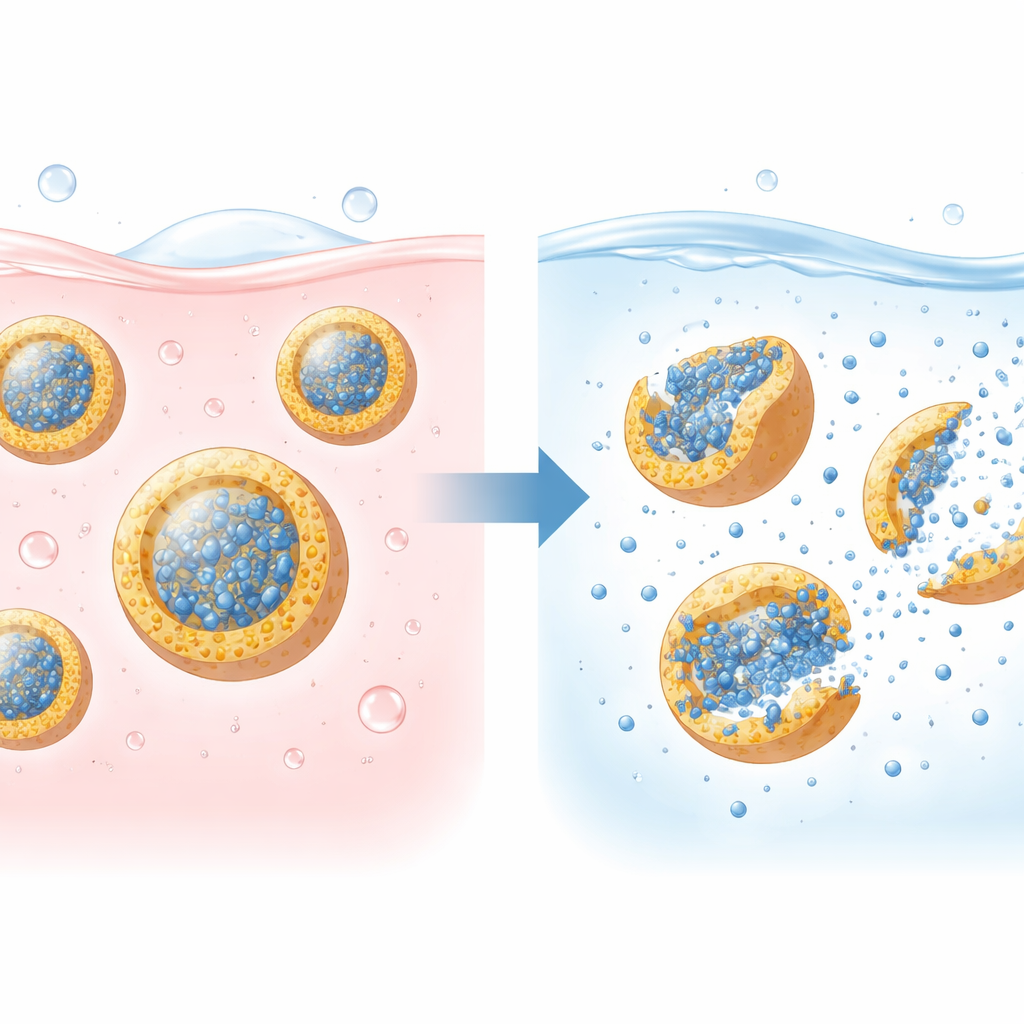
The most practical question was what happens when these nano-bubbles encounter the harsh journey through the gut. In lab simulations that mimicked stomach acid and intestinal conditions, the liposomes released only about 7% of their peptide load after two hours in a highly acidic, enzyme-rich stomach-like fluid. In contrast, once transferred to an intestinal-like fluid with a milder pH and digestive enzymes that break down fats, the nanoliposomes gradually opened up and released more than 95% of their peptides within four hours. This pattern—minimal leakage in the stomach followed by nearly complete delivery in the intestine—is considered ideal for maximizing the body’s chance to absorb the beneficial compounds.
What this means for future foods and supplements
In everyday terms, this work shows that it is possible to turn sensitive, health-promoting molecules from red seaweed into robust, gut-smart ingredients. By tucking the peptides inside nano-sized fat bubbles, the researchers protected them from the stomach’s acid bath while arranging for a controlled, efficient release in the intestine, where absorption mainly happens. If scaled up and tested in people, this strategy could help bring marine-derived antioxidants into drinks, snacks, or supplements without losing their power on the way. It moves us a step closer to food products that do more than fill us up—they could quietly help defend our cells from damage as we go about our daily lives.
Citation: Heydari-Majd, M., Mahmoodi, F., Rezaeinia, H. et al. Nano-liposomal delivery of Gracilaria corticata bioactive peptides for improved stability and controlled gastrointestinal release. Sci Rep 16, 14411 (2026). https://doi.org/10.1038/s41598-026-46972-2
Keywords: seaweed peptides, nanoliposomes, functional foods, antioxidant delivery, controlled release