Clear Sky Science · en
Effect of biopolymer structure on uranium sorption by superabsorbent hydrogels based on CMC/guar gum
Why Cleaning Up Uranium Matters
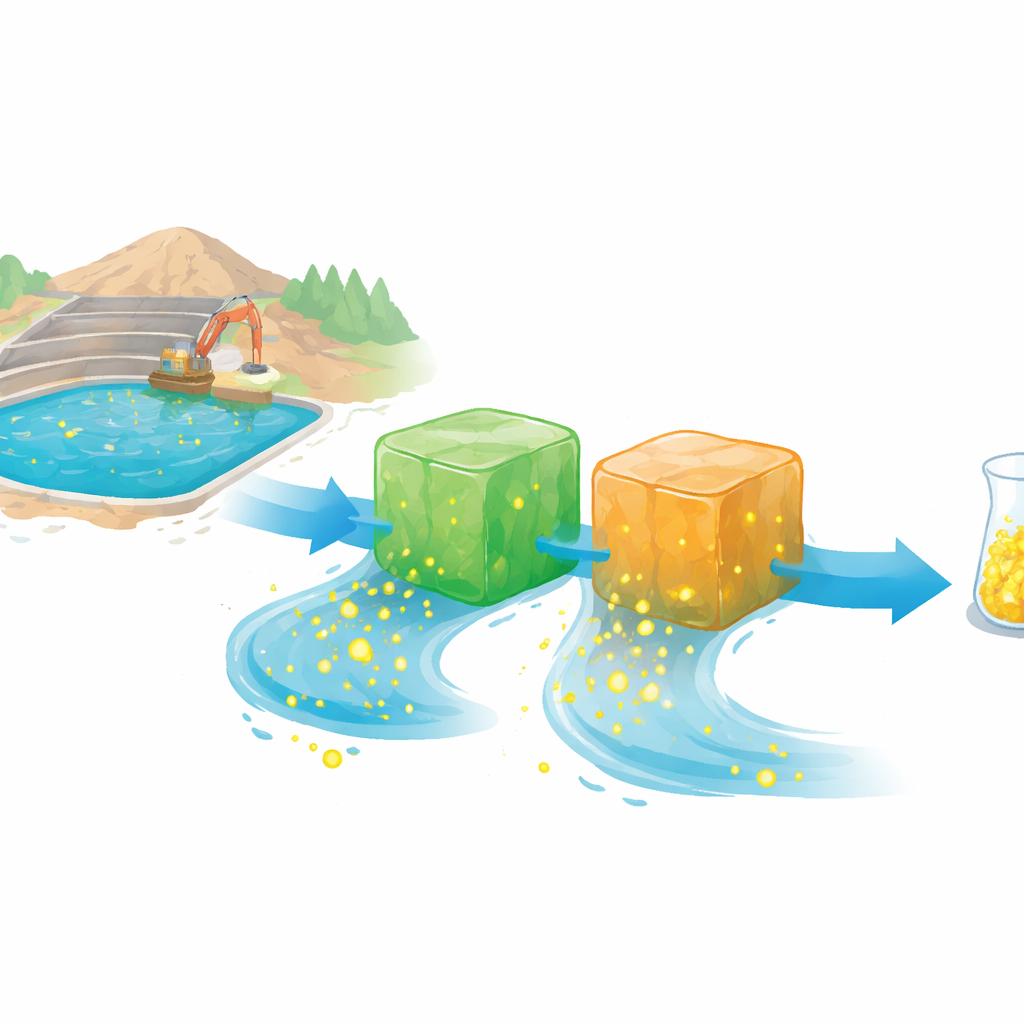
Uranium is best known as fuel for nuclear power plants, which can generate large amounts of electricity without releasing carbon dioxide. But when uranium is mined and processed, some of it can leak into water supplies, posing risks to people and ecosystems. The study behind this article explores a new way to trap and recover dissolved uranium from acidic wastewaters and ore leachates using soft, plant-based "super sponges" called hydrogels. These materials aim to make nuclear energy cleaner by capturing valuable uranium before it becomes long‑term waste.
Plant-Based Super Sponges
The researchers built two kinds of superabsorbent hydrogels from natural polymers derived from plants: carboxymethyl cellulose (a modified form of cellulose from plant fibers) and guar gum (a thickener used in foods and cosmetics). They chemically "grafted" extra building blocks onto these polymers to create three-dimensional networks that can swell dramatically in water while presenting many chemical hooks for dissolved metals. After forming the gels, they dried and ground them into small particles, named F‑CMC and F‑GG, and then carefully characterized their composition, structure, surface charge, pore size, and ability to swell in water across a range of acidity.
How the Gels Grab Uranium
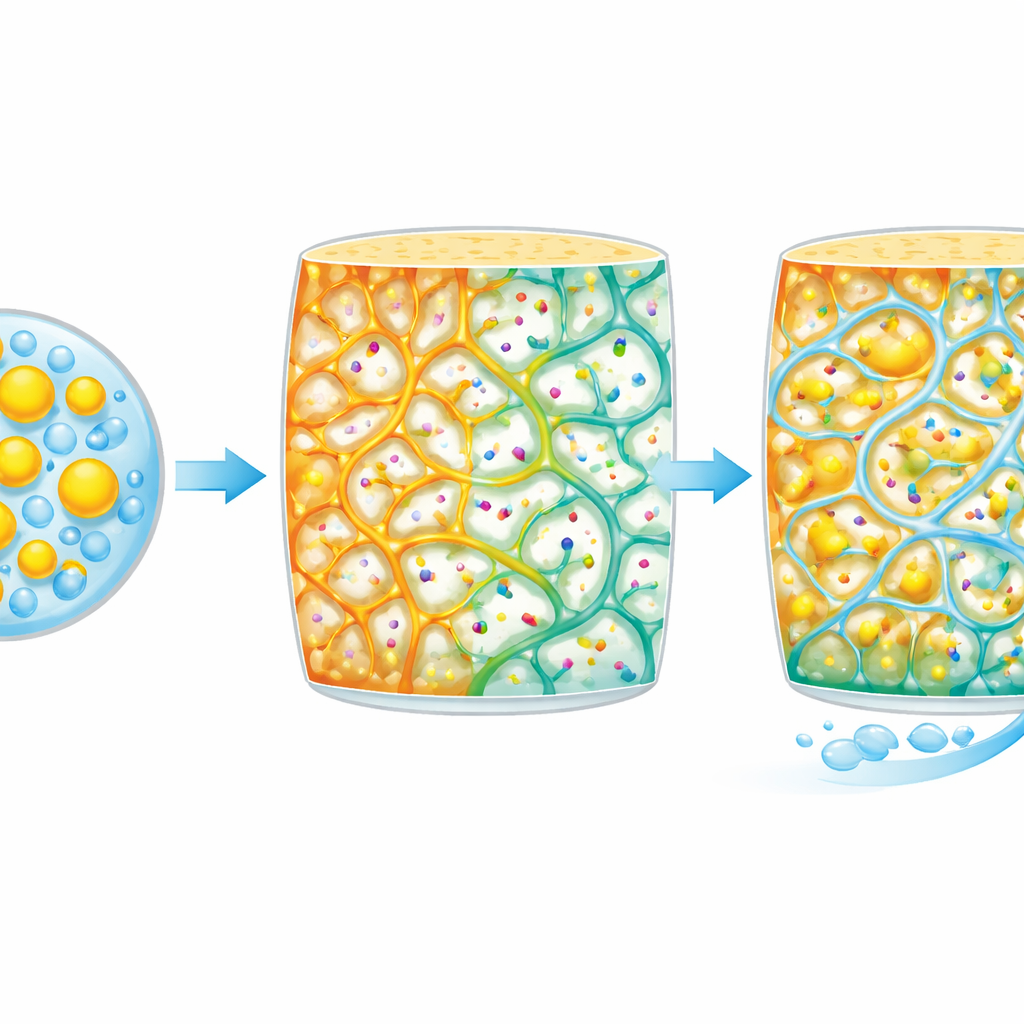
In slightly acidic water, uranium is present mainly as positively charged uranyl species. The hydrogels present oxygen- and nitrogen-rich groups that can bind these ions. Experiments showed that both F‑CMC and F‑GG absorb uranium best around pH 4, where there is a balance between uranium remaining dissolved and the gel’s binding groups being activated. Tests of how fast uranium moves into the gels revealed a two‑stage process: a rapid first stage where uranium sticks to easily accessible sites, followed by slower movement into the interior of the gel particles. Mathematical fits to the data indicate that the process is dominated by surface reactions and chemical bonding, not just simple diffusion.
Which Gel Works Better and Why
When the two sorbents were compared, the cellulose-based gel (F‑CMC) consistently captured more uranium than the guar-based gel (F‑GG). In clean test solutions, F‑CMC held up to about 269 milligrams of uranium per gram of sorbent, while F‑GG reached around 169 milligrams per gram. Microscopy and surface measurements help explain this difference. F‑CMC has an internal structure with smaller, more selectively sized pores and a higher density of carboxyl groups, which act as strong binding sites for the hard, oxygen-loving uranyl ion. After use, its surface becomes rough and coated with granular deposits of uranium. F‑GG, by contrast, has a more open, sponge-like architecture with larger pores; after sorption, these pores become partially filled and blocked. This favors rapid uptake and good performance in complex mixtures, but with slightly lower overall loading.
Real Mine Water, Reuse, and Practicality
To test real-world performance, the team used acidic leachate from Egypt’s El‑Sella uranium ore, a challenging liquid loaded with many competing metals. Even in this harsh environment, both hydrogels preferentially captured uranium. F‑CMC achieved the higher capacity, but F‑GG showed better selectivity and smaller performance loss compared with its behavior in simple laboratory solutions. The gels can also be regenerated: washing with mild bicarbonate or dilute acid removed most of the absorbed uranium, allowing each sorbent to be reused for at least five cycles while retaining roughly 80% of its original efficiency. Thermodynamic analysis confirmed that uranium binding is spontaneous, releases heat, and is partly driven by an increase in disorder as water molecules rearrange during sorption.
What This Means for Cleaner Nuclear Energy
Put simply, this work shows that tailored plant-based hydrogels can act as reusable filters that pull uranium out of acidic waste and mine effluents, concentrating it for potential recycling. The cellulose-based gel excels at strong, high-capacity capture, while the guar-based gel offers robust selectivity in chemically complex waters. Together, they demonstrate that inexpensive, renewable biopolymers can be engineered into powerful tools for cleaning up nuclear-related pollution and recovering valuable resources, helping nuclear power move closer to a truly sustainable, closed fuel cycle.
Citation: Elsaeed, S.M., Zaki, E.G., El-Tantawy, I.E. et al. Effect of biopolymer structure on uranium sorption by superabsorbent hydrogels based on CMC/guar gum. Sci Rep 16, 12893 (2026). https://doi.org/10.1038/s41598-026-46963-3
Keywords: uranium recovery, hydrogels, water purification, biopolymers, nuclear waste