Clear Sky Science · en
Efficacy of laparoscopic simulator training in standardized obstetrics and gynecology residents: a prospective study demonstrating skill convergence
Why practice surgery in a box matters
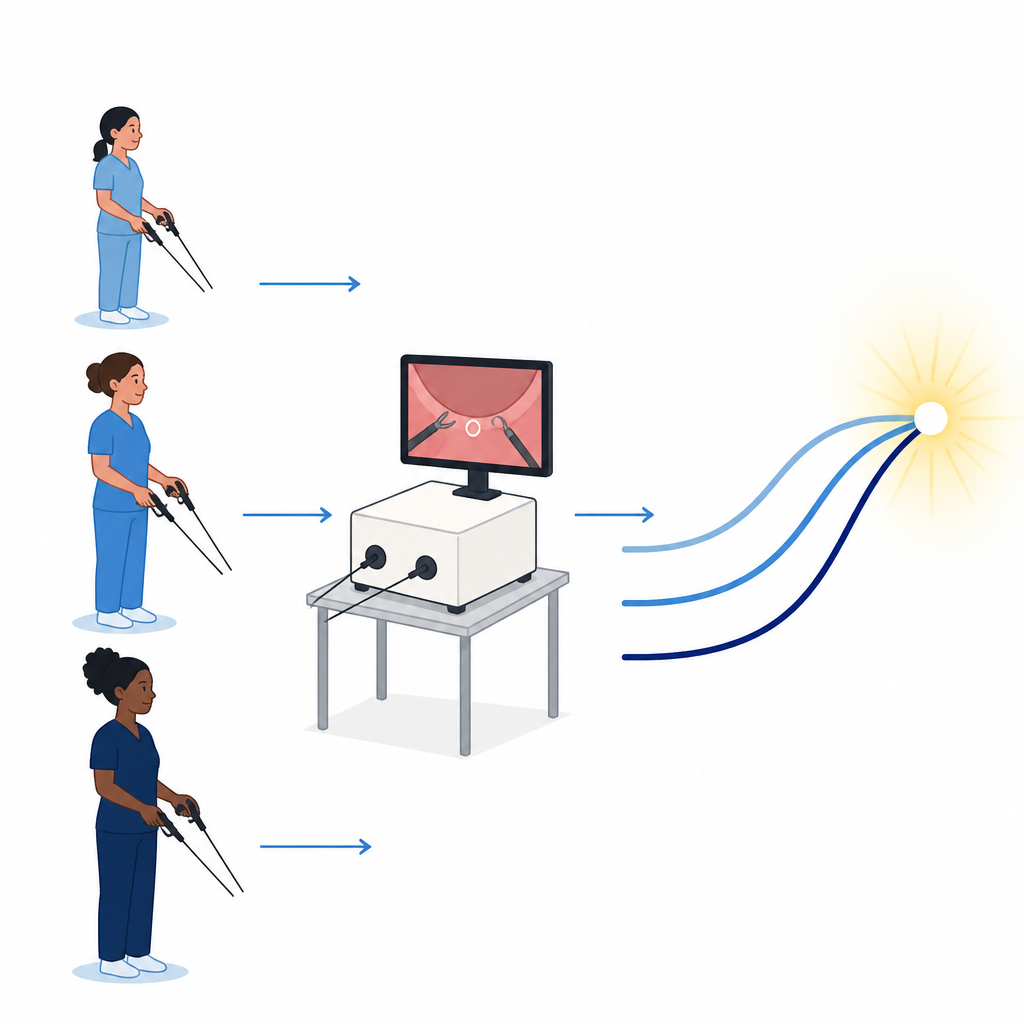
For people who may one day need gynecologic surgery, how doctors learn to operate safely is more than an academic question. Modern keyhole surgery uses tiny cameras and tools inserted through small cuts, which is easier on patients but harder to learn. This study from China asks a simple, practical question: can a low cost, four week training course using a tabletop laparoscopic simulator help junior doctors catch up to their more experienced colleagues, without putting patients at extra risk?
From busy hospitals to a controlled practice room
China’s residency system trains thousands of young doctors with the goal that they all reach a similar level of skill by graduation. In obstetrics and gynecology, most operations are now performed through small incisions using a camera. Yet in real operating rooms, chances to practice can be uneven, and early attempts carry risks for patients. The researchers designed a structured program where 30 residents at three experience levels practiced on a box like device that mimics keyhole surgery. Over four weeks, each group spent 90 minutes per week on the simulator, then completed timed tasks that tested their basic abilities.
Four core skills under the camera
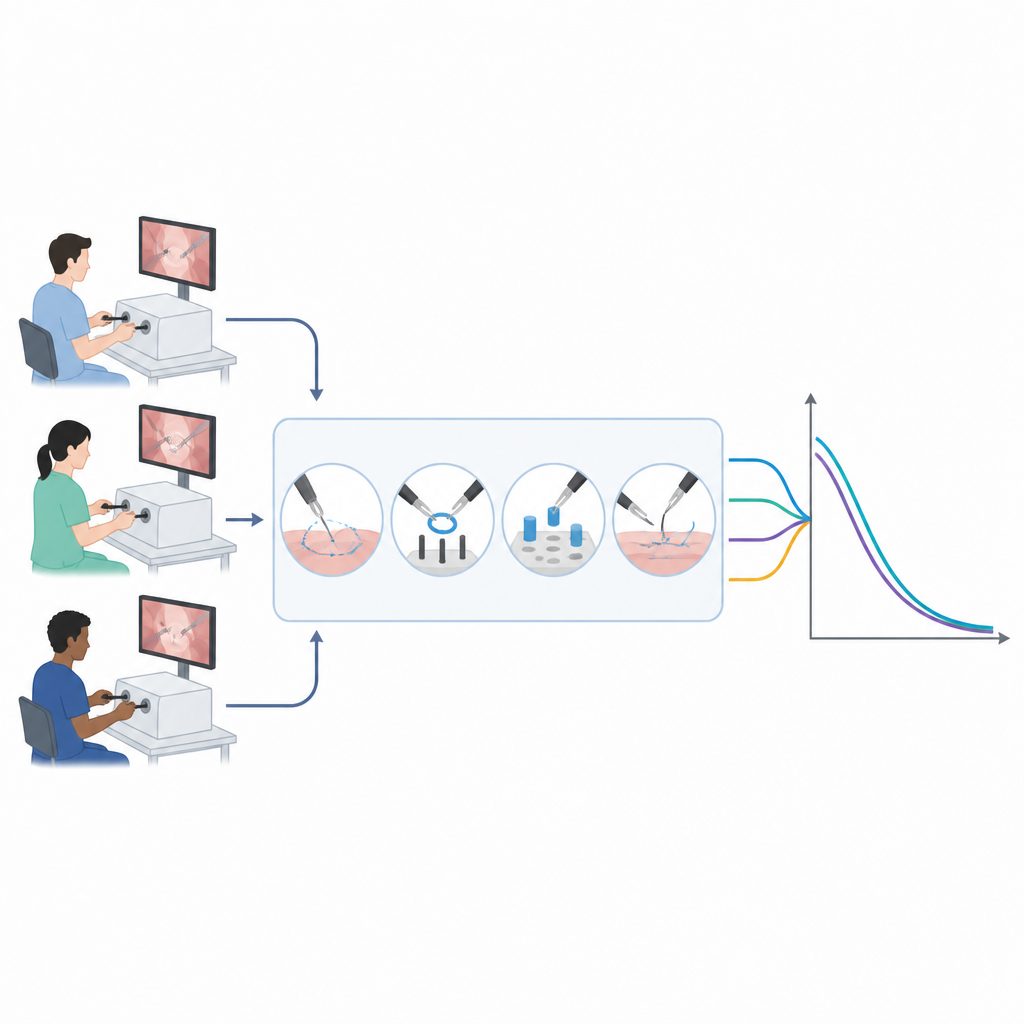
The training focused on four building block skills needed for safe laparoscopic surgery. First was guiding the camera and staying oriented in a flat video image. Second was coordinating eyes and hands while moving small rings with long instruments. Third was using both hands together to transfer tiny pegs in mid air, a stand in for delicate work inside the body. Finally, residents practiced stitching and tying knots on a soft pad, one of the trickiest parts of keyhole surgery. In each case, performance was measured mainly by how quickly the task was completed, once a basic standard of accuracy was met.
How junior and senior trainees compared
At the start, the least experienced residents took much longer to complete all tasks than senior residents who already had substantial time in the operating room. Over the four week course, however, first and second year residents became markedly faster in every skill. Their times dropped most sharply for complex tasks like bimanual coordination and suturing, where practice clearly paid off. In contrast, third year residents began the program already performing quickly and showed little change, suggesting they were near a performance plateau even before simulator training.
Converging toward a shared skill level
When the researchers compared all groups together, they found that by the end of the program the differences between junior and senior residents largely disappeared for these basic tasks. Statistical tests showed significant improvement over time overall, and a strong link between how much residents improved and how experienced they were at the start. The pattern suggests that the simulator was most helpful for novices, helping them close much of the gap with their seniors in a short, focused period, without requiring extra time in the operating room.
What this means for patients and training
For lay readers, the takeaway is straightforward: practicing difficult hand and eye skills in a safe, controlled setting appears to help young surgeons get faster and more confident before they operate on real people. A simple box trainer, far cheaper than high tech virtual reality systems, was enough to boost basic skills and narrow differences between trainees at different stages. The authors caution that equal times on a simulator do not guarantee identical real world performance, and the study involved a small number of residents at a single hospital. Still, their findings support weaving structured simulator practice into residency programs as a practical way to promote safer, more consistent surgical training for the benefit of future patients.
Citation: Li, C., Song, F., Xu, Y. et al. Efficacy of laparoscopic simulator training in standardized obstetrics and gynecology residents: a prospective study demonstrating skill convergence. Sci Rep 16, 15671 (2026). https://doi.org/10.1038/s41598-026-46957-1
Keywords: laparoscopic simulation, surgical training, gynecology residents, skill convergence, box trainer