Clear Sky Science · en
Long non-coding RNA PCAT18 defines a leukemia-specific regulatory network in pediatric T-ALL
Why this hidden RNA matters for children with leukemia
T-cell acute lymphoblastic leukemia is a fast-moving blood cancer that affects children and teenagers. Treating it has become much more successful over the last decades, yet some patients still face aggressive disease, harsh side effects, and relapse. This study explores an unexpected player in this cancer: a long stretch of RNA called PCAT18 that does not make a protein but still seems to influence how leukemia cells grow, cope with stress, and keep their T-cell identity. Understanding how this silent molecule behaves could improve how we diagnose and eventually treat young patients.
A closer look at a tough childhood blood cancer
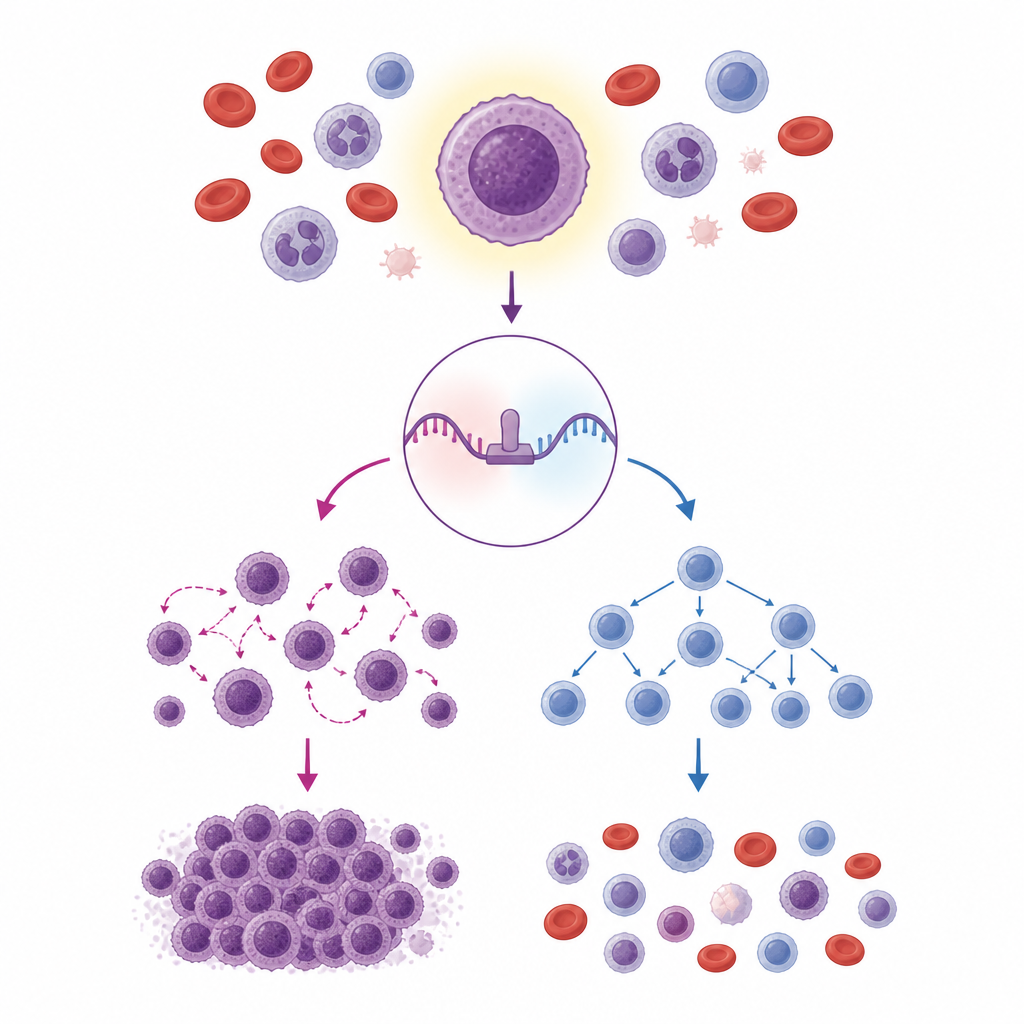
In T-cell acute lymphoblastic leukemia, white blood cells that should develop into infection-fighting T cells get stuck in an immature state and multiply out of control. These cancer cells crowd healthy cells out of the bone marrow, spill into the blood, and can spread to the brain or other organs. Although T-cell leukemia is less common than the B-cell form, it is often harder to treat and more likely to present with very high white blood cell counts and disease outside the bone marrow. These challenges drive the search for new molecular markers that reveal what makes these cancer cells tick and that might guide more tailored therapies.
The rise of non-coding RNA in cancer research
For many years, cancer genetics focused mainly on genes that make proteins. More recently, scientists have learned that long non-coding RNAs, RNA molecules longer than 200 building blocks that do not code for proteins, can still shape how cells behave. They can fine-tune when genes turn on or off, influence how DNA is packed, and affect how other RNAs are processed. Many of these long RNAs are active only in certain tissues or diseases, making them attractive as both biological clues and potential biomarkers. The authors previously showed that a specific pattern of these RNAs can distinguish T-cell from B-cell leukemia in children, and one of the standout molecules in that work was PCAT18.
Mapping PCAT18 within the leukemia gene network
To understand where PCAT18 fits, the team examined bone marrow cells from 13 children with T-cell leukemia and compared them with healthy cord blood cells using RNA sequencing. They found thousands of genes whose activity levels differed between leukemia and normal cells. Using a network analysis that groups genes that rise and fall together, they uncovered a large cluster strongly linked to the leukemia samples. PCAT18 sat near the center of this cluster, connected to many other genes, suggesting it plays a coordinating role. Importantly, PCAT18 was found in the cancerous blast cells but not in healthy T cells, pointing to a leukemia-specific expression pattern that could be useful for diagnosis or disease monitoring.
What happens when PCAT18 is switched off
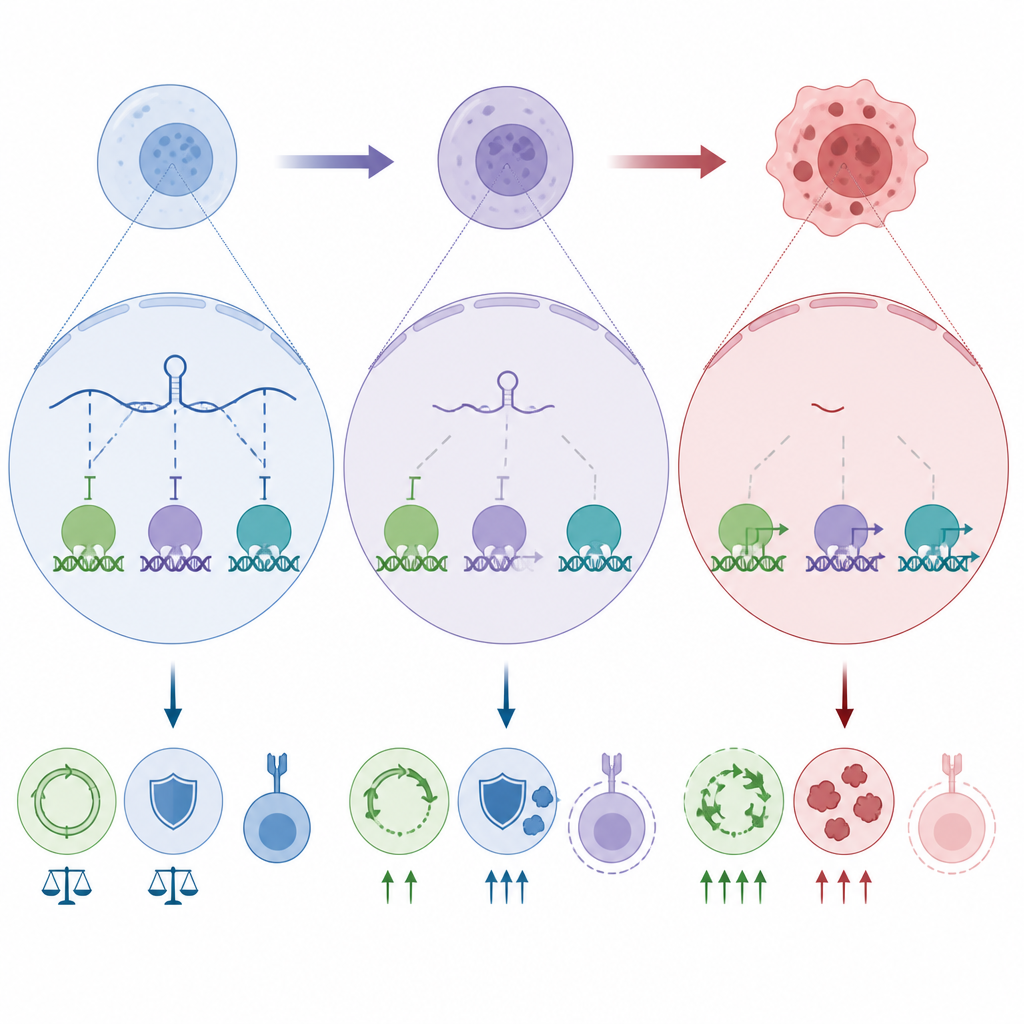
The researchers then asked what PCAT18 actually does inside leukemia cells. They reduced PCAT18 levels in two T-cell leukemia cell lines grown in the lab and watched how the cells responded. Surprisingly, when PCAT18 was silenced, the cancer cells did not slow down; they proliferated even faster and showed an imbalance in how they moved through the cell cycle that governs division. Cells piled up in the first phase of the cycle, and a key braking protein called p27 dropped, while another protein that usually helps push cells into division, Cyclin B, went up. This pattern suggests that without PCAT18, important checkpoints that ensure orderly division become uncoordinated. At the same time, stress-response proteins such as heat shock chaperones increased, while factors that help maintain T-cell identity, like FOXP3 and NOTCH3, decreased, hinting that the cells were under pressure and drifting away from normal T-cell programs.
A surprising role reversal for a cancer-linked RNA
The most striking message from this study is that PCAT18 behaves differently in childhood T-cell leukemia than in several solid tumors, where it has been linked to cancer growth. In these leukemia cells, PCAT18 appears to act more like a safety valve: it is highly active in leukemia blasts, yet taking it away makes the cells divide more freely, disrupts the timing of the cell cycle, and triggers stress pathways while weakening T-cell identity signals. This supports the idea that PCAT18 may function as a context-dependent tumor suppressor-like regulator in pediatric T-cell leukemia. While more work in animal models and larger patient groups is needed, PCAT18 and its surrounding network of genes now stand out as promising guides for future diagnostics and for strategies that target non-coding RNA to better understand and eventually control this childhood cancer.
Citation: Altieri, F., Pecoraro, G., Costabile, V. et al. Long non-coding RNA PCAT18 defines a leukemia-specific regulatory network in pediatric T-ALL. Sci Rep 16, 15894 (2026). https://doi.org/10.1038/s41598-026-46929-5
Keywords: pediatric T-ALL, long non-coding RNA, PCAT18, cell cycle control, leukemia biomarkers