Clear Sky Science · en
SPG601-associated modulation of resting-state EEG and improvement in executive function in a fragile X syndrome randomized controlled crossover study
Why this new study matters for families
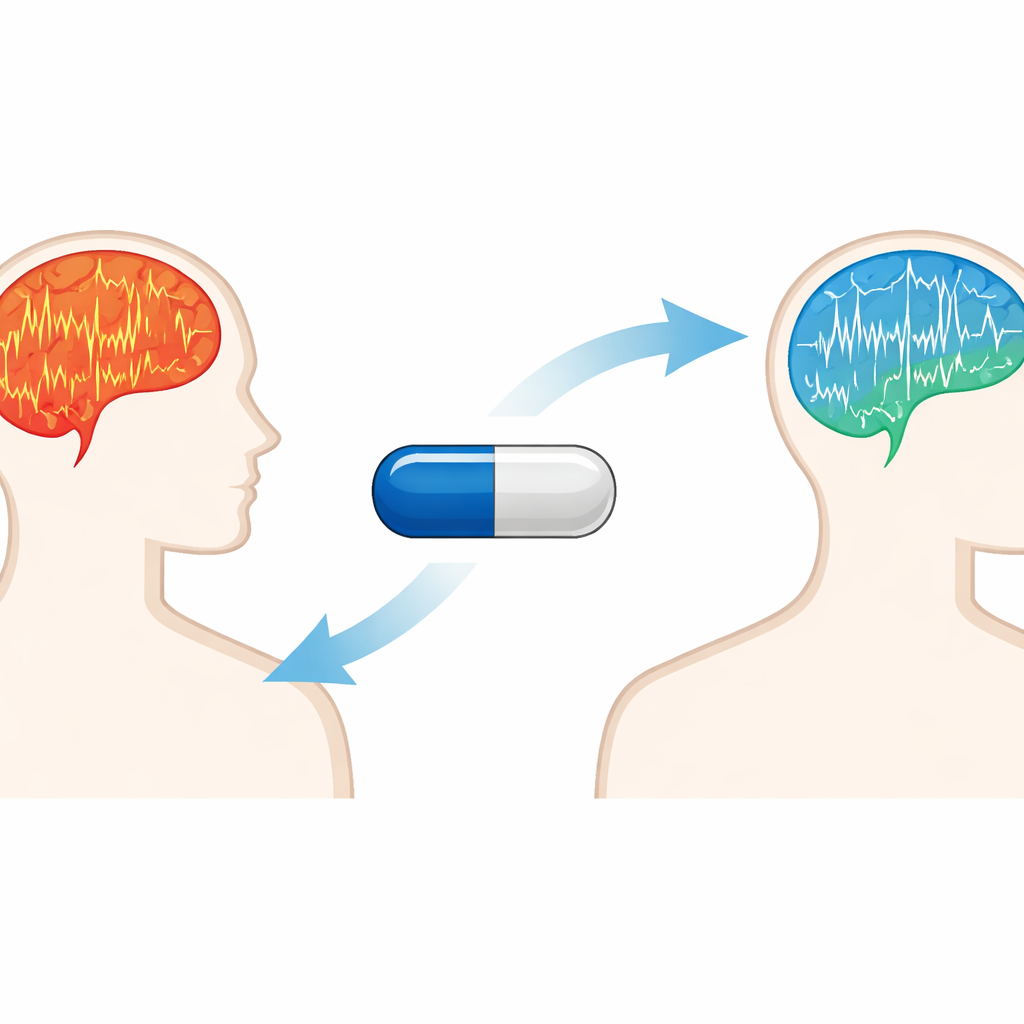
Fragile X syndrome is the most common inherited cause of intellectual disability and a frequent cause of autism, yet there are still no medicines that reliably improve its core thinking and sensory problems. This study tests a first-in-class drug, called SPG601, designed to subtly rebalance electrical activity in the brain rather than simply easing surface symptoms. Using sensitive brainwave recordings and carefully chosen thinking tests, the researchers asked a straightforward question: can one dose of this drug nudge the fragile X brain toward a more normal rhythm—and does that show up as clearer thinking?
A brain condition with few options
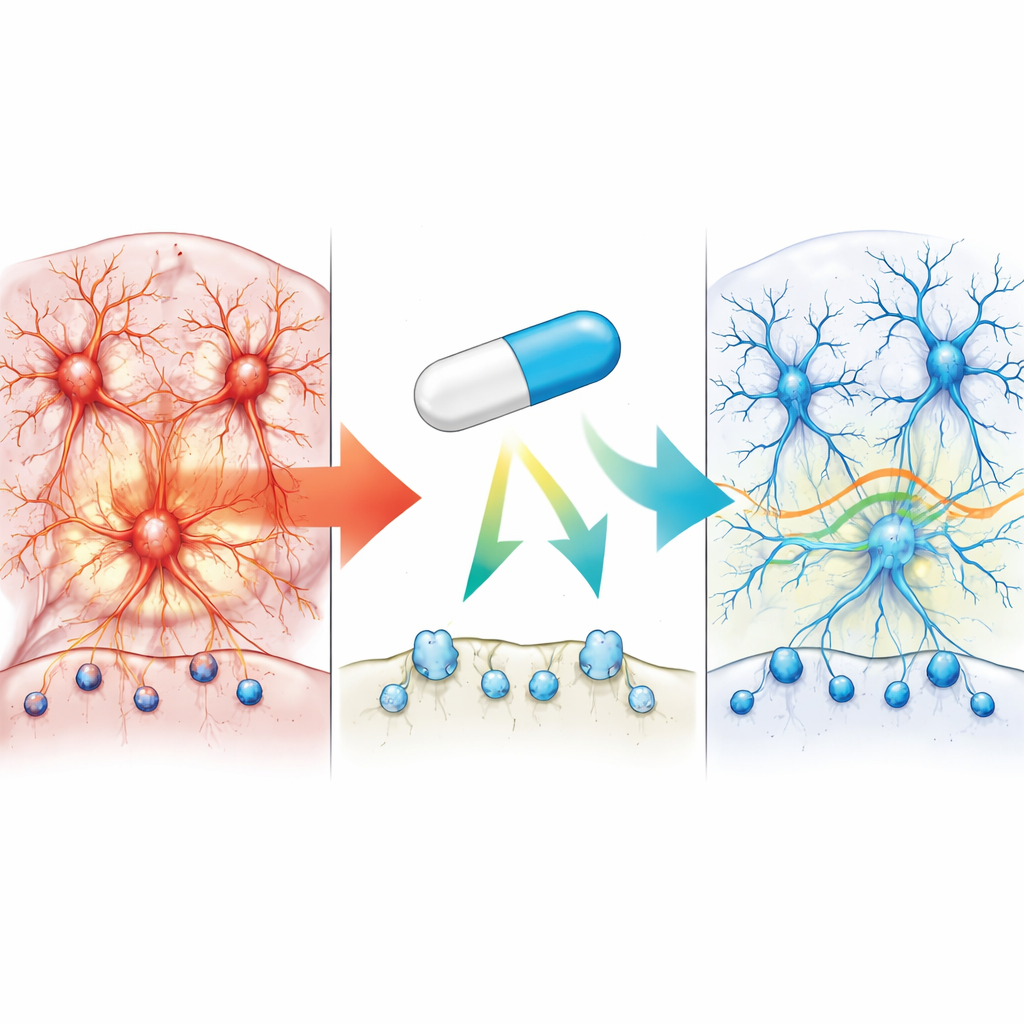
People with fragile X syndrome often struggle with attention, sensory overload, anxiety, and learning. At the cellular level, the disorder stems from the loss of a protein that normally helps regulate how nerve cells communicate. One of its jobs is to tune tiny “brakes” on brain cells called BK channels, which help shut down electrical spikes at the right time. When these channels are underactive, brain circuits can become too excitable. Earlier work in mice suggested that turning these channels back on can calm overactive circuits and improve behavior, hinting that they might be a promising target for human treatment.
A targeted drug and a careful trial
SPG601 is a pill that boosts the activity of BK channels, including a form closely tied to fragile X biology. In this early human trial, ten adult men with genetically confirmed fragile X each received a single 800 mg dose of SPG601 on one visit and a placebo on another visit, separated by a one-week washout. Neither participants, caregivers, nor researchers knew which treatment was which at the time. The main goals were to confirm safety and to see whether the drug could quickly shift objective brainwave markers and performance on computerized thinking tasks that are well validated for people with intellectual disability.
Reading the brain’s rhythms
The team recorded resting-state electroencephalography (EEG) two hours after dosing, when drug levels peak. Prior work has shown that males with fragile X have unusually strong fast “gamma” activity, weaker “alpha” rhythms, and other changes that reflect an imbalance between excitation and inhibition in brain networks. After SPG601, these signatures moved toward a healthier pattern: excessive fast gamma activity dropped, while alpha and slower theta rhythms increased in a direction considered more typical. The overall background shape of the EEG signal—its so‑called 1/f slope, thought to mirror the balance between excitation and inhibition—also shifted toward a less hyperexcitable state. Notably, these effects appeared across many brain regions, suggesting a global calming and rebalancing of circuits rather than a narrow, localized effect.
Hints of clearer thinking
Brainwave shifts are encouraging only if they connect to real-world function. To probe this, the researchers used the NIH Toolbox, a tablet-based battery built to measure thinking skills across a wide range of abilities. After taking SPG601, participants showed a meaningful improvement on the Flanker Inhibitory Control and Attention Test, which gauges the ability to focus and ignore distractions—an area known to be especially impaired in fragile X. Several broader cognition scores also trended in a positive direction, though they did not meet strict statistical cutoffs in this small study. Importantly, the drug was well tolerated: there were no serious side effects, no worrisome changes in heart rhythm or lab tests, and no signs of increased suicidal thoughts.
What this means going forward
For the first time in fragile X, a medicine has been shown to both normalize well-established EEG abnormalities and improve an objective measure of executive function after a single dose. While the trial was small and short, and cannot yet speak to long-term benefits in everyday life, it offers strong proof-of-concept that targeting BK channels can directly influence brain circuitry in the desired direction. The work also highlights EEG and sensitive cognitive tasks as powerful tools for tracking whether new treatments are hitting their biological targets. If future, longer studies confirm these findings, SPG601—or related drugs—could mark a shift toward precision therapies that address the underlying electrical imbalance in fragile X and potentially other neurodevelopmental conditions.
Citation: Pedapati, E.V., Vanderklish, P.W., Sarraf, S.T. et al. SPG601-associated modulation of resting-state EEG and improvement in executive function in a fragile X syndrome randomized controlled crossover study. Sci Rep 16, 11705 (2026). https://doi.org/10.1038/s41598-026-46928-6
Keywords: fragile X syndrome, BK channels, EEG biomarkers, executive function, clinical trial