Clear Sky Science · en
Injecting drug use worsens the quality of life in HIV-HCV co-infected patients in Vietnam
Why this study matters
For many people, living longer with HIV is now possible thanks to modern treatment. But length of life is not the whole story. How good that life feels day to day also matters, especially for people who inject drugs and are living with both HIV and hepatitis C in countries like Vietnam. This study looks beyond lab tests to ask a simple but vital question: how well do these people feel they are actually living?
Life with two chronic infections
The research follows more than 300 adults in two northern provinces of Vietnam who were living with both HIV and hepatitis C and were already on HIV treatment. Most were men, and nearly three out of four had a history of injecting drug use. Many had been on HIV medicine for about 10 years, which means their virus was being managed over the long term. Yet the team wanted to know whether years of treatment translated into a good quality of life, especially for those who inject drugs.

Measuring everyday wellbeing
To capture how people felt, nurses used a standard questionnaire that asks about five everyday areas: moving around, taking care of oneself, doing usual activities, pain or discomfort, and feelings of anxiety or sadness. Participants also drew a mark on a simple scale from zero to one hundred to show how good or bad they felt their health was overall. Only a small share reported serious problems in any one area, and very few had severe depression or strong physical limits. On paper, most seemed to be doing reasonably well.
The hidden burden among people who inject drugs
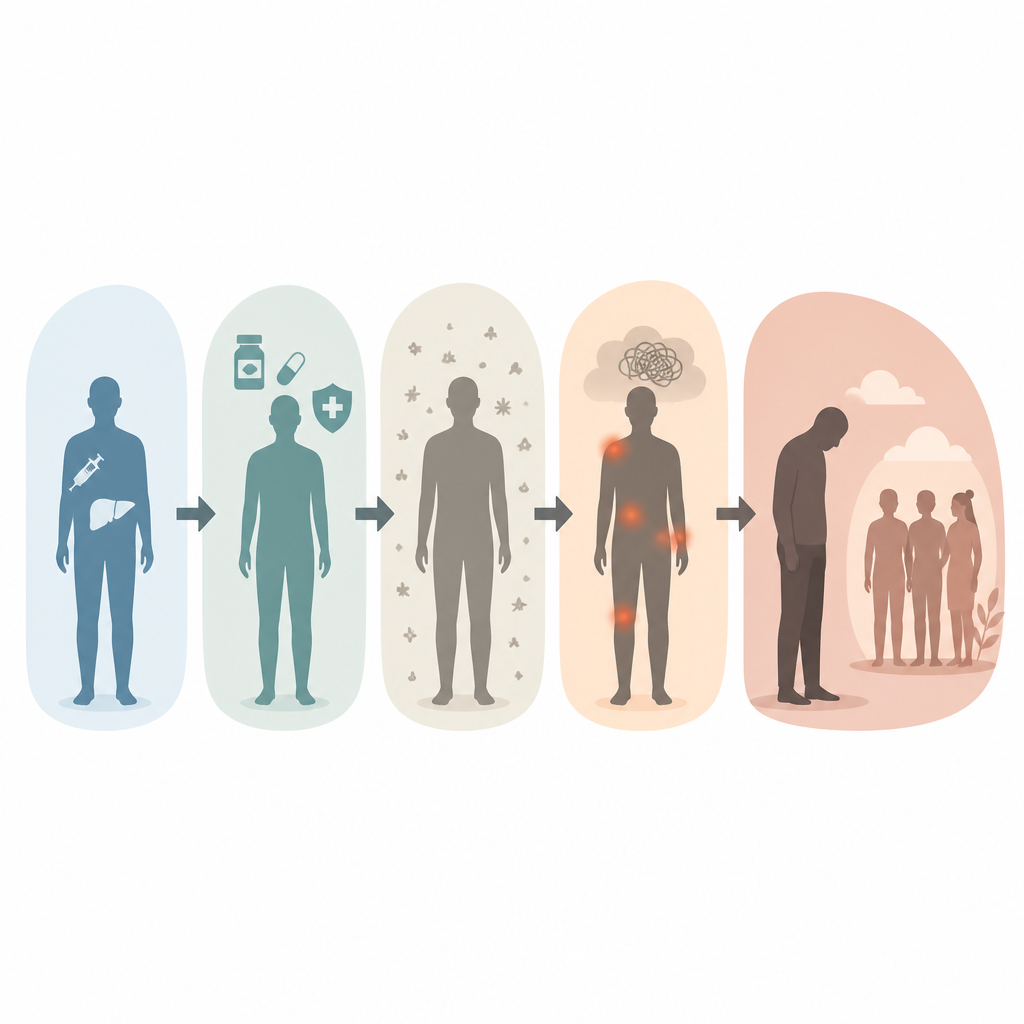
When the researchers looked more closely, an important pattern appeared. People who inject drugs did not report more pain or more anxiety than others, but they gave themselves clearly lower scores when judging their health overall. This gap was largest in those who were still injecting, smaller in those in drug substitution programs, and smallest in those who had injected in the past but stopped. Even after taking into account pain, anxiety, alcohol use, and liver health, a history of injecting drug use remained strongly linked to feeling that life quality was poor. The results suggest that something beyond the infections themselves weighs on these patients.
What drives feeling unwell
Pain and emotional distress still played a strong role. People with aches or discomfort were much more likely to also report anxiety or low mood, and both groups rated their overall health lower. Older age was tied to more physical pain, while drinking alcohol and having ongoing hepatitis C virus in the blood were linked with worse self-rated health. Differences also appeared between ethnic groups, hinting that social position and expectations may shape how people judge their wellbeing. Yet measures of liver damage did not match how people felt, underlining that medical tests alone miss much of the lived experience.
What this means for care
The study’s main message for a general reader is that controlling the virus is not enough. People who inject drugs and live with HIV and hepatitis C in Vietnam may carry extra physical and emotional strain that does not always show up in routine checkups. Feelings of stigma, long histories with drug use, and subtle mental health problems likely contribute to lower quality of life. The authors suggest that clinics should not only provide HIV pills but also screen patients for pain and emotional distress, offer counseling or simple mental health programs, and find ways to make care more welcoming to those who inject drugs. In short, improving life with HIV means paying attention to how people feel, not just to their lab results.
Citation: Madec, Y., Ngo, H.T.H., Pham, T.T.P. et al. Injecting drug use worsens the quality of life in HIV-HCV co-infected patients in Vietnam. Sci Rep 16, 16192 (2026). https://doi.org/10.1038/s41598-026-46919-7
Keywords: HIV, hepatitis C, injecting drug use, quality of life, mental health