Clear Sky Science · en
Preoperative gamma-glutamyl transpeptidase for predicting postoperative recurrence of hepatocellular carcinoma with wide resection margins: a multi-institutional study
Why this research matters to patients and families
For many people with liver cancer, surgery to remove the tumor offers the best chance for long-term survival. Surgeons often remove the tumor with a wide border of healthy tissue to lower the chance that cancer will return. Yet many patients still see their cancer come back. This study asks a practical question: can a simple blood test done before surgery help doctors predict who is more likely to face a return of liver cancer, even after an apparently generous and successful operation?
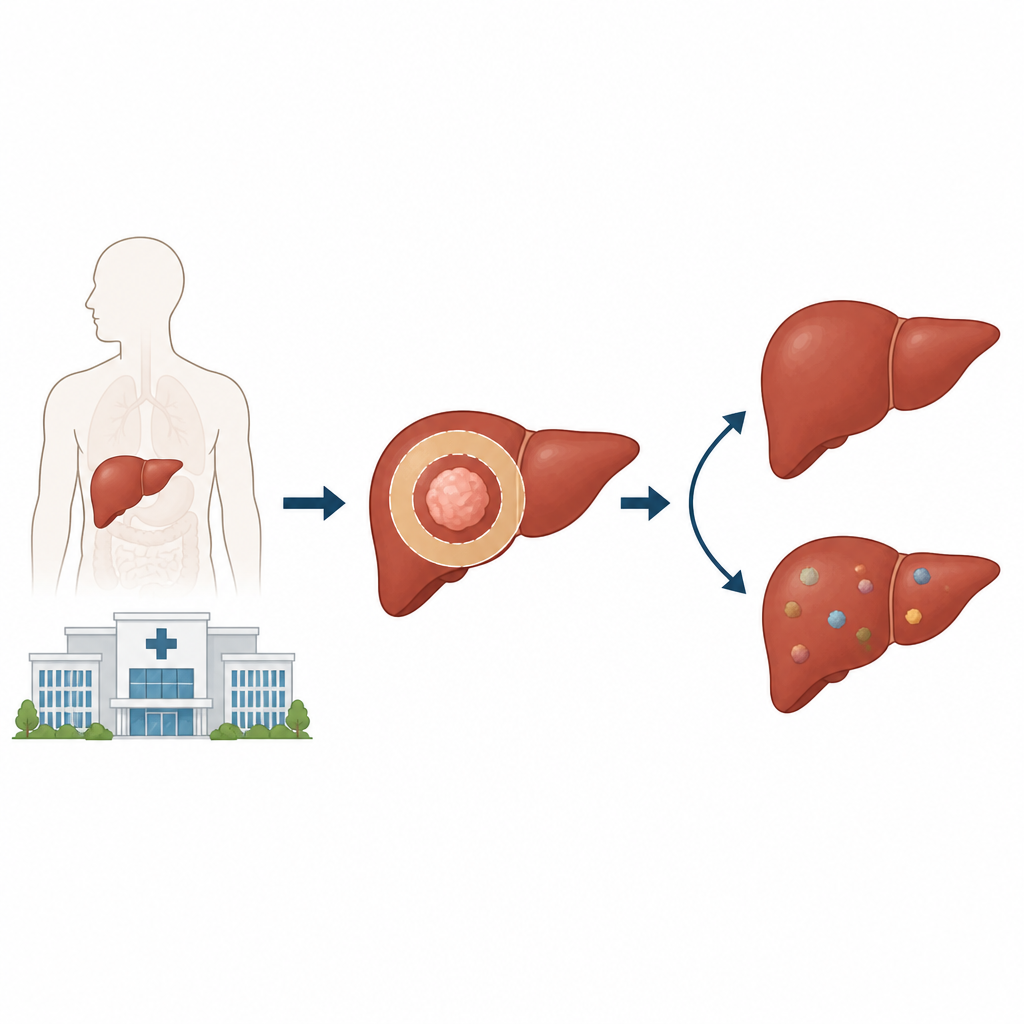
A closer look at liver cancer after surgery
Hepatocellular carcinoma is the most common form of primary liver cancer worldwide and a major cause of cancer death. Surgical removal of the diseased part of the liver is a key treatment. When surgeons achieve a wide margin, meaning they cut at least one centimeter beyond the visible tumor, the operation is considered especially thorough. Despite this, many patients still experience recurrence months or years later. Usual staging systems, which group patients mainly by how large and how advanced their tumors are, do not reliably predict which of these patients with wide margins will have cancer return.
A simple enzyme with a warning signal
The researchers focused on gamma glutamyl transpeptidase, or GGT, an enzyme measured in routine liver blood tests. GGT helps manage the body’s defense against harmful oxygen-related stress inside cells. When the liver is damaged or when liver cancer behaves aggressively, GGT levels in the blood often rise. The team suspected that a GGT level above the normal upper limit before surgery might act as a warning signal that cancer cells are more likely to survive treatment and grow back, even when the visible tumor has been removed with a wide border.
How the prediction tool was built and tested
The investigators examined records from 4,258 people who had liver surgery in three major hospitals in China and identified 750 patients who had liver cancer removed with wide margins and met strict quality criteria. They randomly split these patients into a development group and a separate validation group. Using statistical survival methods, they tested many possible factors and found that four stood out as independently linked to cancer coming back: high preoperative GGT, tumor size over five centimeters, more than one tumor, and the presence of cancer cells in tiny blood vessels within the liver. With these four items they built a scoring tool, called a nomogram, that estimates the chance a patient will remain free of recurrence at one, three, and five years after surgery.
How well the new tool performs
To judge the quality of their prediction tool, the authors compared its performance with widely used staging systems. They looked at how accurately the model separated patients into higher and lower risk groups and how closely its predictions matched what actually happened over time. In both the development and validation groups, the new four-factor model outperformed the traditional systems, showing higher accuracy and better alignment between predicted and observed outcomes. It also provided greater net benefit in decision analyses, suggesting that using it in practice could help doctors choose follow up plans and additional treatments more wisely. Based on the model’s scores, patients could be sorted into two clear risk categories with distinctly different recurrence patterns. The authors also created an online calculator so clinicians can apply the tool at the bedside.
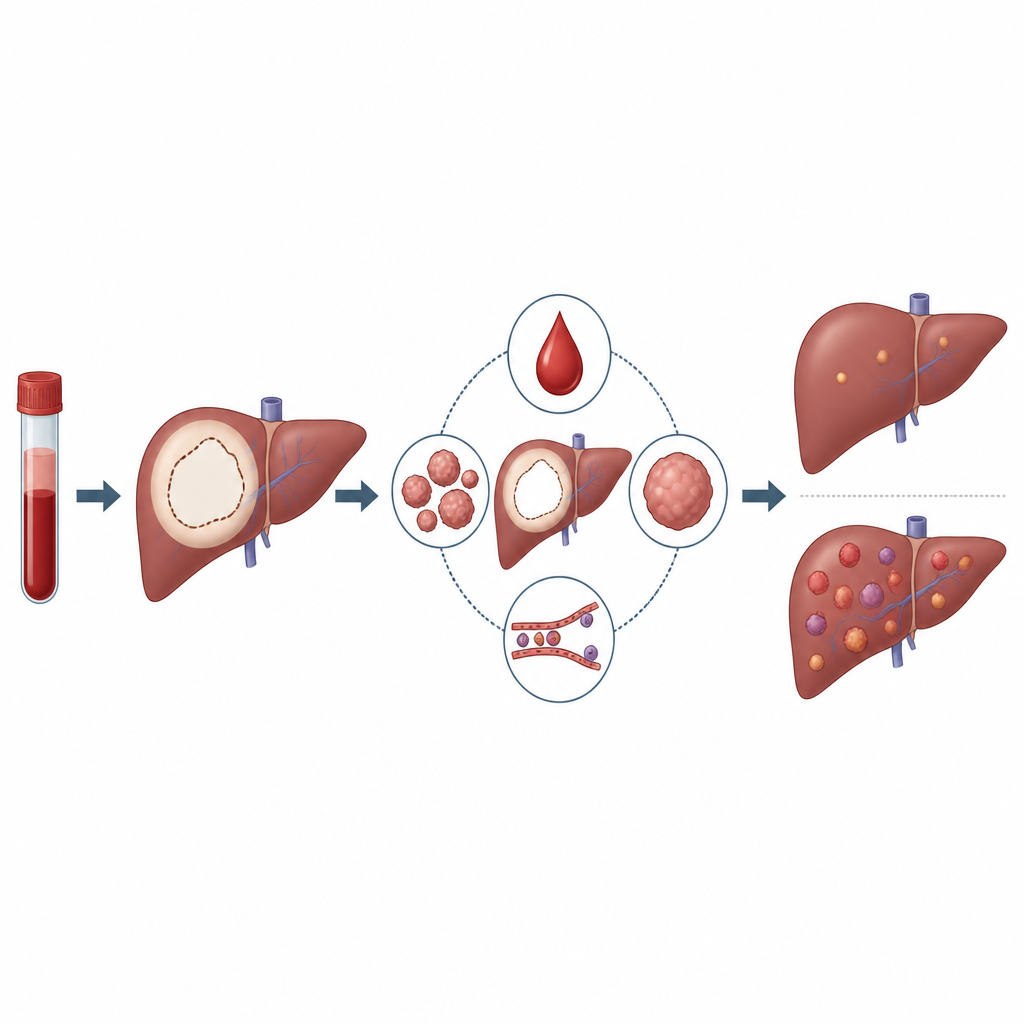
What this means for future care
This study shows that a routine blood test, when combined with basic tumor details, can give meaningful clues about which liver cancer patients are more likely to see their disease return after an apparently wide and successful surgery. For patients, this does not change the need for close follow up, but it may help identify who should be watched more closely or considered for additional treatments. The work suggests that GGT is more than a general liver marker; it can also act as a guide for tailoring care after liver cancer surgery, especially in those who seemed to have had all visible disease removed.
Citation: Zhang, J., Chen, S., Zhang, Z. et al. Preoperative gamma-glutamyl transpeptidase for predicting postoperative recurrence of hepatocellular carcinoma with wide resection margins: a multi-institutional study. Sci Rep 16, 14664 (2026). https://doi.org/10.1038/s41598-026-46909-9
Keywords: liver cancer, hepatocellular carcinoma, GGT, cancer recurrence, risk prediction