Clear Sky Science · en
Development of a triplex FMCA assay for genotyping three genes, ADH1B, ADH1C, and ALDH2, involved in alcohol metabolism
Why our genes shape our response to a drink
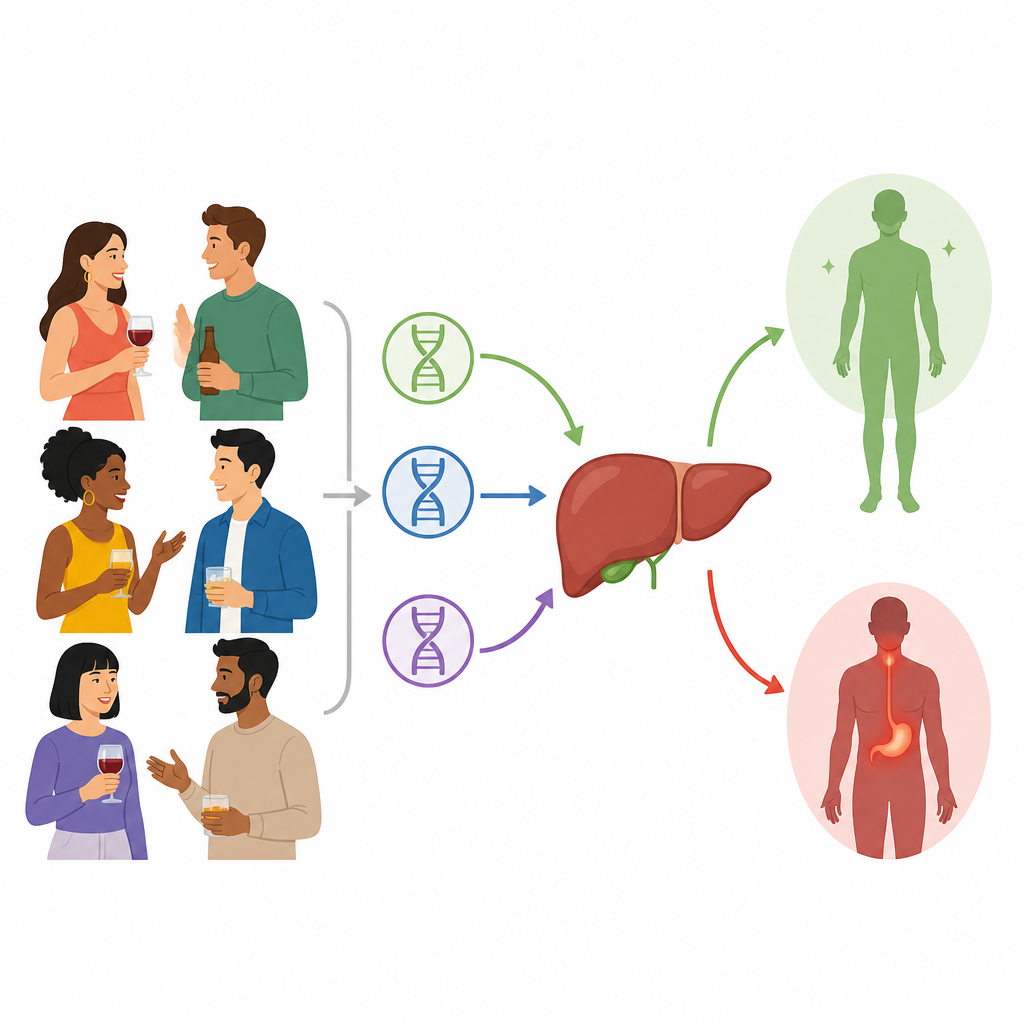
Why do some people flush bright red or feel sick after a single glass of wine, while others seem almost unaffected? This difference is not just about willpower or habit. It often comes down to how quickly a person’s body converts alcohol into less harmful substances, a process controlled in part by three key genes. The study behind this article presents a simple laboratory test that reads these genes at once, opening the door to faster and cheaper assessments of alcohol-related health risks.
The body’s pathway for clearing alcohol
When we drink, the body breaks down alcohol in two main steps. In the first step, enzymes made by the ADH1B and ADH1C genes convert alcohol into acetaldehyde, a highly reactive compound. In the second step, an enzyme produced by the ALDH2 gene transforms acetaldehyde into acetic acid, which the body can handle more easily. Small DNA changes in these three genes can speed up or slow down these steps, affecting how long alcohol and acetaldehyde linger in the body and how strongly people react to drinking.
Why three tiny genetic changes matter
The study focuses on three specific DNA positions, one in each of the ADH1B, ADH1C, and ALDH2 genes. Each position comes in two versions, which together decide whether a person has fast or slow versions of the enzymes. People with low-activity forms of ADH1B and ADH1C clear alcohol more slowly, which can raise overall exposure to alcohol. Those with low or inactive ALDH2 accumulate acetaldehyde, often experiencing flushing, headache, and nausea after drinking. These genetic patterns are especially common in East Asian populations and are linked to higher risks of cancers of the esophagus and stomach, as well as alcohol-related liver disease.
Building a faster genetic test
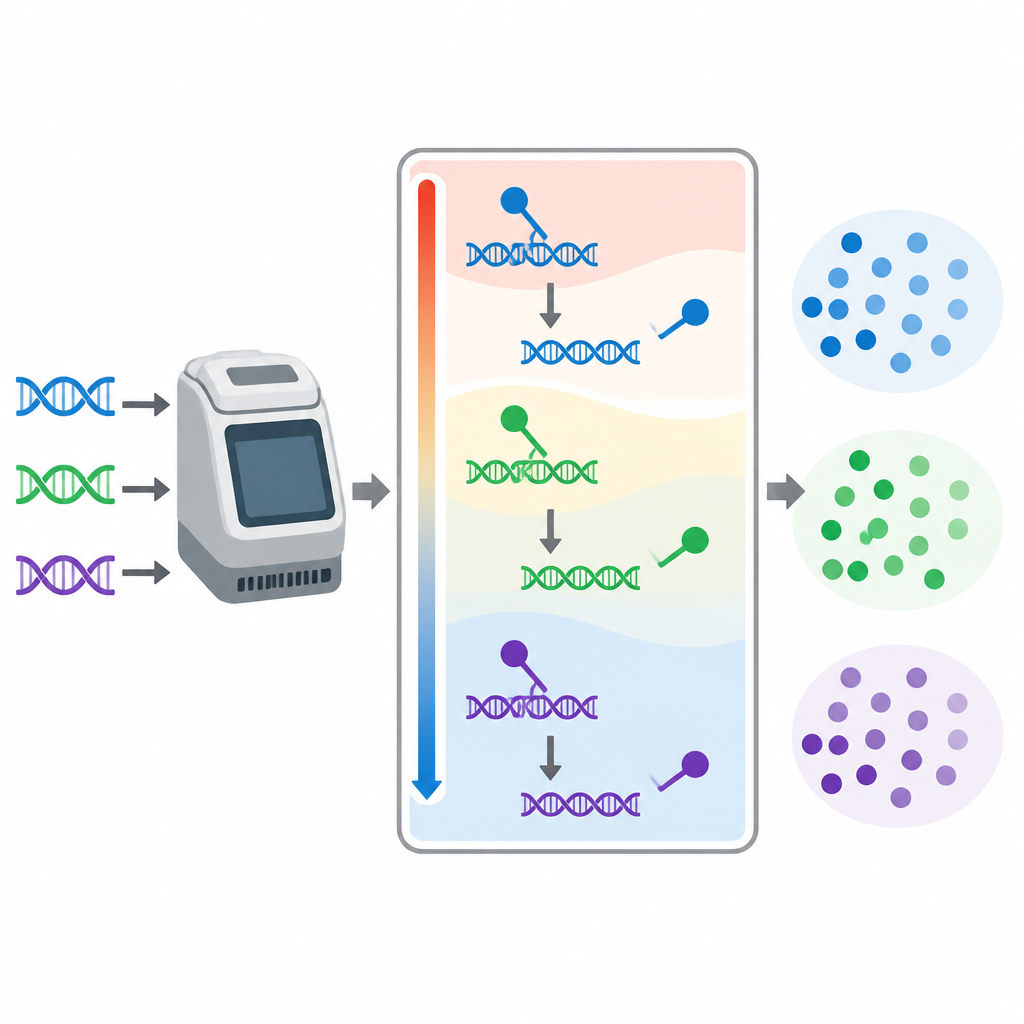
Traditional methods for reading these genetic differences, such as Sanger sequencing, are accurate but slow and relatively costly, especially when many people or several DNA positions must be tested. The researchers developed a new method called a triplex fluorescent melting curve assay, which can check all three gene positions in a single tiny reaction tube. It uses short, light-emitting DNA probes that stick to their targets. By gently heating the mixture and watching when the probes let go, the instrument records a pattern of melting peaks that reveals which version of each gene is present.
How well the new method performs
To see if this new test works, the team analyzed DNA from 94 Japanese volunteers and compared the results with standard sequencing. For two of the genes, ALDH2 and ADH1C, the automated software that reads the melting peaks almost always got the right answer, with only a single doubtful or misplaced call out of 376 reactions for each gene. The third gene, ADH1B, produced more complicated peak shapes, and the computer sometimes confused certain patterns or labeled them as unknown. However, each type of genetic result still had a distinctive curve shape that a trained eye could recognize. When researchers reviewed the curves by sight, every single sample matched the sequencing results, giving the method overall perfect accuracy in this group.
What this could mean for health and research
The new assay is fast, taking about an hour and a half for a full 96-sample run, and costs well under one US dollar in reagents per person. Because it uses standard real-time PCR equipment and needs only one probe per DNA position, it is suitable for many laboratories. This makes it practical for large population studies that look at how drinking behavior and disease risk vary with genetic patterns, and for routine health checks in settings where alcohol-related cancers and liver disease are common. The authors note that the method still depends on human review for one of the three genes and has so far been tested in a relatively small, single-ethnicity group, so further refinement and wider validation are needed.
Bringing genetic insight to everyday drinking risks
In simple terms, this study describes a quick and low-cost way to read three key genetic markers that influence how safely a person’s body handles alcohol. By combining them in one test and showing that the results match gold-standard sequencing, the researchers provide a tool that can help identify people whose genes put them at higher risk from regular drinking. While genes are only part of the story and lifestyle still matters greatly, such testing could support more tailored advice and earlier checks for alcohol-related cancers and liver disease, especially in populations where these genetic variants are common.
Citation: Soejima, M., Koda, Y. Development of a triplex FMCA assay for genotyping three genes, ADH1B, ADH1C, and ALDH2, involved in alcohol metabolism. Sci Rep 16, 15229 (2026). https://doi.org/10.1038/s41598-026-46895-y
Keywords: alcohol metabolism, ALDH2, ADH1B, genotyping assay, cancer risk