Clear Sky Science · en
Key soil fertility determinants influencing rice yield in Malaysian paddy soils
Why rice fields depend on hidden soil clues
Rice feeds more than half of the world, yet the harvest that reaches our plates depends on what happens out of sight in the soil. This study explores paddy fields in Malaysia to uncover which soil conditions most strongly shape rice yield. By comparing different regions and rice varieties, the researchers show that it is not just how much fertilizer is added that matters, but how soil acidity and certain metals quietly help or hinder plant growth.
Rice, food security and the importance of the ground beneath
The work is framed by growing concern over food insecurity, with hundreds of millions of people facing hunger while rice remains a staple across Asia. Malaysia, like many rice-producing countries, must squeeze more food from limited farmland without exhausting the soil. The authors focus on five paddy fields in three Malaysian states that represent common lowland rice landscapes. Instead of changing farming methods, they observe real farmer-managed fields to understand how natural soil differences and existing practices relate to the harvest.
How the team studied soil and harvest together
To link soil conditions with rice yields, the researchers collected topsoil samples from each field using a standard pattern to capture local variation. They measured acidity, moisture, clay content and key nutrients such as nitrogen, phosphorus, potassium, calcium and magnesium. They also tracked the amounts of iron and aluminium, which can become harmful in acidic soils. Two locally developed rice lines, known as UiTM 1 and UiTM 5, were transplanted into small plots within each field and grown under typical flooded conditions. At harvest, grains from each planting hill were dried and weighed so that yield could be compared directly with the measured soil properties. 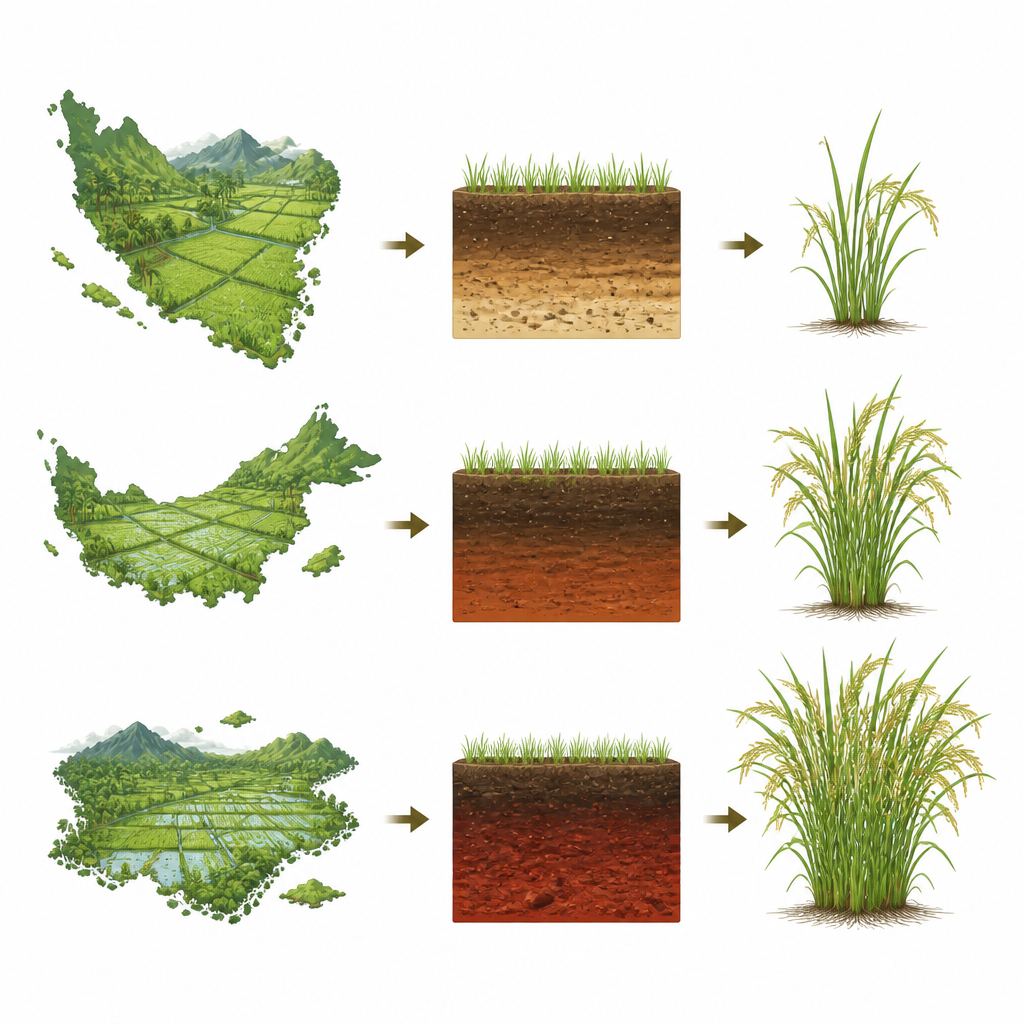
Patterns that emerged from the data
When the team analysed the numbers, a clear pattern appeared. Fields with slightly acidic to near-neutral pH produced better yields, particularly for the UiTM 5 variety. In contrast, fields with high aluminium levels tended to produce smaller harvests, with UiTM 5 again more sensitive than UiTM 1. A site called A9 stood out: it had moderately acidic soil, reasonable nutrient-holding capacity, and aluminium levels about half those of the poorest site. A9 delivered the highest yields for both rice lines, over nine metric tons per hectare, suggesting that its soil conditions sit in a sweet spot for rice. Surprisingly, organic matter and total nitrogen, often seen as signs of good soil, did not show a strong direct link to yield in these fields.
Seeing soil relationships as a bigger picture
Because soil properties are interconnected, the researchers used a statistical tool called principal component analysis to view them as combined patterns rather than isolated numbers. One pattern reflected organic richness and nitrogen supply, while a second captured acidity, nutrient-holding ability and metal toxicity. Rice yield lined up most closely with this second pattern, especially with higher pH, better ability to hold nutrient cations, and lower aluminium. Aluminium pointed in the opposite direction from yield in this analysis, reinforcing its role as a key stress factor in these Malaysian paddy soils. 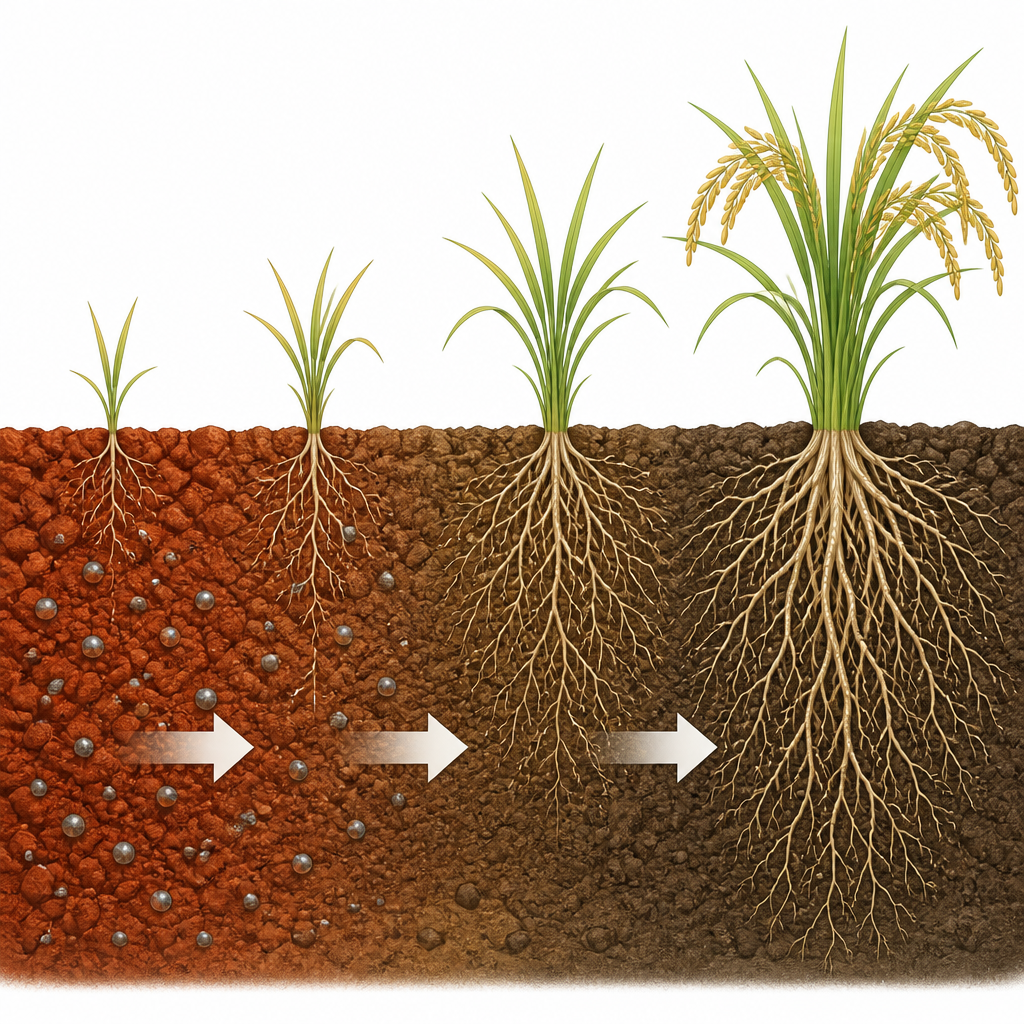
What this means for farmers and rice eaters
For a non-specialist, the takeaway is that the success of a rice field in Malaysia is strongly tied to how sour the soil is and how much harmful aluminium is present, more than to sheer amounts of organic matter alone. Managing soil so that it is not too acidic, and keeping aluminium levels in check, can help rice plants develop healthier roots and fuller grain heads. The study suggests that careful soil testing and targeted practices, such as liming where appropriate, can make existing paddy land more productive and sustainable, supporting more reliable rice harvests without expanding farmland.
Citation: Ahmad, N.M., Hasan, N., Ahmad Noruddin, N.F.N. et al. Key soil fertility determinants influencing rice yield in Malaysian paddy soils. Sci Rep 16, 15757 (2026). https://doi.org/10.1038/s41598-026-46892-1
Keywords: rice yield, soil fertility, acidic soil, aluminium toxicity, paddy fields