Clear Sky Science · en
Acid activated orange peel waste adsorbent for the elimination of phenol with insights into isotherm, kinetics, and thermodynamics
Turning kitchen scraps into clean water
Most of us throw away orange peels without a second thought, but this study shows that these common kitchen scraps can help clean up dangerous chemicals in water. The researchers explored how waste orange peels, after a simple acid treatment, can mop up phenol, a toxic substance often found in industrial wastewater, offering a low cost and eco friendly way to protect rivers, lakes, and human health.
Why phenol in water is a problem
Phenol and related compounds come from industries such as oil refining, textile production, and pharmaceuticals. They are hard to break down in nature, can persist in rivers and lakes, and are harmful even at low levels. Long term exposure is linked to skin burns, nerve damage, and damage to organs such as the liver and kidneys. Because of these risks, agencies like the World Health Organization set very strict limits on phenol in drinking water, pushing scientists to find better and more affordable ways to remove it.
From orange peel waste to useful filter
Orange peel is produced in huge amounts worldwide as a by product of juice and food processing, creating both a waste problem and an opportunity. The peel naturally contains plant fibers and chemical groups that can grab onto pollutants. In this work, the team compared two forms of this material: raw orange peel and peel that had been gently soaked in dilute hydrochloric acid. This mild treatment cleaned out minerals, opened up tiny pores, and increased the number of active spots on the surface where phenol can stick. Careful tests using microscopes, surface area measurements, and spectroscopy confirmed that the treated peel became more porous and chemically richer than the raw peel. 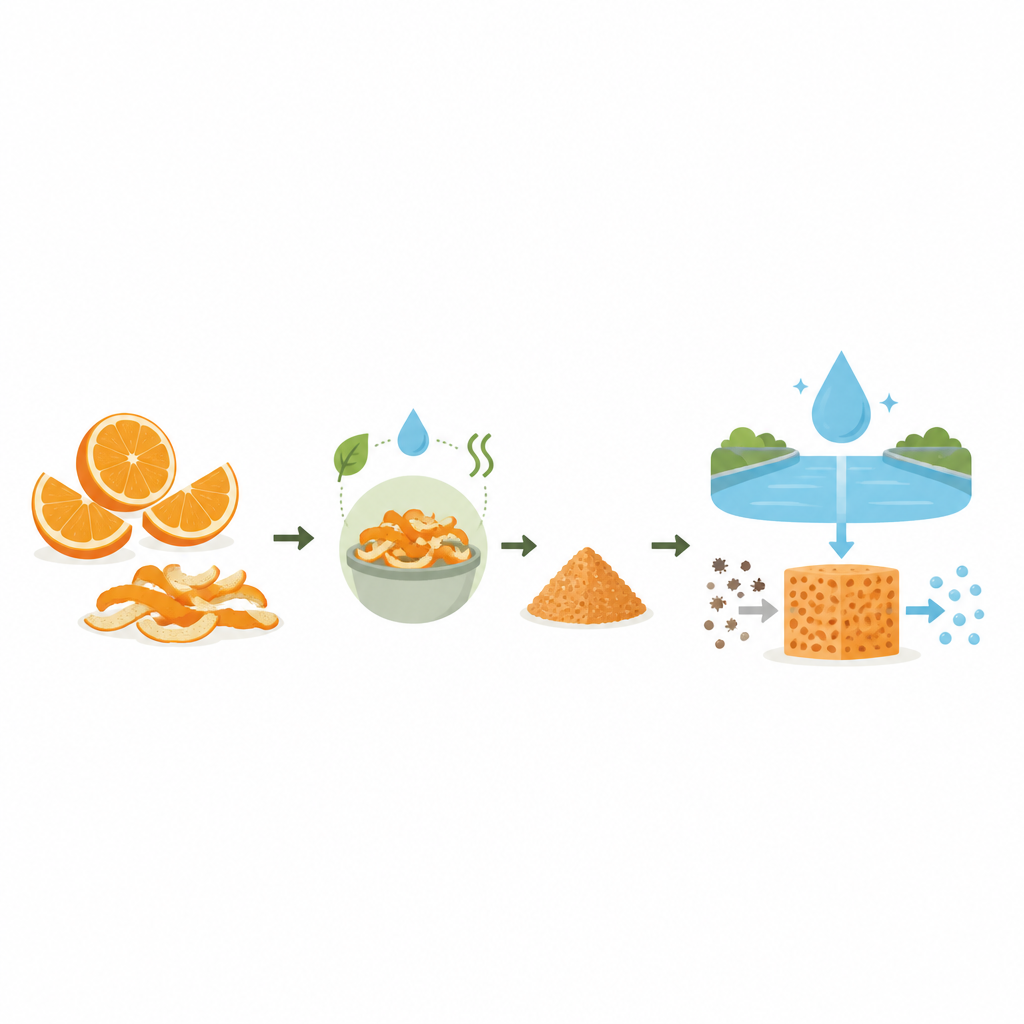
How well the treated peel cleans water
The researchers then tested how the two materials removed phenol from water under different conditions. They varied contact time, starting phenol level, pH, temperature, and how much peel was added. In both cases, most of the removal took place in the first hour, with full balance reached after about 150 minutes. The treated peel consistently performed better, reaching about 85 percent removal under the best conditions, compared with roughly three quarters for the raw material. It also held more phenol per gram, especially at higher phenol levels, showing that the added pores and surface groups made the material more powerful.
What happens at the tiny scale
By applying standard models for how substances attach to solid surfaces, the team found that phenol behaves differently on the two kinds of peel. On raw peel, phenol tends to form a simple, even coating held mainly by weaker physical forces. On treated peel, the pattern points to a rougher, more varied surface with many types of binding spots, where phenol interacts more strongly. Temperature tests showed that removal becomes easier as water gets warmer and that the process is spontaneous, meaning it tends to happen without extra energy input. Imaging and chemical fingerprinting further revealed that phenol molecules fill the new pores and form bonds with the peel’s natural oxygen containing groups, such as hydroxyl and carboxyl groups. 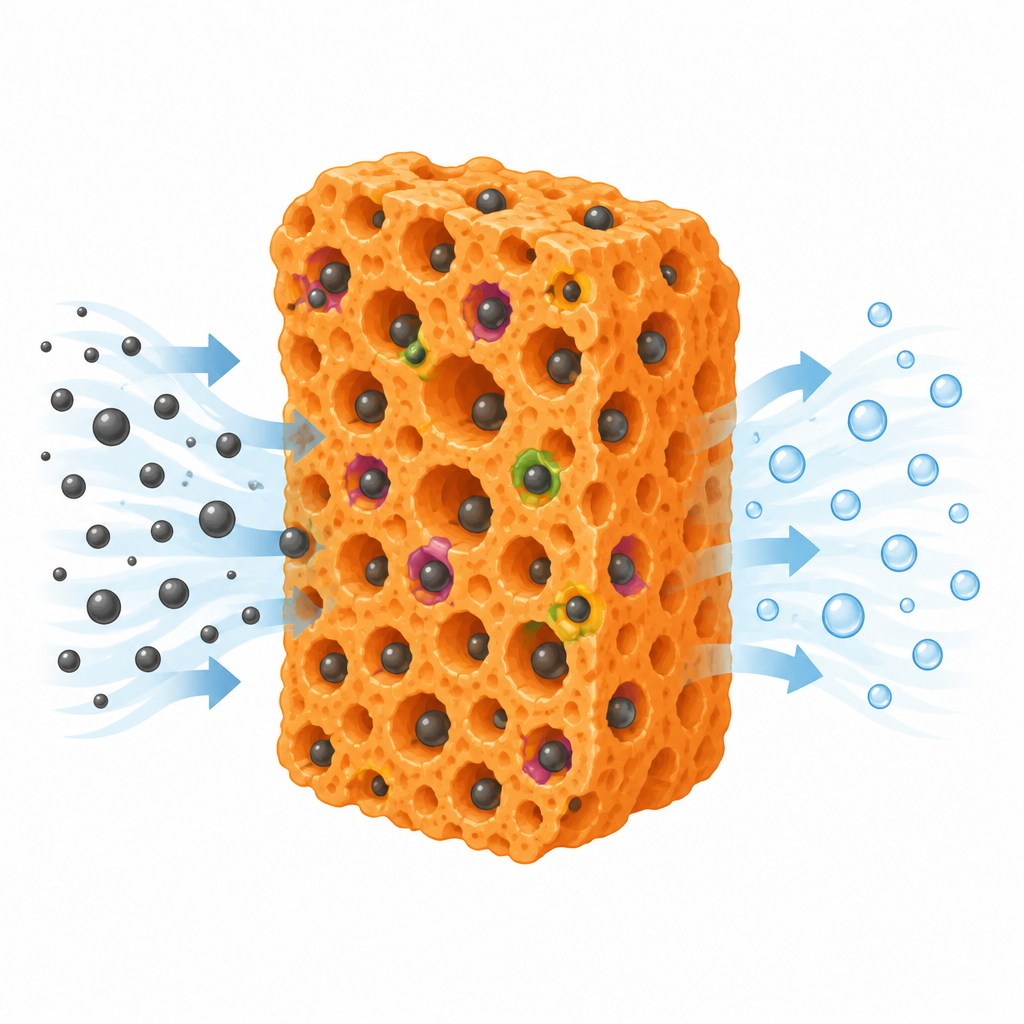
What this means for cleaner water
In simple terms, the study shows that a gentle acid wash can turn everyday orange peel waste into a much more effective sponge for toxic phenol in water. While real factory wastewater is more complex than the test solutions used here, and questions about large scale use and reuse of the material remain, the results suggest a practical route to turn a plentiful fruit waste into a helpful tool for wastewater treatment. This approach links pollution control with waste reduction, offering a cleaner water future built from what now ends up in the trash.
Citation: Alqahtani, Z., Kola, O.E., Alsharif, A. et al. Acid activated orange peel waste adsorbent for the elimination of phenol with insights into isotherm, kinetics, and thermodynamics. Sci Rep 16, 15663 (2026). https://doi.org/10.1038/s41598-026-46890-3
Keywords: orange peel adsorbent, phenol removal, wastewater treatment, biosorption, agricultural waste reuse