Clear Sky Science · en
Development of one part sustainable alkali activated binder system using slag, flyash and micro calcined kaolin
Why greener building materials matter
Cement is the invisible glue holding our roads, bridges and buildings together—but it comes with a heavy climate cost. Making ordinary Portland cement releases large amounts of carbon dioxide, helping drive global warming. This paper explores a different kind of binder, the powder that replaces cement in concrete, made largely from industrial leftovers instead of freshly baked limestone. The goal is to create a “just add water” powder that is strong, durable and far less carbon-intensive, helping cities grow without the same environmental burden.
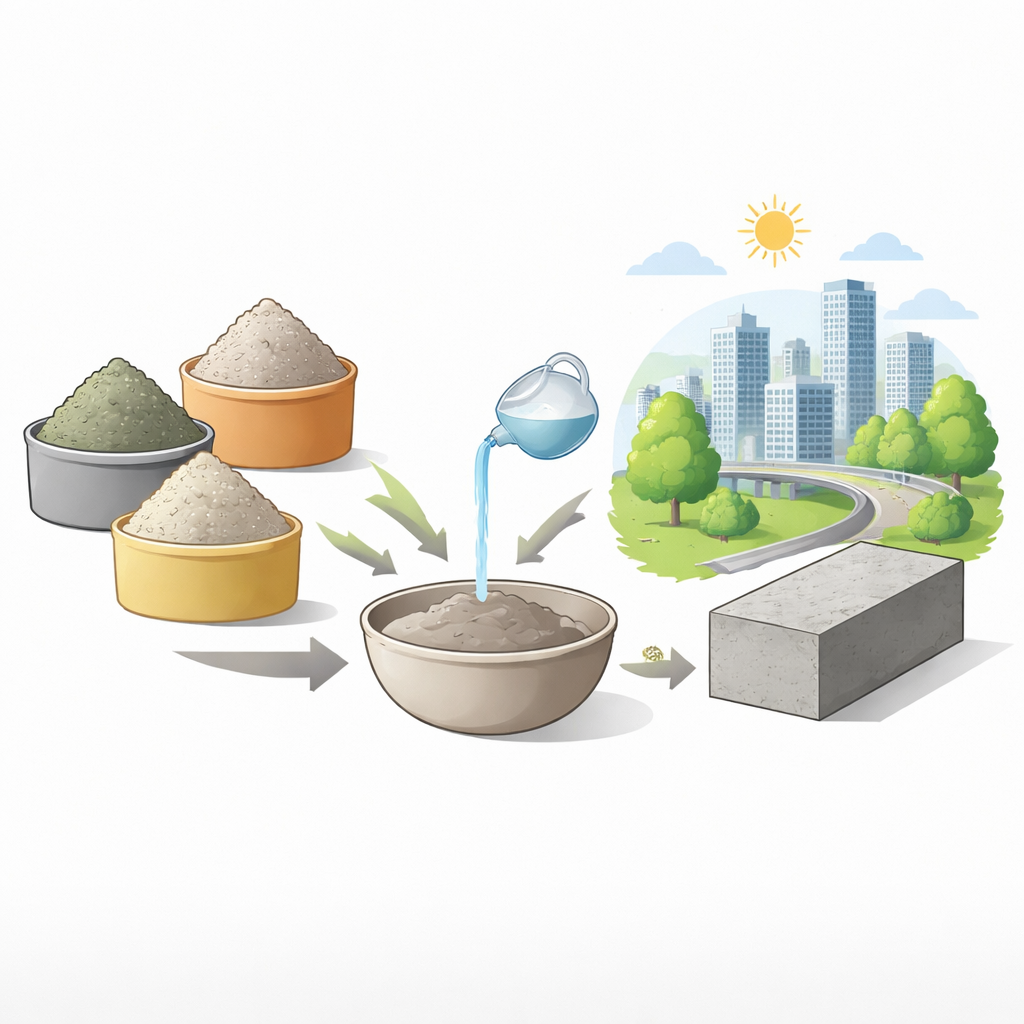
Turning waste into building blocks
The researchers focus on a binder that can be mixed and used much like regular cement but is based on three main ingredients: ground granulated blast furnace slag from steelmaking, fly ash from coal power plants, and micro calcined kaolin derived from clay. These materials are rich in the elements needed to form a hard, stone-like matrix when activated with an alkaline powder called sodium metasilicate and a small amount of water. This “one-part” approach is important because it avoids handling corrosive liquid chemicals on construction sites; workers simply blend the dry powder with water, similar to conventional cement.
Finding the best recipe
Designing such a binder is not as simple as picking a mix by trial and error. The team systematically varied how much fly ash and calcined kaolin replaced slag, along with the water-to-binder ratio, and used a statistical method called Box–Behnken response surface methodology to map how these choices affected flow, setting time and strength. They cast small cubes, measured how easily the fresh paste spread, timed how quickly it stiffened, and tested how much load it could withstand after 7 and 28 days. By feeding all of this data into their model, they could predict which combinations would balance good workability on site with high long-term strength.
What the tests revealed
The analysis showed that water content was the dominant control on how easily the paste flowed and how quickly it set, while slag content largely governed early strength. Fly ash and micro calcined kaolin played subtler but crucial roles: they slowed the very rapid setting associated with slag alone, reduced the risk of cracking, and boosted strength at later ages. The statistically optimal blend contained about 23% fly ash, 24% calcined kaolin and 53% slag with a relatively low water ratio. This mixture spread well, set in a few hours—slow enough for practical placement but fast enough for construction schedules—and reached strengths comparable to or better than many structural concretes after 28 days.
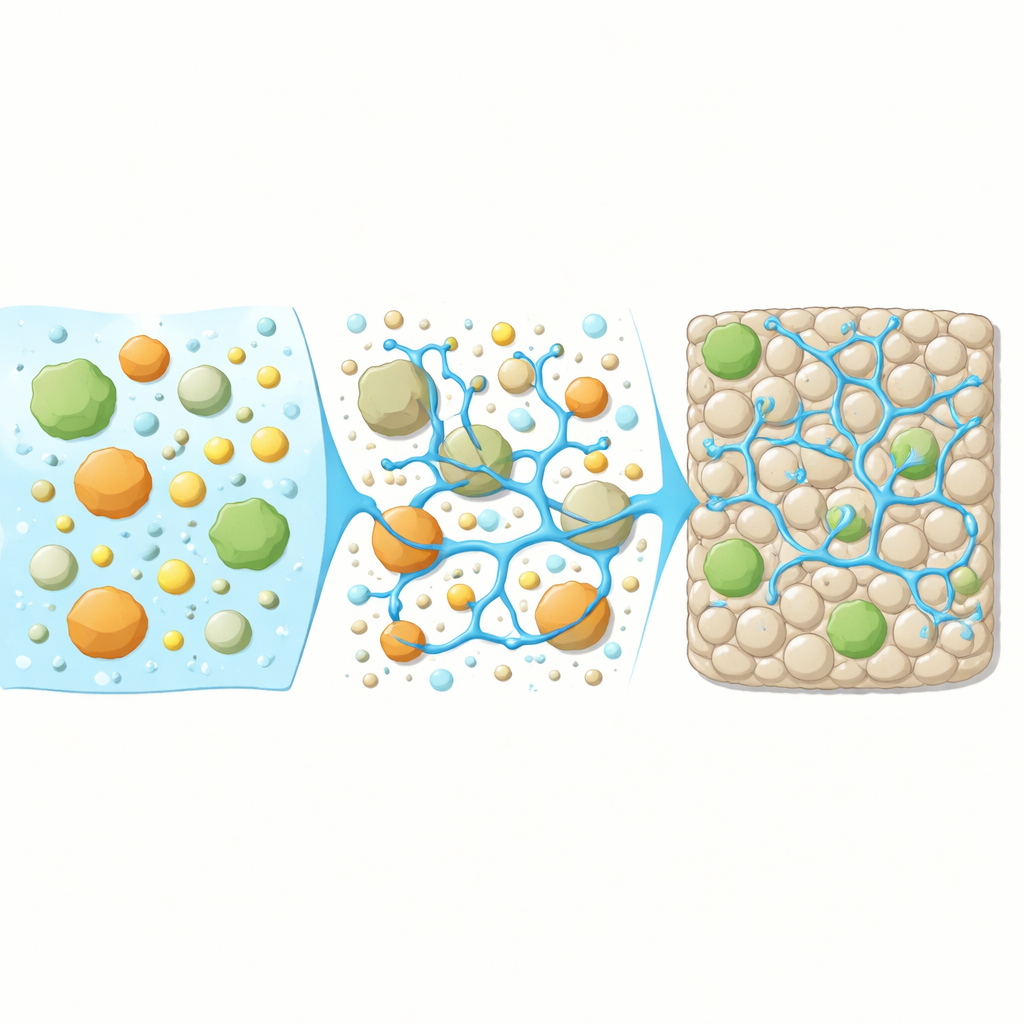
Looking inside the new material
To understand why this recipe worked so well, the team examined the hardened binder under electron microscopes and used X-ray techniques to identify its internal phases. The best-performing mixes showed a dense, continuous network with few pores and only small amounts of unreacted particles. Chemically, the material contained a balanced mix of calcium-, aluminum- and silicon-rich gel phases that lock together like a microscopic skeleton. Weaker mixes, in contrast, showed more cracks, voids and leftover crystals that act as weak spots. These images and measurements confirmed that the optimized blend forms a well-connected, rock-like microstructure that explains its high strength and durability.
Climate gains and cost challenges
Because this new binder replaces most of the traditional cement clinker with industrial by-products, its carbon footprint is dramatically lower. The study estimates that, per unit of material, carbon emissions and overall warming impact drop by roughly three-quarters or more compared with a standard cement binder. In other words, for each unit of strength delivered, far less greenhouse gas is released. The trade-off is cost and energy use: the specialized activator and processed kaolin currently make the binder more expensive and somewhat more energy-intensive to produce than ordinary cement.
What this means for future construction
In simple terms, the authors show that it is possible to design a powder you can use like cement, made mostly from waste streams, that hardens at room temperature into a strong, durable material with a much smaller carbon footprint. With further work on lowering production costs—such as sourcing activators from waste and placing plants near material sources—such binders could help future buildings and infrastructure rise with far less impact on the climate, supporting both modern development and sustainability goals.
Citation: Girish, M.G., Prashant, S., Jagadisha, H.M. et al. Development of one part sustainable alkali activated binder system using slag, flyash and micro calcined kaolin. Sci Rep 16, 11695 (2026). https://doi.org/10.1038/s41598-026-46876-1
Keywords: low-carbon concrete, alkali-activated binder, industrial by-products, sustainable construction, geopolymer materials