Clear Sky Science · en
Dried blood spot sample extraction for metabolomics and proteomics profiling for clinical trials: a descriptive exploratory study
A Tiny Drop that Tells a Big Health Story
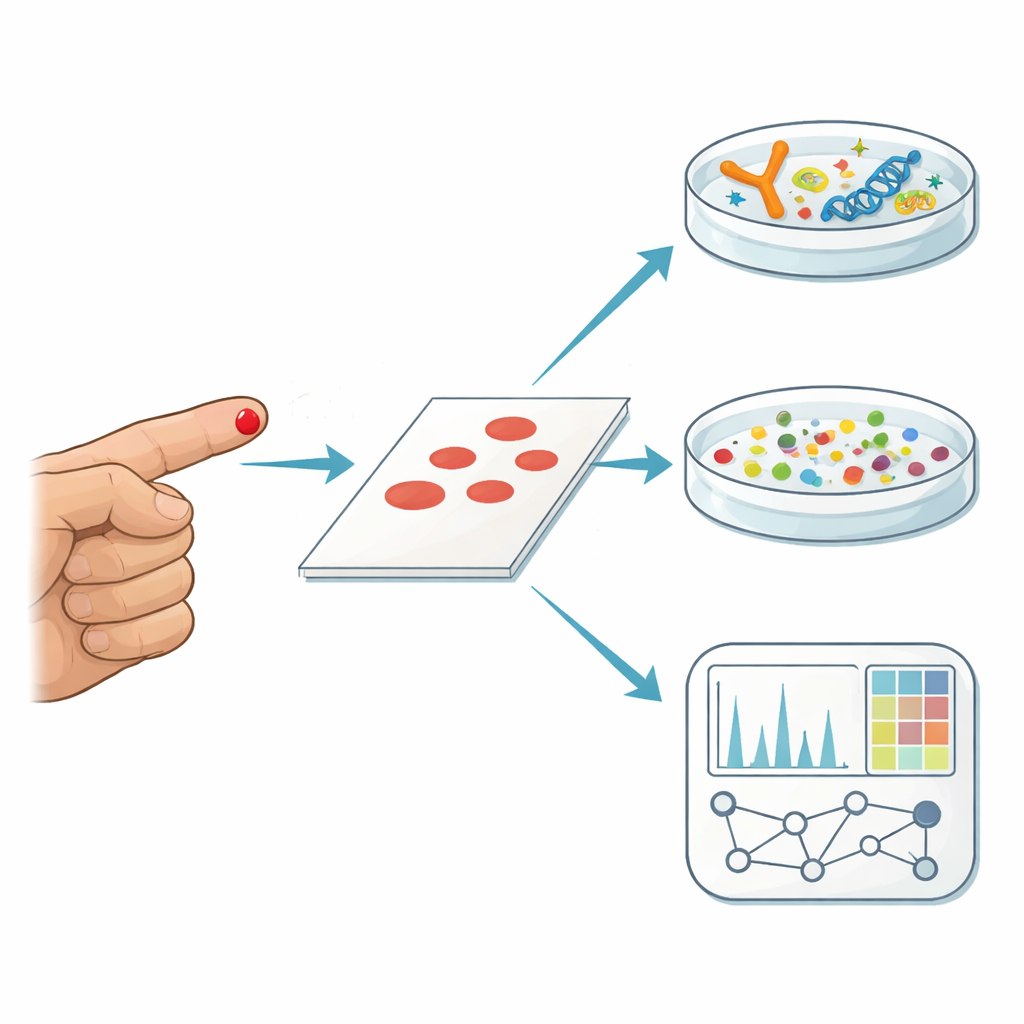
Imagine checking your risk for diabetes or heart disease not by visiting a clinic for a needle-in-the-arm blood draw, but by placing a single drop of blood from a fingertip onto a piece of paper at home. This study explores exactly that possibility. The researchers tested whether "dried blood spots"—small circles of blood dried on filter paper—can reliably reveal the same rich information about the body’s proteins and chemical compounds that standard lab blood tests provide. Their goal is to make large clinical studies, especially for type 2 diabetes, easier, cheaper, and more accessible to people everywhere.
Why Finger-Prick Samples Could Change Testing
Traditional blood testing depends on trained staff, special tubes, fast transport, and cold storage. That makes it hard to include people living far from hospitals or clinics, and it raises costs for large studies. In contrast, dried blood spots can be created with a simple finger prick, a few drops on a special card, and ordinary mail delivery. The question is whether those tiny dried samples still contain enough intact molecules to allow modern "omics" approaches—broad surveys of many proteins (proteomics) and small molecules (metabolomics)—to work well. The team designed this study to fine-tune how best to extract useful information from dried spots and to see if the results match what we would expect from conventional blood samples.
Fine-Tuning How to Get Information from a Drop
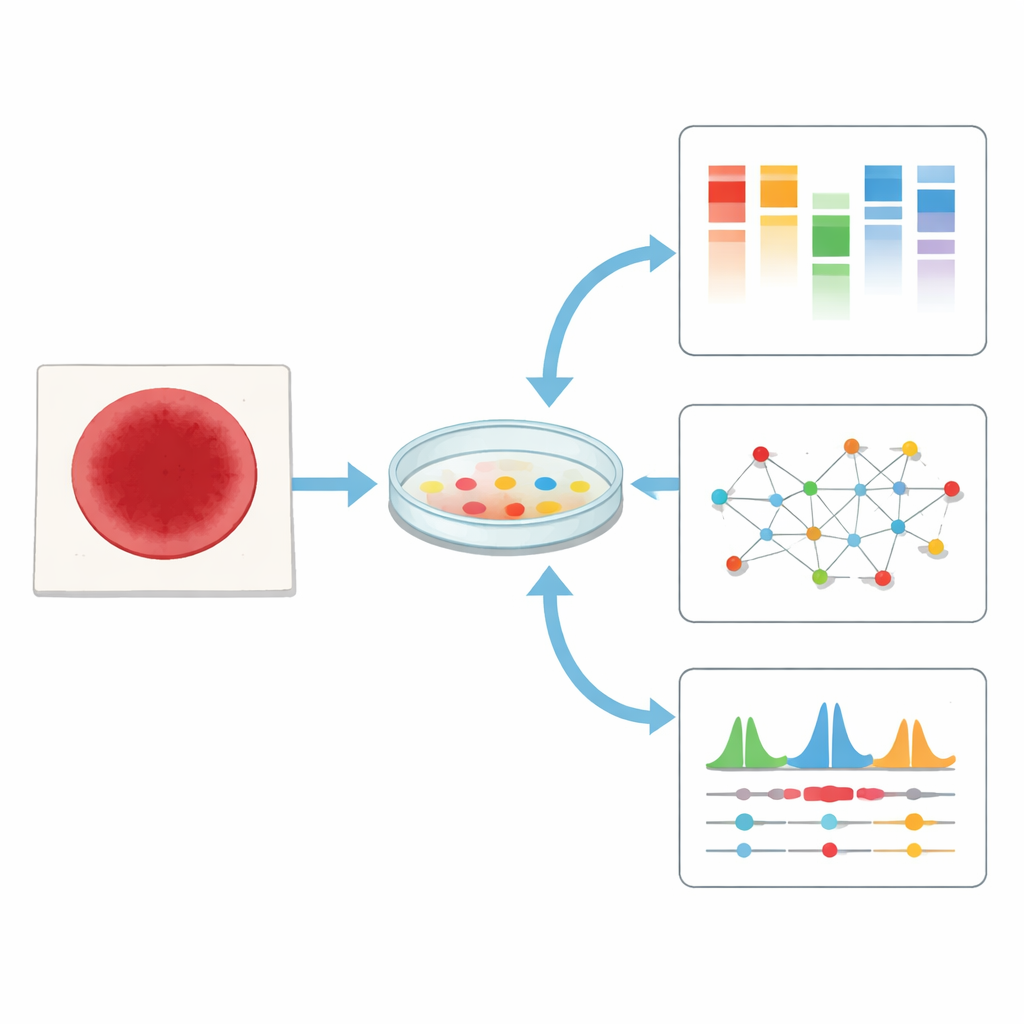
Working first with a small number of volunteers, the researchers compared different liquid solutions and extraction times to pull proteins out of the dried spots. They found that a simple salt solution (PBS) worked best across the advanced methods they wanted to use and that a short, five-minute extraction was enough to recover many proteins, including delicate, low-level signaling molecules involved in inflammation. Longer extraction times actually seemed to damage some of the more fragile components. Gel-based techniques showed that the pattern of proteins from a single dried drop looked very similar to that from standard blood, supporting the idea that the method captures a realistic snapshot of what circulates in the body.
What the Tiny Samples Reveal About Blood Chemistry
Using sensitive antibody-based tests, the team measured several inflammatory markers and C-reactive protein, substances linked to type 2 diabetes and heart disease. These were detectable even in healthy people, often at levels similar to those seen in conventional blood tests, although some markers appeared somewhat lower, likely because whole blood, rather than separated plasma or serum, was used. The scientists then applied powerful untargeted methods—mass spectrometry for proteins and nuclear magnetic resonance for metabolites—to see what broader patterns emerged. From just a few dried spots, they identified hundreds of proteins and dozens of small molecules, including many known to play roles in sugar handling, fat metabolism, cholesterol transport, and low-grade inflammation, all central themes in type 2 diabetes.
Clues for Diabetes Hidden in Everyday Molecules
The proteins and metabolites seen in the dried blood spots mapped onto key pathways that go wrong in type 2 diabetes, such as how the body processes glucose and fats. The researchers detected molecules tied to cholesterol balance, different forms of fat-carrying particles, and specialized sugar-coated proteins that signal inflammation. Notably, they were able to measure composite inflammation markers called GlycA and GlycB, which have been linked to subtle, long-term inflammatory activity and complications in diabetes. Finding these signals in fingertip-derived dried spots suggests that this simple sampling method can capture complex, clinically important biology.
What This Could Mean for Future Health Studies
For now, the work is an early test in a small group of healthy volunteers, and the authors emphasize that the true medical value of these dried-spot measurements still needs to be confirmed in people with type 2 diabetes and other conditions. Even so, the study shows that a single drop of dried blood can feed multiple advanced laboratory techniques at once, revealing proteins, metabolites, and low-abundance inflammatory markers. In plain terms, the research suggests that painless, mail-in finger-prick samples could one day replace many traditional blood draws in large trials, opening the door to more inclusive, patient-friendly studies and faster discovery of new warning signs for disease.
Citation: Fägerstam, S., Johansson, E., af Geijerstam, P. et al. Dried blood spot sample extraction for metabolomics and proteomics profiling for clinical trials: a descriptive exploratory study. Sci Rep 16, 12196 (2026). https://doi.org/10.1038/s41598-026-46874-3
Keywords: dried blood spot, type 2 diabetes, biomarkers, proteomics, metabolomics