Clear Sky Science · en
Recognition of Brucella abortus drives M2 like polarization and impaired antigen presentation in monocyte derived macrophages
Why this matters for human and animal health
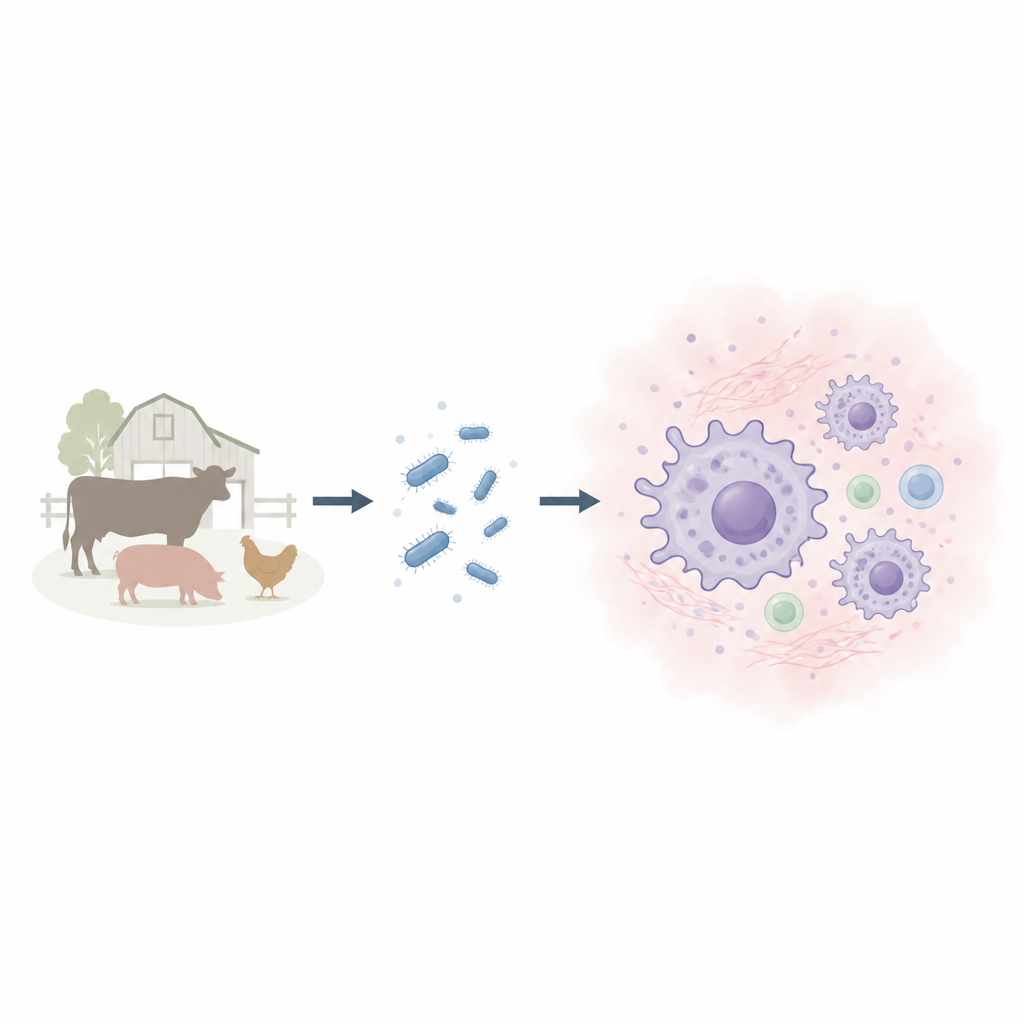
Brucellosis is an infection that spreads from livestock to people and can linger for months or years, causing fever, fatigue and pain. This study asks a simple but important question: when the brucellosis germ first meets our immune cells, does it quietly reshape them in a way that helps the infection persist? By tracking how fresh blood cells turn into tissue cleaning cells in the presence of Brucella abortus, the authors uncover how the bacterium nudges our defenses into a state that looks helpful but actually weakens long term protection.
How key immune cells normally protect us
Macrophages are front line cells that patrol tissues, clear debris and swallow invading microbes. Many of them arise from monocytes, a type of white blood cell that leaves the bloodstream and settles into damaged or infected sites. As monocytes mature, local signals decide whether they become more attack oriented cells that fuel inflammation or more repair oriented cells that calm it and help rebuild tissue. This balance influences whether an infection is cleared quickly or becomes chronic, and whether surrounding tissue is protected or harmed by prolonged inflammation.
What Brucella does to developing macrophages
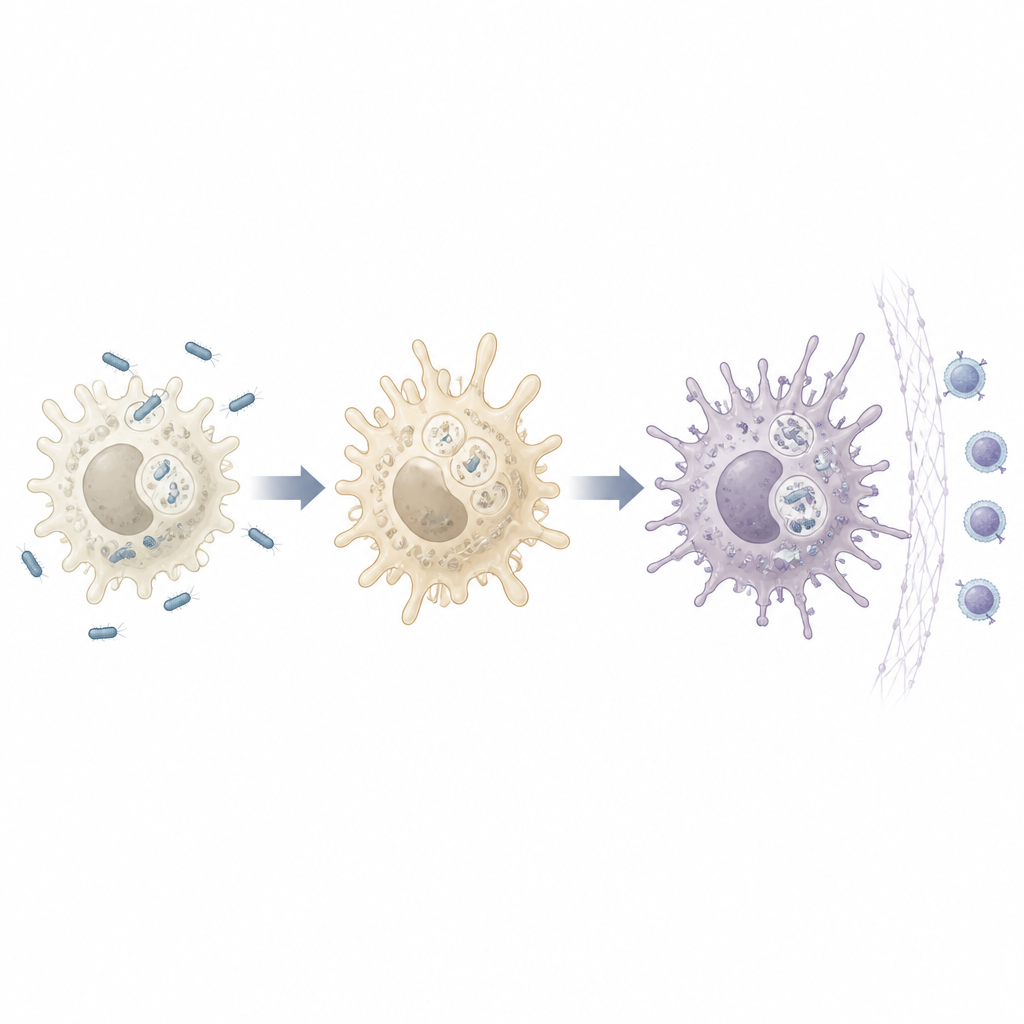
The researchers grew human monocytes in the lab and let them mature into macrophages with a growth factor, either alone or together with killed Brucella abortus or purified pieces of the bacterium. When Brucella was present during this five day transition, the resulting macrophages looked normal and survived well, but their surface makeup changed. They showed lower levels of proteins that are needed to display bits of germs to other immune cells, and fewer helper signals that normally tell T cells to wake up and divide. At the same time, they increased markers linked with a more repair oriented, so called M2 like state, and genes associated with tissue growth.
A mixed personality: more swallowing, more signals, weaker teaching
Despite their shift toward a repair style profile, these Brucella shaped macrophages were far from quiet. They released higher amounts of several alarm molecules that drive inflammation, as well as substances that usually dampen immune reactions and promote healing. They also became better at swallowing test particles such as yeast and beads. Yet when these cells were asked to activate T cells, which are crucial for targeted, long lasting defense, they performed poorly. T cells grew less and produced less of a key protective messenger, showing that the macrophages were less able to teach the rest of the immune system about the invader.
Locked in a blunted response to later threats
The team then tested whether these preconditioned macrophages could still respond to a classic bacterial alarm signal from another microbe. Normal macrophages boosted their surface display molecules and secreted more inflammatory messengers when exposed to this signal. In contrast, macrophages that had developed in the presence of Brucella hardly adjusted their surface markers and did not increase their messenger release any further, even though their baseline levels were already high. This suggests that early contact with Brucella leaves macrophages stuck in a reprogrammed state that is hard to shake.
Which pieces of the bacterium drive the change
To pinpoint what Brucella components reshape macrophages, the scientists tested individual building blocks. A fatty outer membrane protein called L Omp19 and bacterial DNA alone could reproduce much of the altered surface pattern seen with whole bacteria, while other parts such as RNA or a weak form of the outer sugar coat had little effect. This points to specific bacterial signals that are sensed by monocytes during their maturation and steer them away from becoming strong presenters of microbial clues to T cells.
What this means for chronic brucellosis
Altogether, the study shows that when monocytes encounter Brucella abortus as they turn into macrophages, they become cells that are busy swallowing and sending mixed messages but are poor at alerting and guiding T cells. For a layperson, this means the bacteria coax a key immune cell into acting more like a clean up and repair crew than a skilled scout that calls in reinforcements. This combination may help the germ hide inside cells, keep inflammation smoldering at the infection site and contribute to the long lasting, relapsing nature of brucellosis.
Citation: Guano, A.D., Bazán Bouyrie, A.J., Appella, M. et al. Recognition of Brucella abortus drives M2 like polarization and impaired antigen presentation in monocyte derived macrophages. Sci Rep 16, 15519 (2026). https://doi.org/10.1038/s41598-026-46865-4
Keywords: brucellosis, macrophages, Brucella abortus, immune evasion, T cell activation