Clear Sky Science · en
Awareness motivations and barriers related to rhinoplasty among adults in Palestine, Syria, Lebanon, Jordan and Iraq
Why nose surgery choices matter
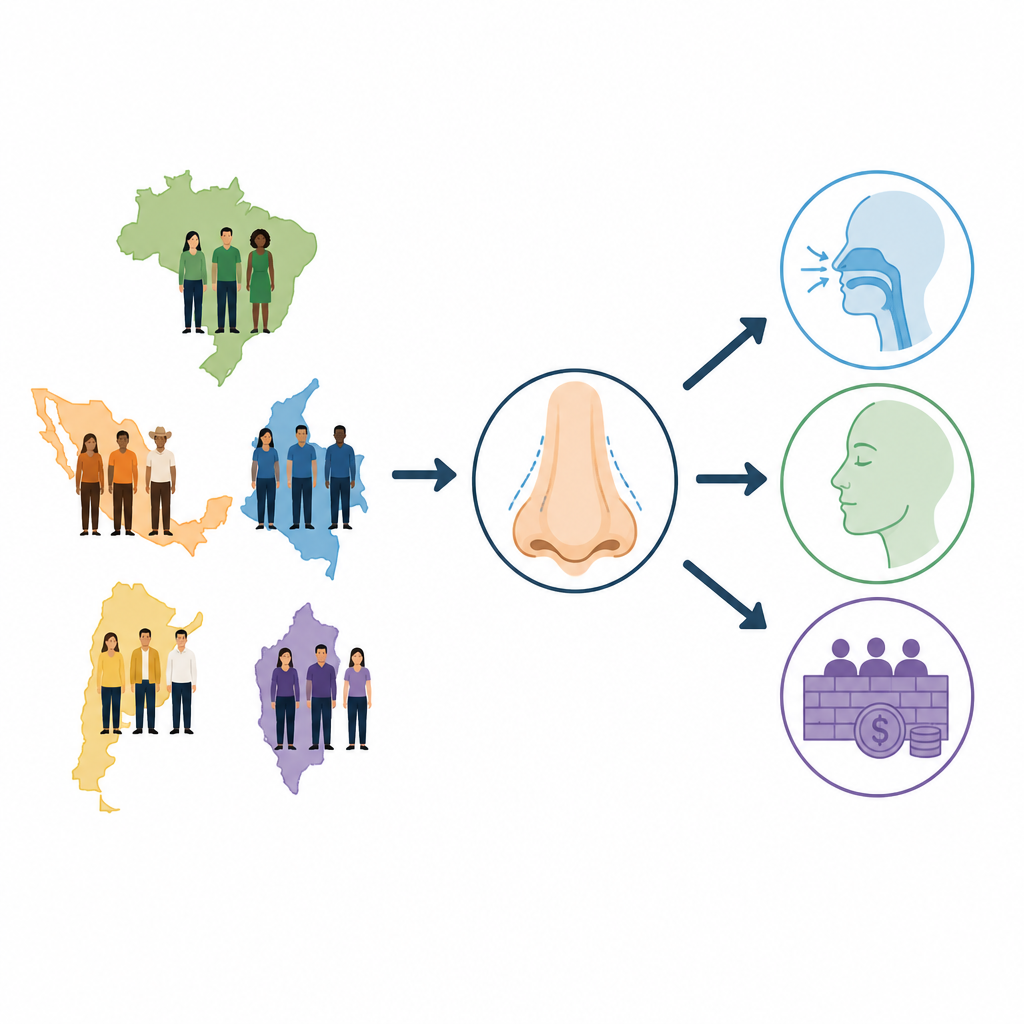
Cosmetic nose surgery, or rhinoplasty, is often portrayed as a simple beauty fix, yet it also affects breathing, self image, and family life. This study looks at how young adults in five Levantine countries think about nose surgery, what drives them toward it, and what holds them back. Understanding these views helps doctors and the public talk more clearly about when such surgery is truly helpful, what risks it brings, and how culture and money shape the decision.
Who took part in the survey
The researchers ran an online survey from January to October 2025 among adults aged 18 and older living in Palestine, Syria, Lebanon, Jordan, and Iraq. More than four thousand people answered, most of them university students in their early twenties, and about two thirds were women. Because the survey spread through social media, it mainly reached young, educated, and digitally connected residents rather than a full cross section of society. Even so, it offers a rare regional snapshot of attitudes toward nose surgery across several neighboring countries.
How common nose surgery and knowledge were
About one in seven respondents reported having had nose surgery, but this share differed sharply between countries. In Iraq, roughly a quarter of participants had undergone rhinoplasty, while in Palestine the figure was closer to one in twenty five. When tested on basic facts about the operation, such as its ability to change nose shape, improve breathing, and carry risks, overall scores were high and half of all respondents answered every question correctly. Still, some people believed it was only for looks or that results were the same for everyone, showing that familiarity did not always mean full understanding.

What drives interest in surgery
Participants rated different reasons for considering nose surgery, separating health related motives from appearance related ones. Across all five countries, health reasons came out stronger than looks alone. People were more likely to agree with getting surgery to ease blocked breathing or correct a deformity than simply to appear more attractive. Yet appearance still mattered, with some countries, such as Jordan and Lebanon, showing higher concern for cosmetic reasons than others. Information sources also played a role: social media slightly edged out doctor visits as the main place people learned about rhinoplasty, especially in Lebanon, Palestine, and Syria, while Iraqis more often cited doctors first.
What stands in the way
When asked about obstacles, about two thirds of respondents said nothing would fully stop them from having nose surgery. Among the rest, some pointed to social concerns, such as family disapproval or fear of judgment, others to cost, and some to both at once. These patterns varied by country. For example, Jordan had the lowest share of people reporting no obstacles and the highest share reporting combined social and financial concerns. The survey also showed that older age within this young group and higher knowledge scores were linked to a greater chance of having had surgery, while country of residence remained a strong background factor.
What the study means for the public
In simple terms, the study shows that among young adults in these five countries, nose surgery is fairly well known and often viewed through a health lens rather than pure vanity, yet cost, culture, and place of residence still shape who actually goes through with it. Because the survey was online and cross sectional, the results describe patterns rather than causes and do not stand for each country as a whole. Even so, they point to a need for clear, culturally sensitive information from health professionals to balance the influence of social media, address lingering myths, and help people weigh both the medical and personal sides of changing the shape of their nose.
Citation: Deeb, S., Amro, A.M., Hanifa, H. et al. Awareness motivations and barriers related to rhinoplasty among adults in Palestine, Syria, Lebanon, Jordan and Iraq. Sci Rep 16, 16080 (2026). https://doi.org/10.1038/s41598-026-46839-6
Keywords: rhinoplasty, cosmetic surgery, social media, Middle East, patient motivations