Clear Sky Science · en
Alcohol consumption and its association with biochemical indicators and quality of life among rural adults in Northern Thailand
Why this village study matters to all of us
Alcohol is often seen as a normal part of social life, but what does regular drinking really do to our bodies and daily well-being? This study from rural Northern Thailand offers a close look at how drinking habits, simple blood tests, and everyday quality of life fit together in one community. Although the work focuses on hill villages far from big cities, its message is broadly relevant: patterns of drinking leave clear fingerprints in our blood and in how healthy and satisfied we feel.
A look inside a high-drinking region
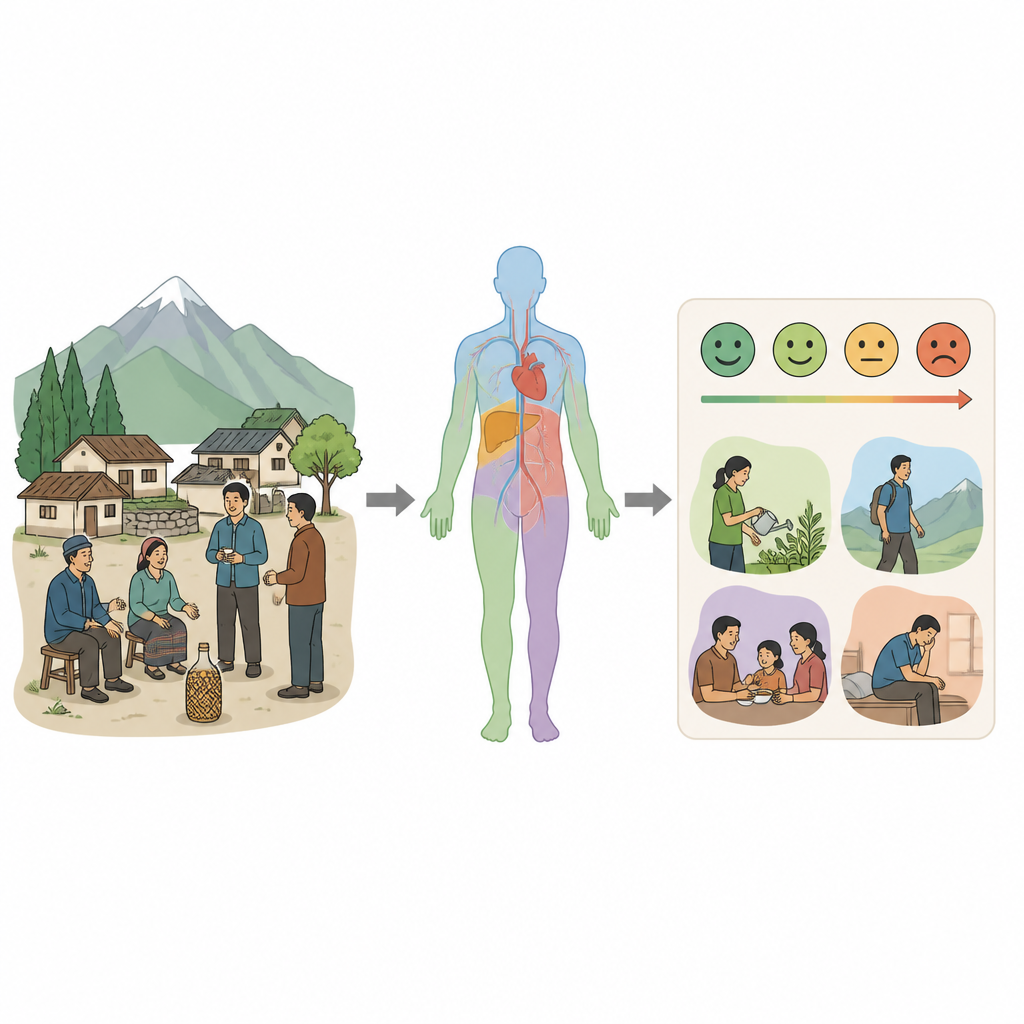
The research took place in Phayao Province, a mountainous area where many ethnic groups live and alcohol is closely woven into traditions and village gatherings. Thailand’s north reports the country’s highest drinking levels, and Phayao is among the provinces with the most drinkers. In these settings, homemade alcohol is common and long trips to the nearest hospital make health care harder to reach. Against this backdrop, the researchers wanted to know how much adults were drinking, how that related to their liver and blood sugar, and whether heavier drinking went hand in hand with poorer day-to-day life.
How the researchers checked health and habits
The team randomly selected one rural village and invited all adults aged 20 and older who had lived there at least a year. In total, 405 men and women took part. Trained local health workers interviewed them using two standard question sets: one to rate their drinking risk and another to measure quality of life across physical health, mood, social ties, and environment. Each person also gave a fasting blood sample. From this, the researchers measured a liver enzyme called ALT, which tends to rise with liver strain, and HbA1c, which reflects average blood sugar and is widely used to screen for diabetes. Blood pressure was recorded as another sign of strain on the heart and blood vessels.
What the village numbers reveal
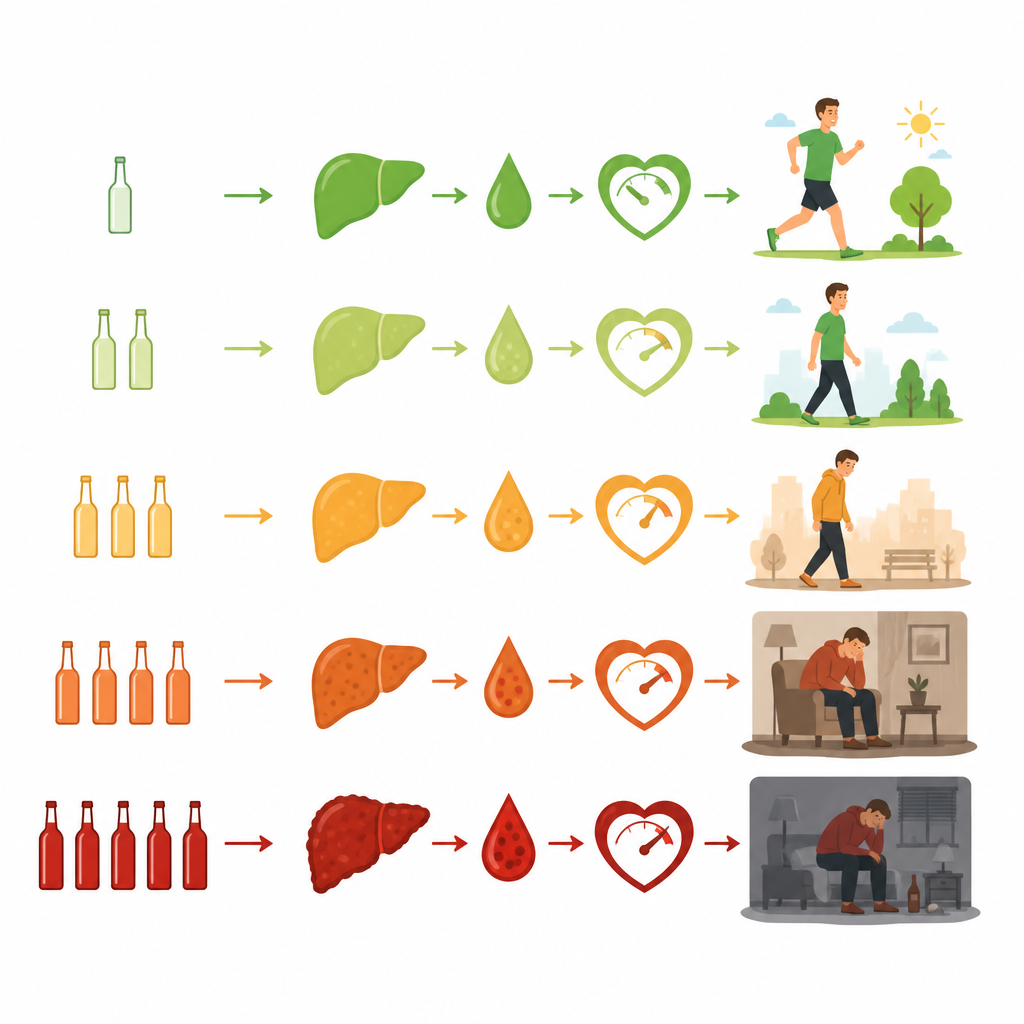
The results painted a clear picture. About one in ten people were at high risk for serious alcohol problems, and roughly one third showed harmful drinking patterns. Men were far more likely than women to fall into the harmful or dependent groups. As drinking risk rose, ALT levels climbed sharply in both sexes, signaling stress on the liver. Among men, higher drinking scores also went with higher HbA1c and blood pressure. People who smoked tended to drink more, had worse liver and blood sugar readings, and reported poorer quality of life than non-smokers. Those with existing long-term conditions such as diabetes, high blood pressure, or lung disease generally showed worse scores across the board and a lower sense of well-being.
Quality of life and hidden warning signs
Quality of life scores were closely tied to these simple health measures. Villagers with normal liver tests and blood sugar were much more likely to report better physical comfort, mood, and social life. By contrast, abnormal ALT or high HbA1c went with noticeably lower quality-of-life scores. Men who drank more had not only higher liver and blood sugar readings but also lower ratings of daily well-being. Regular health checkups appeared to help: people who had an annual exam tended to feel better overall, suggesting that early detection and advice may support healthier habits and a stronger sense of control.
What this means for communities
For readers outside Thailand, the takeaway is straightforward. In this rural village, heavier drinking did not exist in isolation: it clustered with smoking, raised liver and blood sugar markers, higher blood pressure, and a poorer quality of life. The study does not prove that alcohol alone caused all these problems, but it shows that drinking patterns, simple blood tests, and everyday well-being are tightly linked. The authors argue that community-based approaches, regular screening, and respect for local culture are key to easing alcohol-related harm, whether in remote hill villages or urban neighborhoods elsewhere.
Citation: Chairinkam, S., Sakulwattana, W., Seangpraw, K. et al. Alcohol consumption and its association with biochemical indicators and quality of life among rural adults in Northern Thailand. Sci Rep 16, 15685 (2026). https://doi.org/10.1038/s41598-026-46837-8
Keywords: alcohol use, liver health, rural Thailand, blood sugar, quality of life