Clear Sky Science · en
Biofilm producing and antibiotic resistant coagulase negative staphylococci in clinical samples isolated from tertiary care hospital of Nepal
Why sticky hospital germs matter
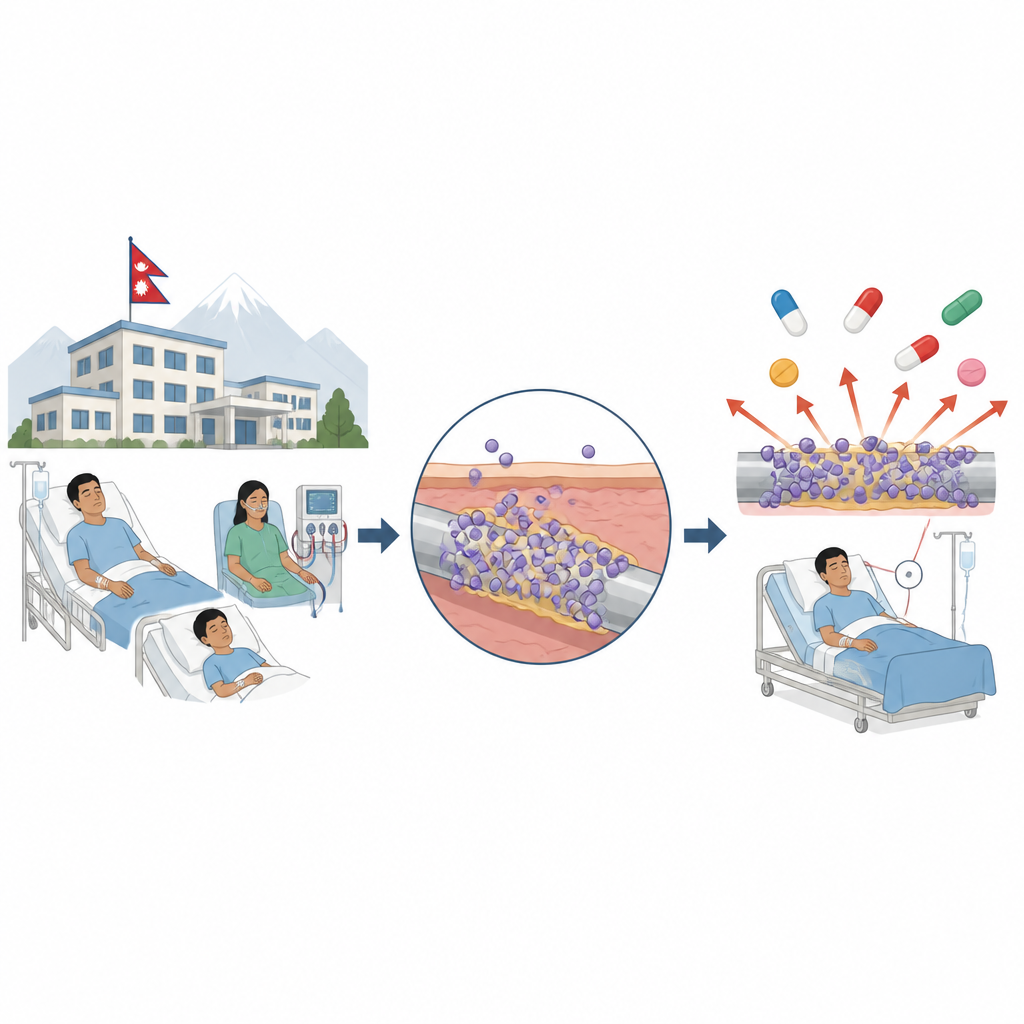
Most of us think of skin bacteria as harmless hitchhikers, but in hospitals some of these tiny residents can turn into stubborn troublemakers. This study from a hospital in Nepal looks at a group of skin bacteria that quietly stick to medical devices, shield themselves in a slimy layer, and resist many of the antibiotics doctors rely on. Understanding how common these hard to treat germs are, and how they behave, helps hospitals protect vulnerable patients from lingering infections.
From harmless guests to hospital pests
The bacteria examined here are called coagulase negative staphylococci, often shortened to CNS. They normally live on healthy skin and in the nose without causing problems. But when people are ill, have wounds, or need catheters and other tubes, CNS can slip inside the body and cause infections ranging from urinary tract infections to bloodstream infections. As hospitals use more invasive devices, these once ignored microbes have gained new importance as hidden drivers of hospital related illness.
Sticky shields called biofilms
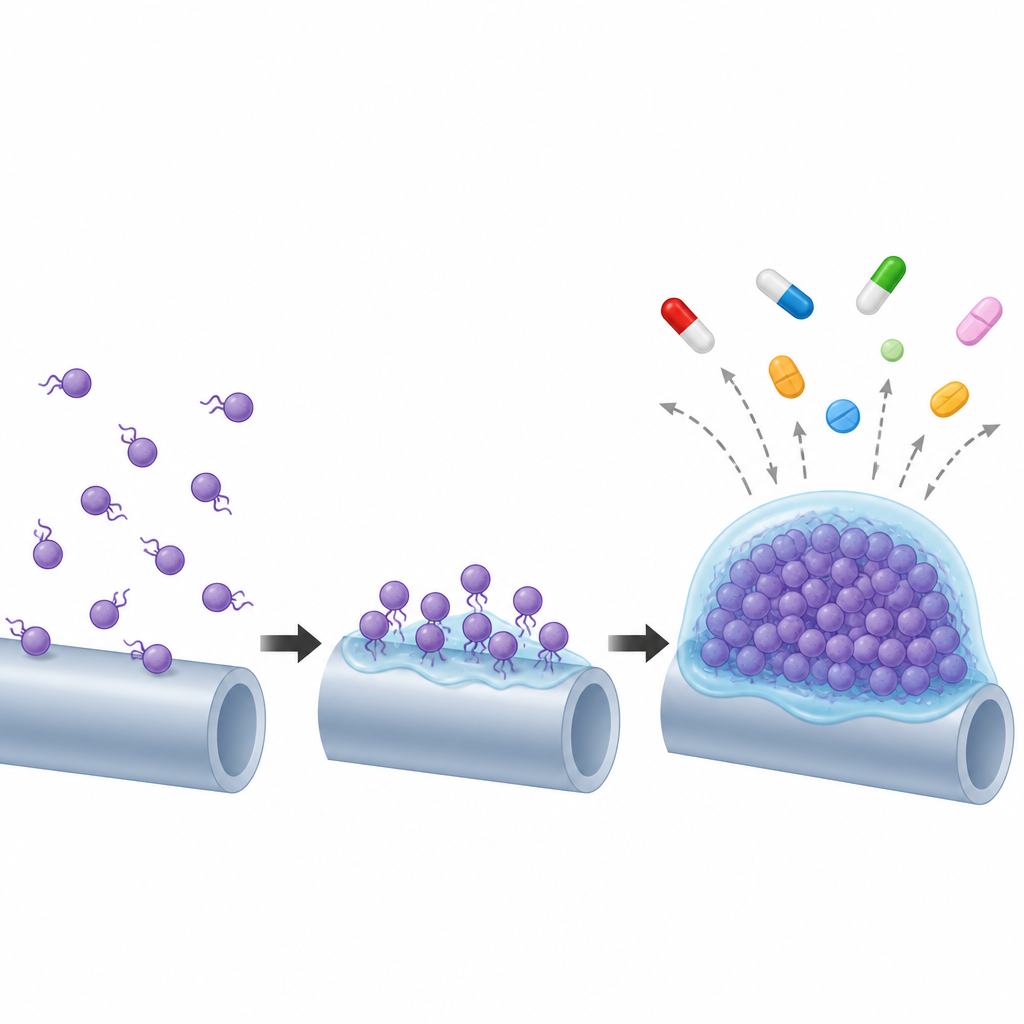
A key trick that makes these bacteria so difficult to control is their ability to form biofilms. In a biofilm, bacteria glue themselves to a surface such as a catheter tip and surround themselves with a self made protective coating. Inside this slimy shelter, they can survive attacks from antibiotics and the immune system far better than free floating bacteria. The researchers used a plate based test to measure how strongly each bacterial sample could form this sticky layer and also looked for a known biofilm related gene called icaA.
What the hospital samples revealed
The team studied 69 bacterial samples taken from over 1600 patient specimens, including urine, wound swabs, blood, semen, and catheter tips. Nearly half of the samples came from urine and about a third from wounds, showing how often these bacteria turn up in everyday hospital testing. Alarmingly, almost all of the bacteria were resistant to common drugs such as penicillin and cefixime, and about three quarters were resistant to several different antibiotic families at once. Many had a high resistance index, suggesting they came from settings where antibiotics are used heavily.
Biofilms common, but genes tell only part of the story
When the scientists tested for sticky growth on plastic plates, more than nine out of ten bacterial samples formed biofilms, and about a third were strong producers. Yet only a small fraction carried the icaA gene that is often linked to this behavior. This gap suggests that these bacteria can build protective layers using several different routes, not just the classic one taught in textbooks. The study also checked for methicillin resistance, a marker of tough to treat staph, and found it in roughly two thirds of the samples. However, there was no clear statistical link between being a strong biofilm former and being resistant to methicillin or to multiple drug classes.
What this means for care and infection control
For patients and hospitals, the message is that skin bacteria once dismissed as harmless contaminants can be important, adaptable invaders. In this Nepalese hospital, most CNS isolates could form protective biofilms and resist many standard antibiotics, yet the exact genetic pathways behind this behavior were varied. The authors conclude that doctors and infection control teams should treat these organisms as real threats, focus on preventing device related infections, and use antibiotics more carefully to slow the rise of such hardy hospital germs.
Citation: Manandhar, S., Karn, D., Shrestha, M.R. et al. Biofilm producing and antibiotic resistant coagulase negative staphylococci in clinical samples isolated from tertiary care hospital of Nepal. Sci Rep 16, 15280 (2026). https://doi.org/10.1038/s41598-026-46831-0
Keywords: biofilm, hospital infections, antibiotic resistance, staphylococci, catheter related infection