Clear Sky Science · en
ICT training with wearable devices to enhance emotional communication and musicality in vocal education
Why your phone might help you sing better
Many people dream of singing more confidently, but regular lessons can be expensive and hard to schedule. This study explores whether everyday digital tools, like smartphone apps and wearable devices, can help beginner vocal students sharpen their musical ear and perhaps communicate emotions more clearly when they sing. By following first-year music students over eight weeks, the researchers asked a simple question that matters to anyone who loves music: can smart technology make us not just more accurate singers, but also more expressive ones?
How technology entered the voice studio
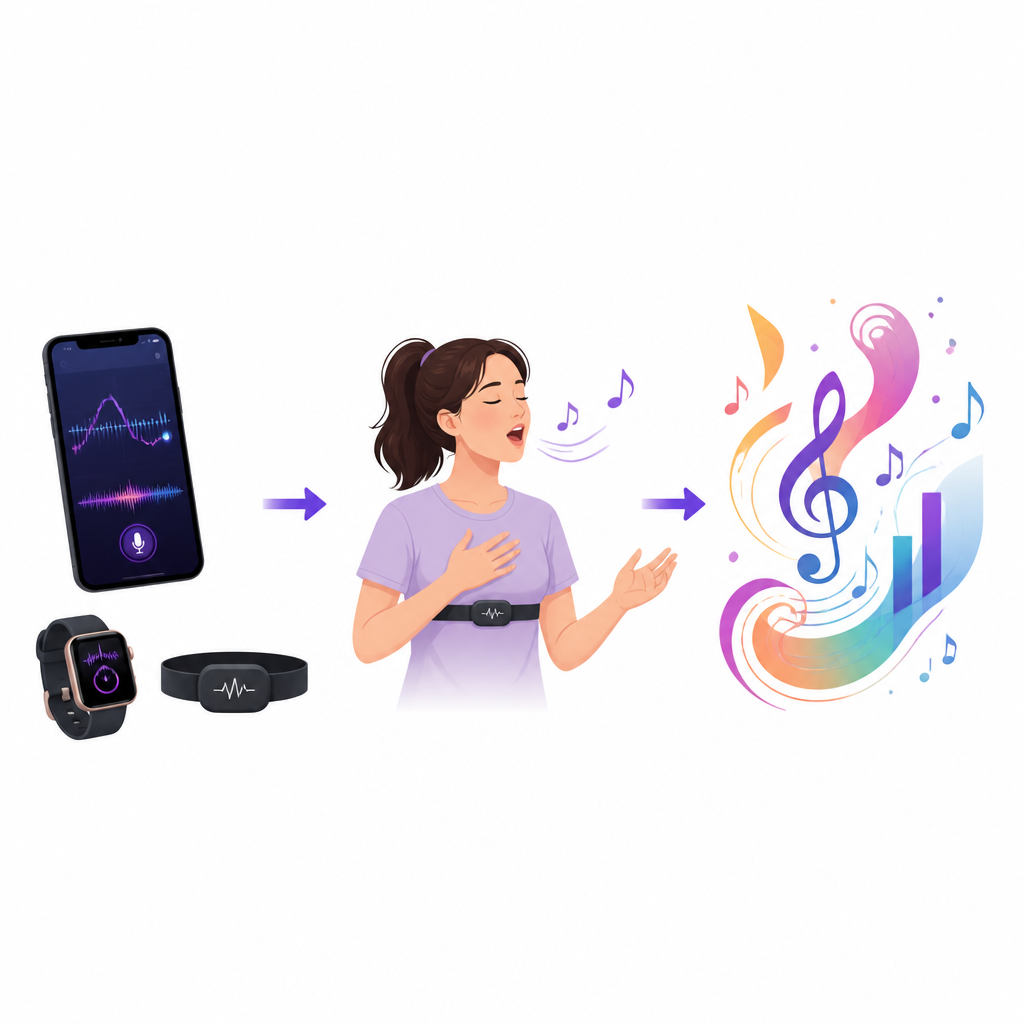
The research followed 218 first-year vocal students at a Ukrainian arts university. Half the students used a singing app called SingTrue as part of an eight-week program, while the other half continued with traditional lessons only. SingTrue offers interactive listening and singing tasks that focus on matching pitch, keeping steady rhythm, and improving diction. Alongside the app, some students wore smartwatches and chest sensors while they practiced. These wearables recorded heart rate and breathing patterns during singing, giving the researchers a window into how physically and emotionally engaged the students were as they worked.
Measuring musical ear and emotional color
To see whether the training changed musical skills, all students took a standardized listening test called the Advanced Measures of Music Audiation before and after the course. This test does not ask people to sing; instead, they listen to pairs of short musical phrases and judge whether they differ in melody or rhythm. It provides separate scores for how well a person hears pitch and rhythm, plus a combined total. To gauge emotional color in the voice, each student recorded the same chosen song in a studio before and after the eight weeks. Specialized software, originally designed for speech, analyzed the recordings for patterns linked to emotions such as joy, sadness, anger, fear, and a neutral, less expressive style.
What changed and what stayed the same
The students who used SingTrue showed clear improvements in their musical ear. Their scores for pitch, rhythm, and overall listening ability all rose significantly compared with the control group, whose scores remained largely stable. This suggests that focused app-based practice can quickly strengthen the building blocks of musicality, such as hearing small differences in notes and recognizing rhythmic patterns. However, the emotional side told a different story. The computer analysis showed that most students, in both groups, chose joyful songs and stayed at a roughly similar level of expressiveness before and after the program. The training did not lead to stronger emotional shading in their recorded performances according to this automated measure.
What body signals revealed
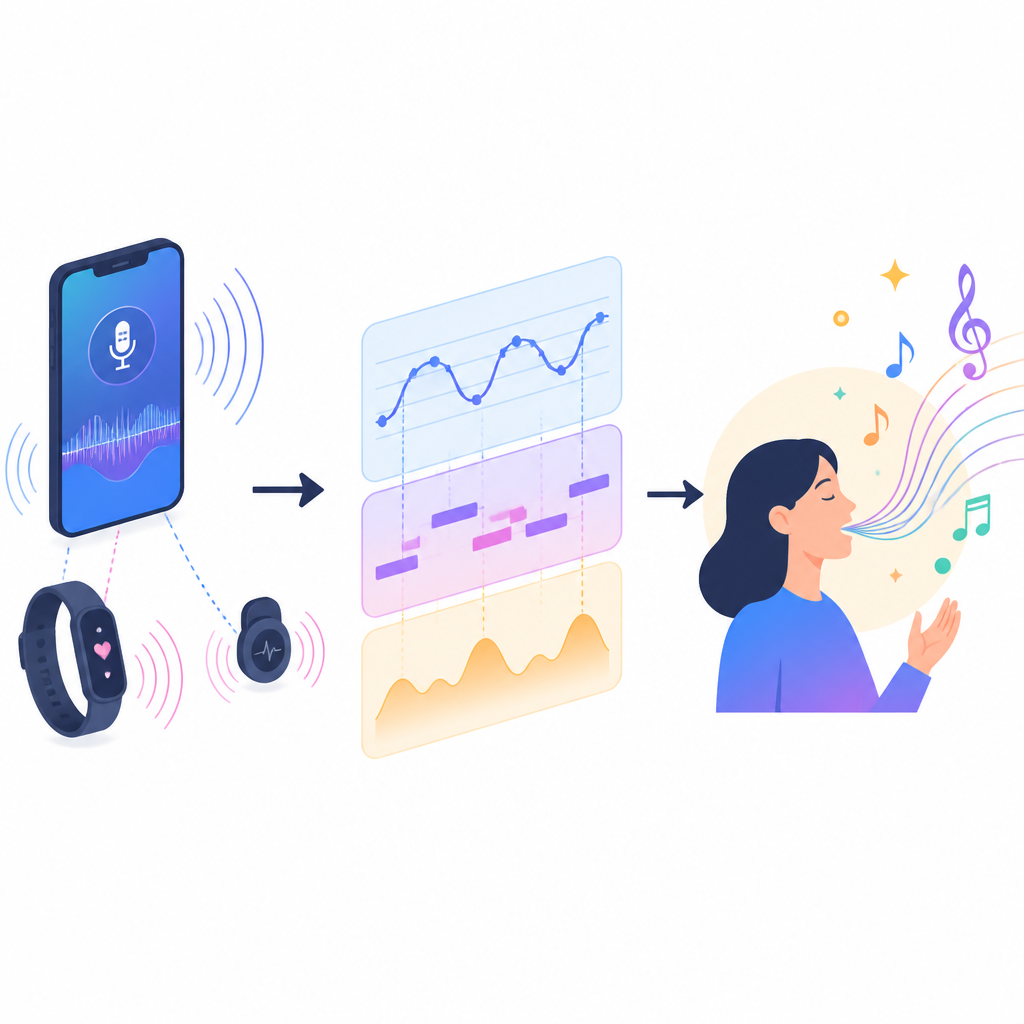
The wearable devices added another layer of insight. After the eight weeks, students in the app group showed higher heart rate and faster breathing during singing than before, while a measure of heart rate variability, which reflects how the body balances stress and recovery, stayed steady. This pattern points to greater physical activation and involvement in the act of singing, not necessarily to clearer emotional storytelling. The physiological data were used only for analysis, not for live feedback in the lessons, so students did not directly adjust their performance in response to these signals.
Why musical accuracy is not the whole story
For a general reader, the key message is that technology can reliably help beginning singers sharpen their ears and sing more accurately, but this does not automatically make their performances more emotionally moving. The app and wearables proved useful for training pitch and rhythm and for tracking how engaged the body becomes during singing. Yet genuine emotional communication in music seems to require more than clever software: it calls for teaching methods that deliberately focus on interpretation, feeling, and connection with an audience. The authors argue that future tools and courses should weave emotional practice into their design, combining digital precision with human guidance to help singers not only hit the right notes, but also touch listeners’ hearts.
Citation: Ling, Z. ICT training with wearable devices to enhance emotional communication and musicality in vocal education. Sci Rep 16, 15382 (2026). https://doi.org/10.1038/s41598-026-46822-1
Keywords: vocal education, wearable devices, mobile learning, musicality, emotional communication