Clear Sky Science · en
A prognostic nomogram for all frequencies sudden sensorineural hearing loss based on the commixed index of inflammatory–immune–hemostasis–nutrition
Why sudden hearing loss matters
Waking up to find that the world has gone quiet in one ear can be frightening. Sudden hearing loss often strikes without warning and can permanently change how people communicate, work, and enjoy daily life. This study looks for simple blood-based clues that might help doctors predict which patients are more likely to regain their hearing and which may need closer care.
A closer look at a sudden drop in hearing
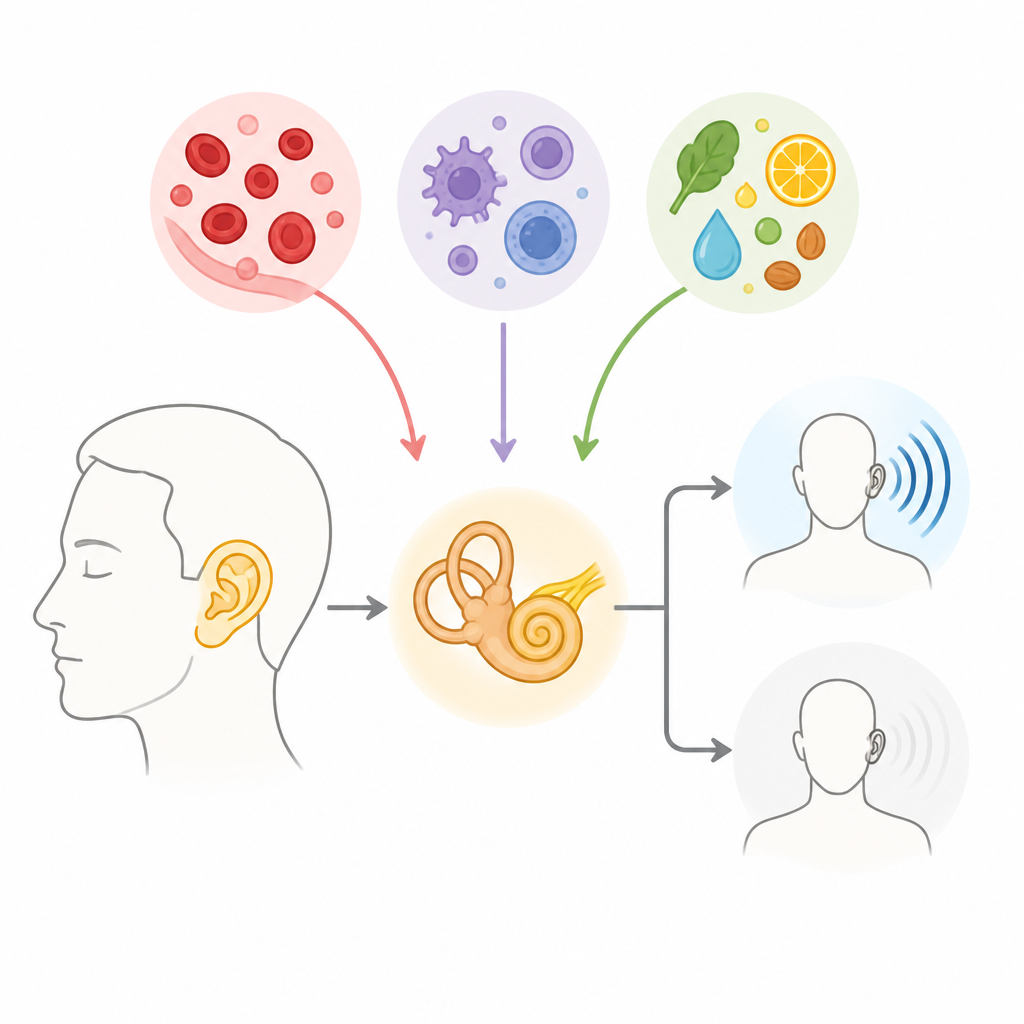
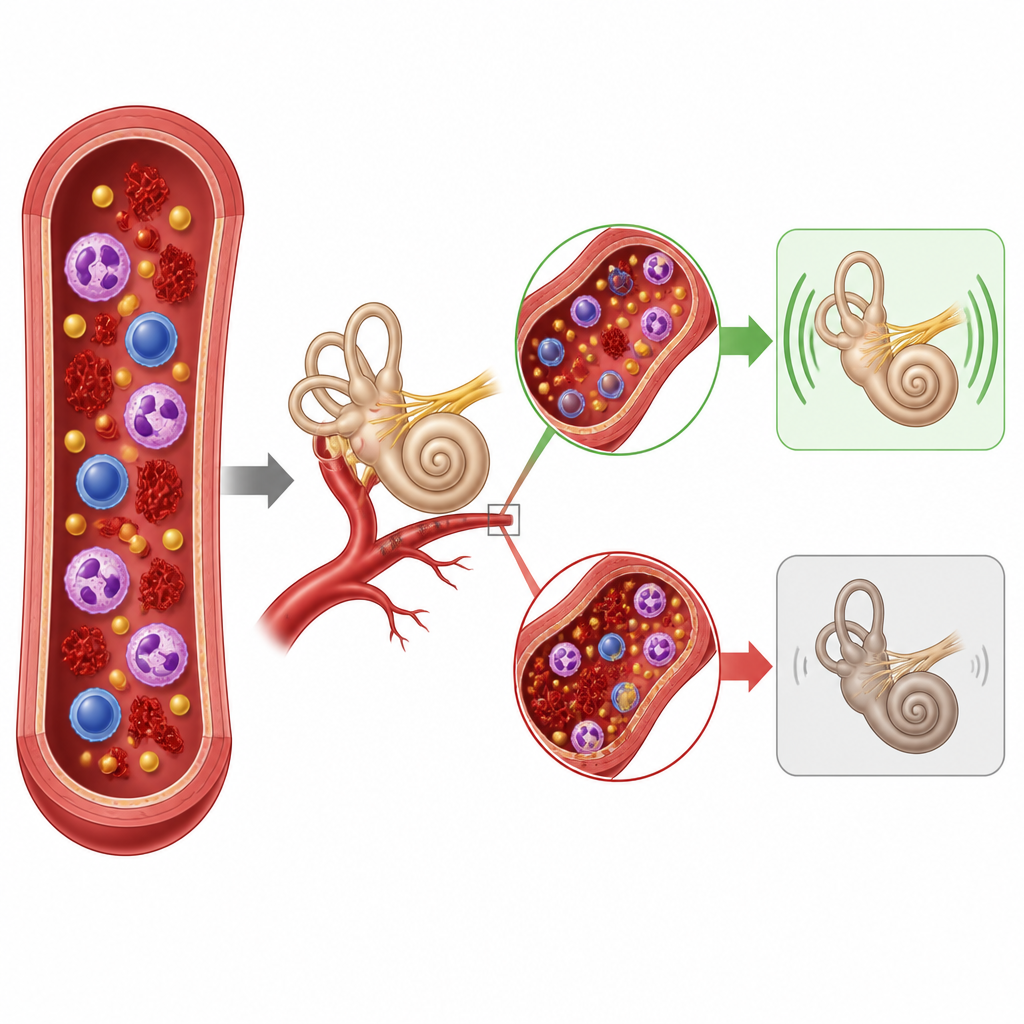
Sudden sensorineural hearing loss is a rapid loss of hearing that develops over just a few days. In the most severe form, called all-frequencies sudden hearing loss, sound is reduced across the full range of pitches. This pattern usually has the worst outlook and can severely affect quality of life. Although the exact cause is still uncertain, research suggests that infection, immune reactions, tiny blood clots, and poor blood flow inside the delicate inner ear all play a part. Because the inner ear has only a single small artery feeding it, even mild problems with blood and blood vessels can lead to lasting damage.
How blood, immunity, and nutrition connect to the ear
The team behind this study reasoned that the state of a person’s blood, immune system, clotting tendency, and nutrition might all be reflected in common lab tests. They focused on two summary measures: the prognostic nutritional index, which combines blood protein levels with a type of white blood cell, and a new score called NLDA, which blends counts of different white cells with a clotting fragment and a blood protein. Together, these measures capture whether the body is inflamed, prone to clotting, or undernourished, all of which could disturb blood flow in the tiny vessels that keep the inner ear alive.
What the study did in real patients
Researchers followed 245 people treated at a single hospital in China for sudden hearing loss affecting all frequencies. All patients arrived within two weeks of losing their hearing and received standard care, including steroid drugs and a medicine aimed at improving blood flow. Before treatment started, the team recorded symptoms such as dizziness, measured hearing levels, and drew blood for routine tests. They then combined these lab values into several indices related to inflammation, clotting, and nutrition, and watched how well each patient’s hearing improved over the next two weeks.
Two simple scores and a new prediction tool
When the researchers compared those who recovered useful hearing with those who did not, clear patterns emerged. Patients with better nutritional status, reflected in a higher prognostic nutritional index, were more likely to improve. Those with a higher NLDA score, hinting at stronger inflammation, more clotting activity, and lower protective blood proteins, tended to do poorly. In addition, people who arrived with worse hearing and those who felt vertigo at the start often had less recovery. Using these four features vertigo, initial hearing level, the nutritional index, and the NLDA score the team built a simple chart called a nomogram that estimates the chance of meaningful hearing improvement for an individual patient.
What this means for people with sudden hearing loss
To a layperson, the message is that the state of the whole body not just the ear can shape recovery after a sudden loss of hearing. By using information from standard blood tests and a few key symptoms, doctors may be able to quickly sort patients into higher and lower risk groups and tailor follow-up and treatment intensity. The study suggests that paying attention to inflammation, blood thickness, and nutrition could help protect the inner ear, although more research is needed in other hospitals and over longer time spans. For now, this work offers a practical step toward more personalized care when hearing disappears overnight.
Citation: Zheng, Z., Xia, L., Chen, X. et al. A prognostic nomogram for all frequencies sudden sensorineural hearing loss based on the commixed index of inflammatory–immune–hemostasis–nutrition. Sci Rep 16, 15259 (2026). https://doi.org/10.1038/s41598-026-46821-2
Keywords: sudden hearing loss, inner ear, blood markers, inflammation, hearing prognosis