Clear Sky Science · en
Digitalization and upstream supply chain source concentration in high-tech industries
Why this matters for everyday life
From smartphones and solar panels to lifesaving medicines, many products we rely on come from complex global supply chains. This study looks at how the spread of digital tools such as data platforms and smart software is quietly reshaping where high-tech makers buy their critical parts, and what that means for the risk of shortages and disruptions.
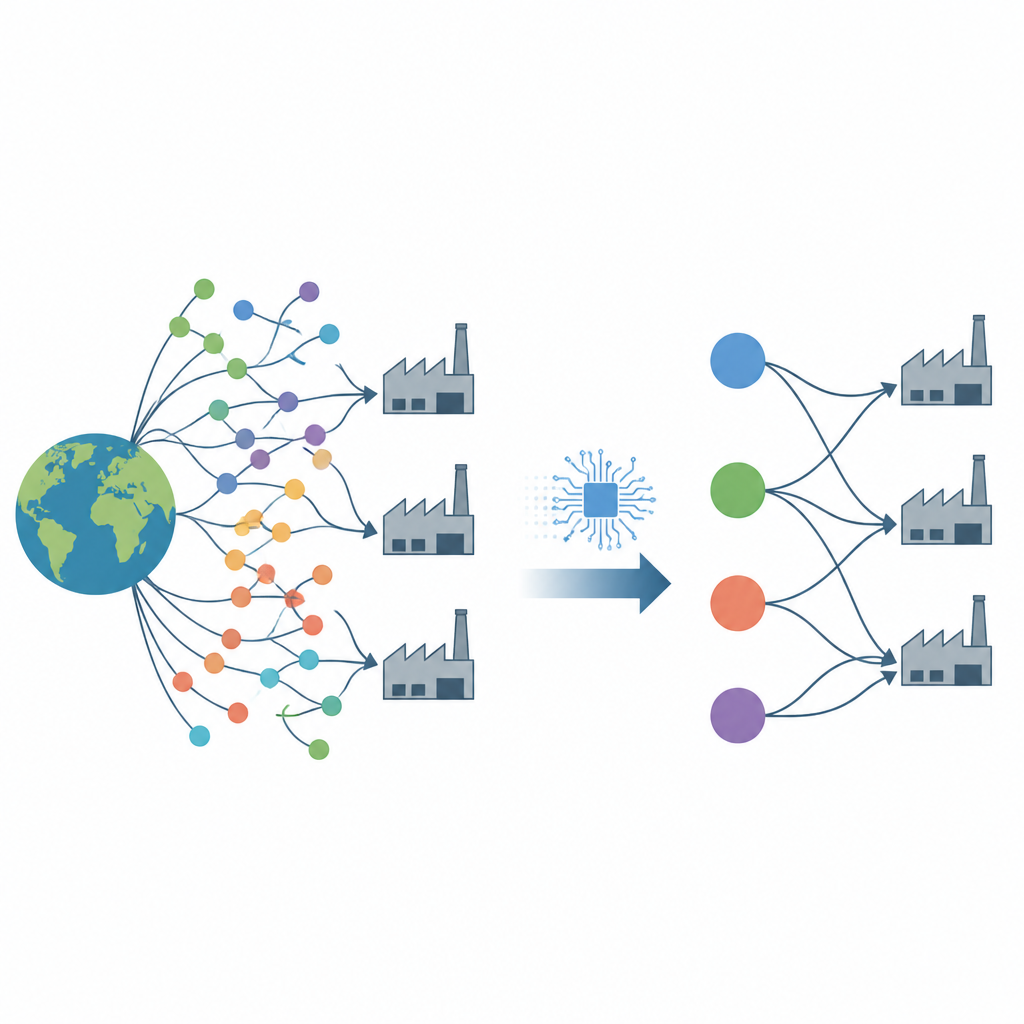
How digital tools change buying patterns
The authors focus on high-tech industries in China, which has become a major hub for electronics, clean energy equipment, and advanced materials. These sectors depend heavily on imported components from around the world. When too many of those imports come from just a few countries or suppliers, any shock—such as a trade dispute, a natural disaster, or a pandemic—can quickly ripple through factories and into consumer products. The central question is whether digitalization helps firms spread their risks across more sources, or instead locks them into a smaller set of partners.
A surprising U-shaped pattern
Using detailed data on nearly 1,800 listed firms and more than 600 key components from 2010 to 2022, the researchers track both the rise of digitalization in each industry and how concentrated its import sources are. They find a clear U-shaped relationship. In the early stages of adopting digital tools, firms gain better information, easier communication, and lower search costs. This makes it simpler to find and manage a wider range of suppliers, so dependence on any single country or company falls. But once digital systems become more complex and deeply embedded, the pattern reverses: import sources become more concentrated again.
People, risk, and hidden costs
To understand this reversal, the study looks closely at two human factors: skilled workers and willingness to take risks. At first, firms hire and train more employees with advanced qualifications to run new systems and analyze data. This expanded pool of talent makes it easier to juggle many suppliers without losing control. Over time, however, the benefits of adding yet more skilled staff shrink, while ongoing expenses for software upgrades, maintenance, and regulatory compliance rise. At the same time, managers become more cautious as digital systems grow complicated and costly to change. Faced with higher coordination burdens and lower appetite for risk, firms simplify their networks and rely on fewer, more familiar suppliers.
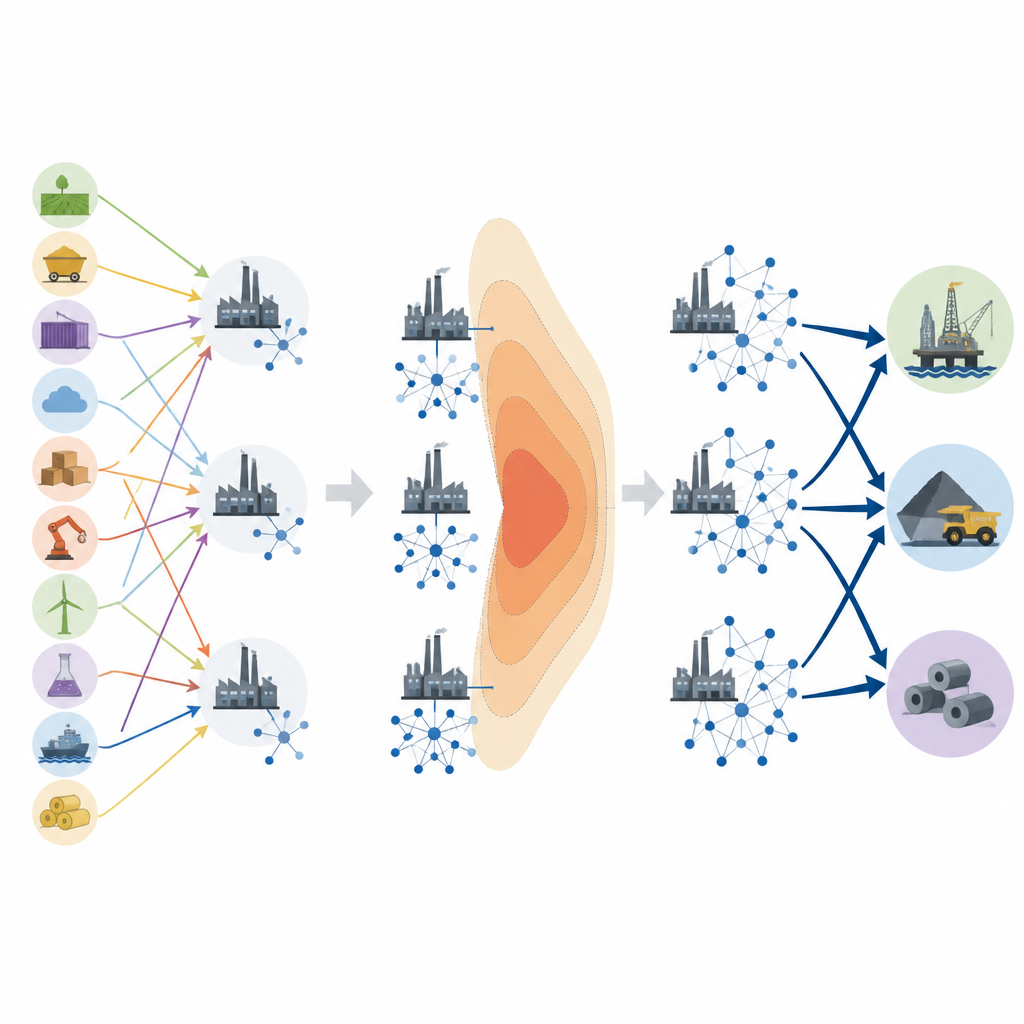
Not all industries respond the same way
The U-shaped effect is strongest in labor-intensive high-tech industries and in sectors that already had highly concentrated supply chains. In these settings, early digital tools offer big gains in flexibility, but later waves of digital investment quickly add complexity. The study also shows that digitalization does not reshape supply networks overnight. Short-term changes are small; the main impact appears over several years, as companies gradually adjust contracts and sourcing strategies. This long time frame suggests that digital transformation is less a quick fix and more a slow-moving force that subtly rewires global trade patterns.
What this means for supply chain security
For policymakers and business leaders, the message is that digital technology is not a simple cure for fragile supply chains. It can first help spread risk by opening doors to new suppliers, but if pushed too far without careful planning, it can also pull an industry back toward dependence on a narrow set of sources. The authors argue for balanced digital strategies that invest in skills, risk management, and clear rules so that high-tech industries can enjoy the benefits of smarter systems without drifting into new forms of vulnerability.
Citation: Zhang, Y., Zhu, H. Digitalization and upstream supply chain source concentration in high-tech industries. Sci Rep 16, 15249 (2026). https://doi.org/10.1038/s41598-026-46819-w
Keywords: industrial digitalization, high-tech supply chains, source concentration, human capital, risk management