Clear Sky Science · en
Curcumin nanocrystals mitigate hypoxia-induced cardiac injury through redox regulation and CHOP-CytC-caspase pathway modulation
Why the heart struggles in thin air
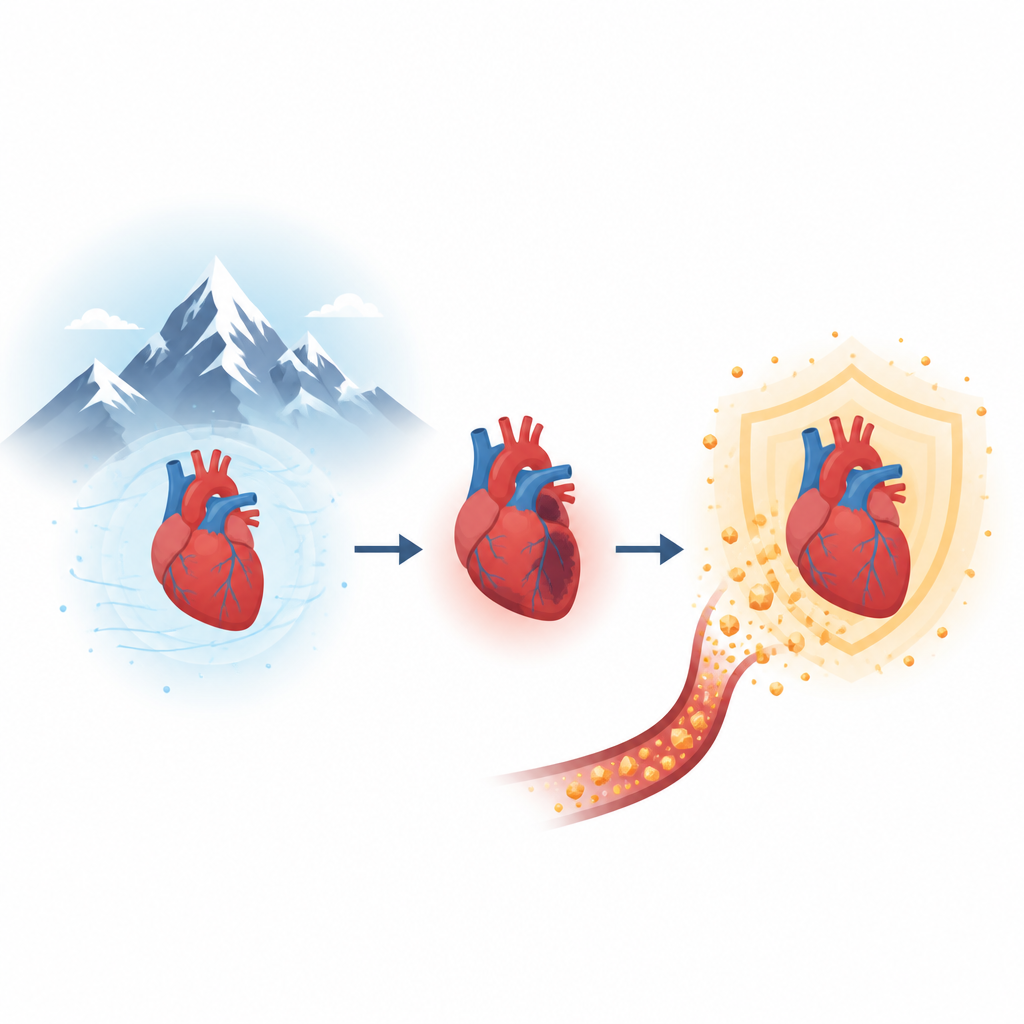
People who live, work, or travel at high altitude face a double threat during serious injuries: not only does the trauma itself strain the body, but the low oxygen of thin mountain air can quietly damage the heart. This study used young pigs to mimic abdominal gunshot wounds at simulated high altitude and asked whether an ingredient from the spice turmeric, delivered as tiny crystals into the bloodstream, could shield the heart from this hidden damage.
Hidden heart damage after trauma
Doctors have long known that the heart can be hurt even when it is not directly struck. Severe infections, toxins, or major injuries can trigger “secondary” heart injury, which worsens recovery and survival. High-altitude conditions add extra stress because the air contains much less oxygen and the pressure is lower, making it harder for the heart muscle to get what it needs. In this study, the researchers created abdominal firearm injuries in piglets either at normal altitude or inside a chamber that mimicked 6,000 meters above sea level. They found that low-oxygen trauma led to much more damage to heart structure, higher blood levels of typical heart injury markers, and many more dying heart muscle cells than similar injuries at normal altitude.
A turmeric compound upgraded for the bloodstream
The team focused on curcumin, the bright yellow compound in turmeric that has drawn attention for its anti-inflammatory and antioxidant properties. Ordinary curcumin, however, does not dissolve well in water and is poorly absorbed by the body, which limits its usefulness in emergencies. To overcome this, the scientists used curcumin nanocrystals, a formulation in which curcumin is broken into ultra-small particles that can be given directly into a vein. Piglets in the high-altitude trauma group either received no drug or were treated with an intravenous dose of these nanocrystals four hours after injury, allowing the researchers to compare how the hearts fared.
Less cell death, less inflammation, calmer chemistry
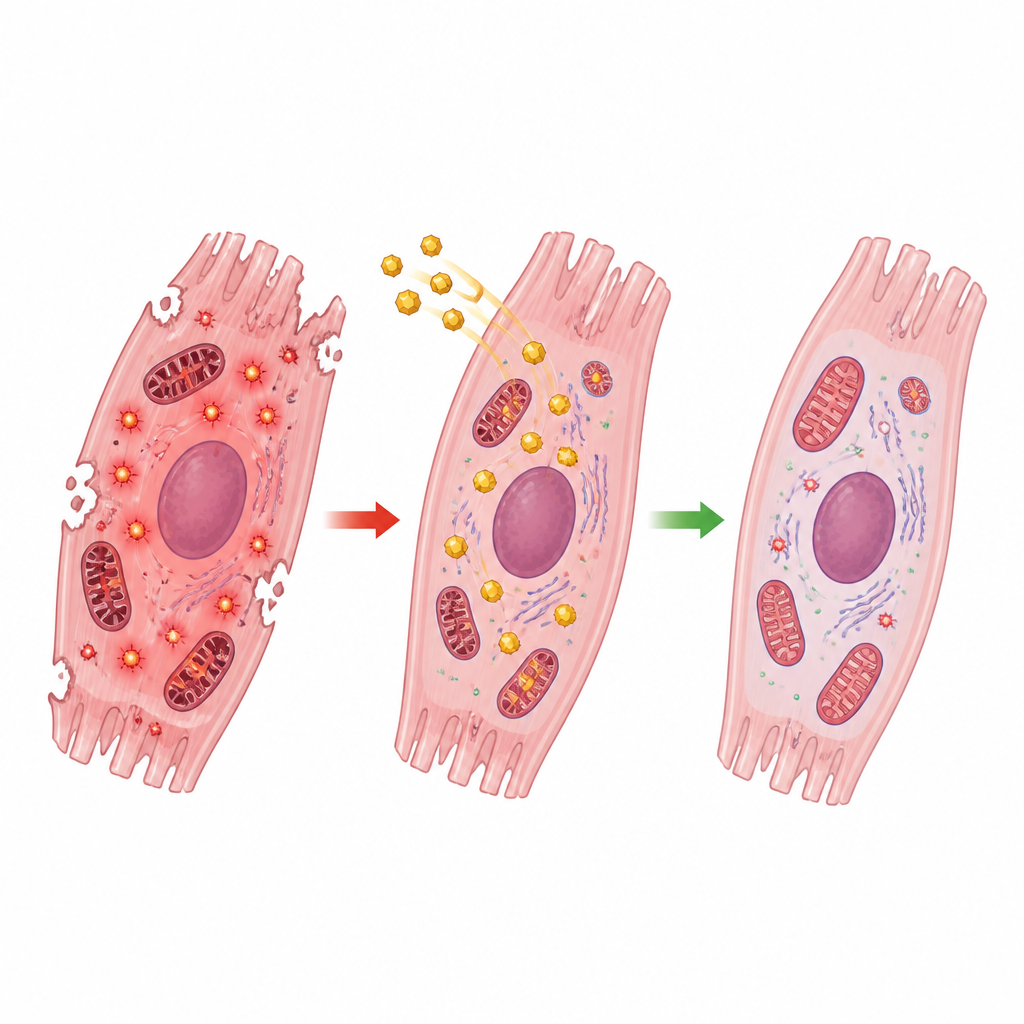
The results showed that curcumin nanocrystals clearly softened the blow to the heart. Under the microscope, hearts from untreated high-altitude animals looked swollen and disorganized, while those from treated animals showed far fewer structural changes and lower injury scores. Blood tests revealed that key heart enzymes rose sharply after hypoxic trauma but were noticeably lower when curcumin nanocrystals were given. Staining methods that mark dying cells showed that the number of heart cells undergoing programmed death dropped by roughly two-thirds with treatment. The drug also reduced levels of inflammatory molecules and reactive oxygen species, the chemically aggressive byproducts often called “oxidative stress,” suggesting that the heart’s internal environment had become less hostile.
Dialing down a dangerous chain reaction inside cells
Digging deeper, the investigators tracked a particular chain reaction inside heart cells that links prolonged stress to cell death. A stress sensor protein called CHOP becomes highly active when the cell’s protein-handling machinery is overwhelmed, pushing the cell toward destruction. In the high-altitude trauma group, CHOP was strongly increased, and this rise went hand in hand with signs that mitochondria, the cell’s power plants, were leaking key components that trigger a self-destruct program. Proteins that promote death were turned up, while protective proteins were turned down. Curcumin nanocrystals cut CHOP levels, restored some of the protective balance, and reduced the activation of downstream “executioner” proteins that break the cell apart. Together, these shifts suggest that the treatment interrupts a stress-to-death pathway at several points.
What this could mean for people at altitude
For now, these findings apply only to an animal model over a short time window, and the study did not measure long-term heart function. Even so, the work points to a practical idea: a curcumin-based infusion, formulated as nanocrystals for better delivery, might one day help protect the hearts of people who suffer severe injuries in high-altitude environments by calming harmful chemistry and slowing the loss of heart cells. Further studies will need to test how long the benefit lasts, the safest and most effective doses, and whether similar protection appears in other types of low-oxygen or trauma-related heart stress.
Citation: Liang, F., Yang, X., Wang, Z. et al. Curcumin nanocrystals mitigate hypoxia-induced cardiac injury through redox regulation and CHOP-CytC-caspase pathway modulation. Sci Rep 16, 15695 (2026). https://doi.org/10.1038/s41598-026-46816-z
Keywords: curcumin nanocrystals, high altitude trauma, cardiac injury, oxidative stress, cardiomyocyte apoptosis