Clear Sky Science · en
Post-cervical artificial insemination with a low sperm dose in gilts and sows improved reproductive performance in subtropical climates
Why pig breeding methods matter to your dinner plate
Pork is one of the most widely eaten meats in the world, and demand is rising, especially in warmer regions. Farmers must find ways to produce more healthy piglets from fewer animals, without wasting valuable breeding material from top-quality boars. This study tests a newer insemination method in pigs to see whether farmers can use much smaller semen doses while still getting large, healthy litters under hot, humid subtropical conditions.
Two different ways to deliver sperm
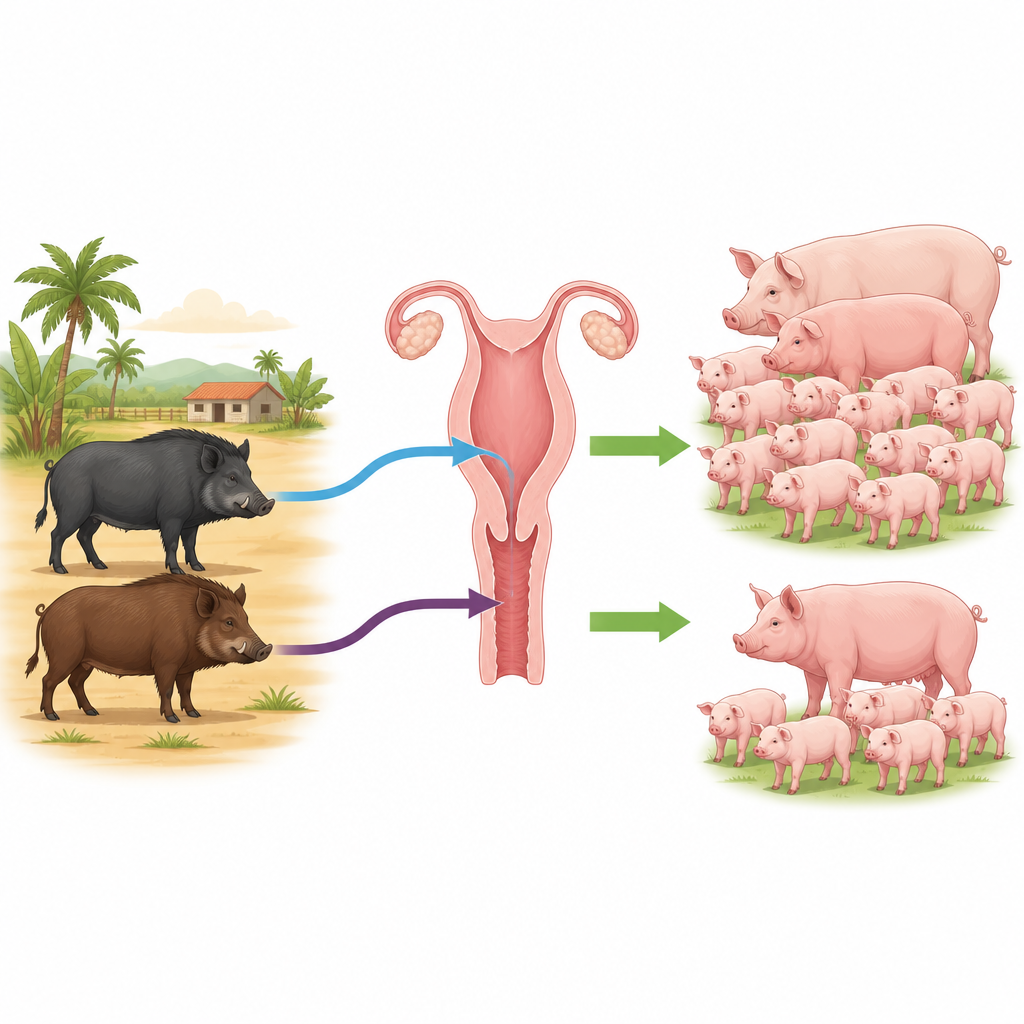
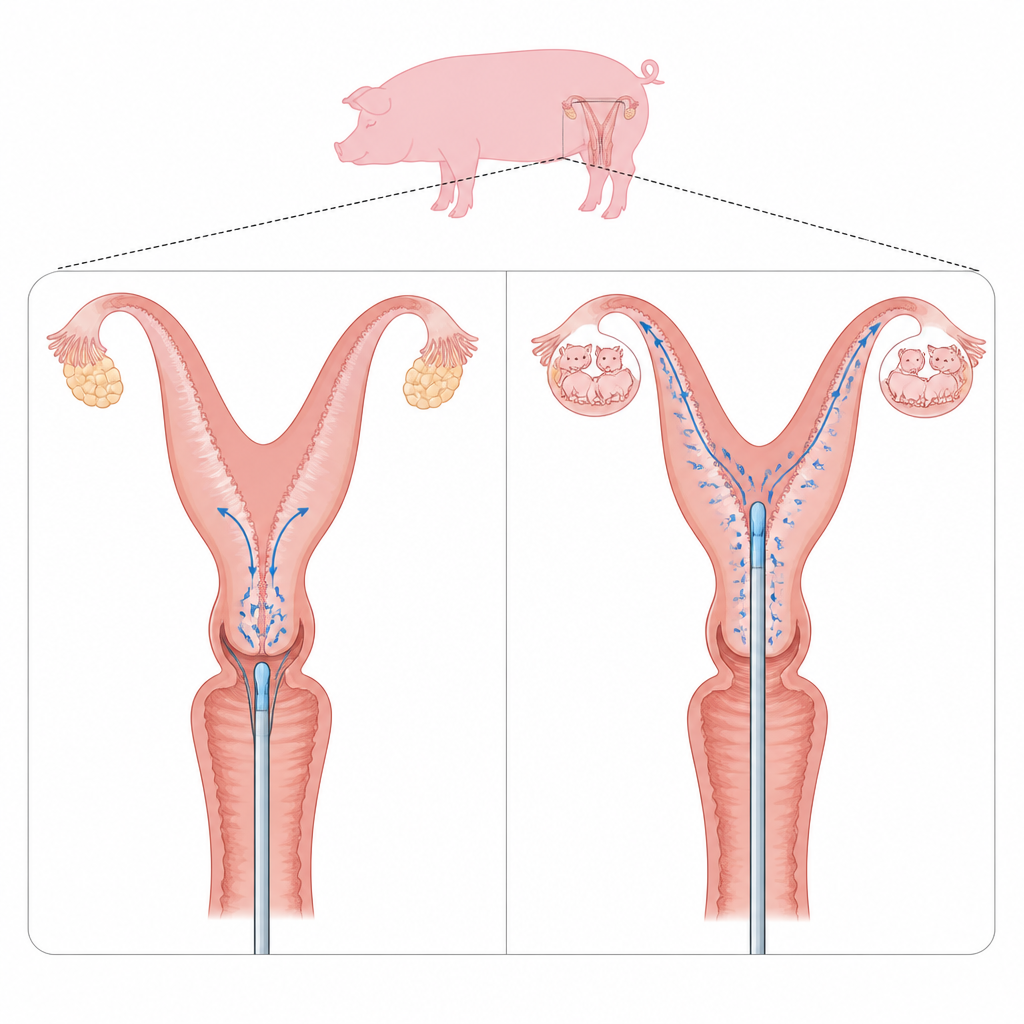
On modern pig farms, most breeding does not rely on natural mating but on artificial insemination, where semen from selected boars is collected and then placed into the female’s reproductive tract. The traditional approach, called cervical artificial insemination, deposits semen in the neck of the uterus using a simple catheter and relatively large sperm doses. A newer method, post-cervical artificial insemination, uses a longer inner tube to place semen deeper inside the uterus. Because the sperm are delivered closer to where fertilization occurs, this technique promises to work with fewer sperm cells, saving semen and money.
Testing low-dose insemination in a hot, humid setting
The researchers worked at a government pig farm in northeast India, which has a warm and humid subtropical climate that can reduce semen quantity and quality in boars. They studied 716 crossbred female pigs, including young first-time breeders (gilts) and older sows with previous litters. Each animal was randomly assigned to one of six combinations of technique and dose: traditional cervical insemination or post-cervical insemination, each using a high, medium, or low sperm dose. Every female received two inseminations during a natural heat period, and the team tracked whether she became pregnant, how many piglets were born, how many survived to weaning, and how long the procedures took.
More piglets from less semen
When the catheter for post-cervical insemination could be placed correctly, this method clearly outperformed the traditional approach, especially at lower doses. In both gilts and sows, females inseminated post-cervically were more likely not to return to heat, more likely to farrow, and produced more total and liveborn piglets than those inseminated through the cervix. At the lowest sperm dose tested, the newer method still produced litter sizes similar to or better than the highest-dose traditional method, while cervical insemination with the same low dose led to noticeably smaller litters. This means that a single ejaculate from a boar could be divided into more insemination doses without sacrificing fertility, which is particularly valuable where boars naturally produce less semen.
Procedural trade-offs and semen loss
The study also examined how practical and safe the methods were. Passing the longer post-cervical catheter was more challenging, especially in young gilts, and often took more attempts than the shorter traditional catheter. However, when passage was successful, the newer method reduced the time needed to infuse the semen and, in sows, shortened the overall procedure. Bleeding after insemination was rare in both methods. An important advantage of post-cervical insemination was a clear drop in semen flowing back out of the reproductive tract, which suggests that fewer sperm are wasted and more reach the area where fertilization takes place.
What this means for pig production
For farmers and breeding programs in warm, resource-limited regions, these results indicate that placing semen deeper into the uterus can safely cut sperm doses while improving litter size and reducing waste, as long as technicians can master the more demanding catheter placement. In simple terms, the study shows that carefully targeted insemination allows pigs to have more piglets from less semen, making better use of valuable boars and reducing costs. If adopted widely and used under good management, this approach could help pig producers meet rising demand for pork with fewer animals and more efficient breeding in challenging climates.
Citation: Singh, M., Katiyar, R., Chaudhary, J.K. et al. Post-cervical artificial insemination with a low sperm dose in gilts and sows improved reproductive performance in subtropical climates. Sci Rep 16, 15535 (2026). https://doi.org/10.1038/s41598-026-46814-1
Keywords: pig reproduction, artificial insemination, post-cervical insemination, subtropical farming, litter size