Clear Sky Science · en
Digital financial inclusion and household consumption structure upgrading
Why Your Phone Wallet Matters for Everyday Life
Across China and much of the world, paying with a tap on a phone has become routine. But beyond convenience, these digital tools may be quietly changing what families spend their money on—from basic survival to education, health care, travel, and leisure. This study asks a simple but powerful question: as digital financial services spread, do ordinary households shift toward a higher quality of life, and under what conditions does this shift happen fastest?
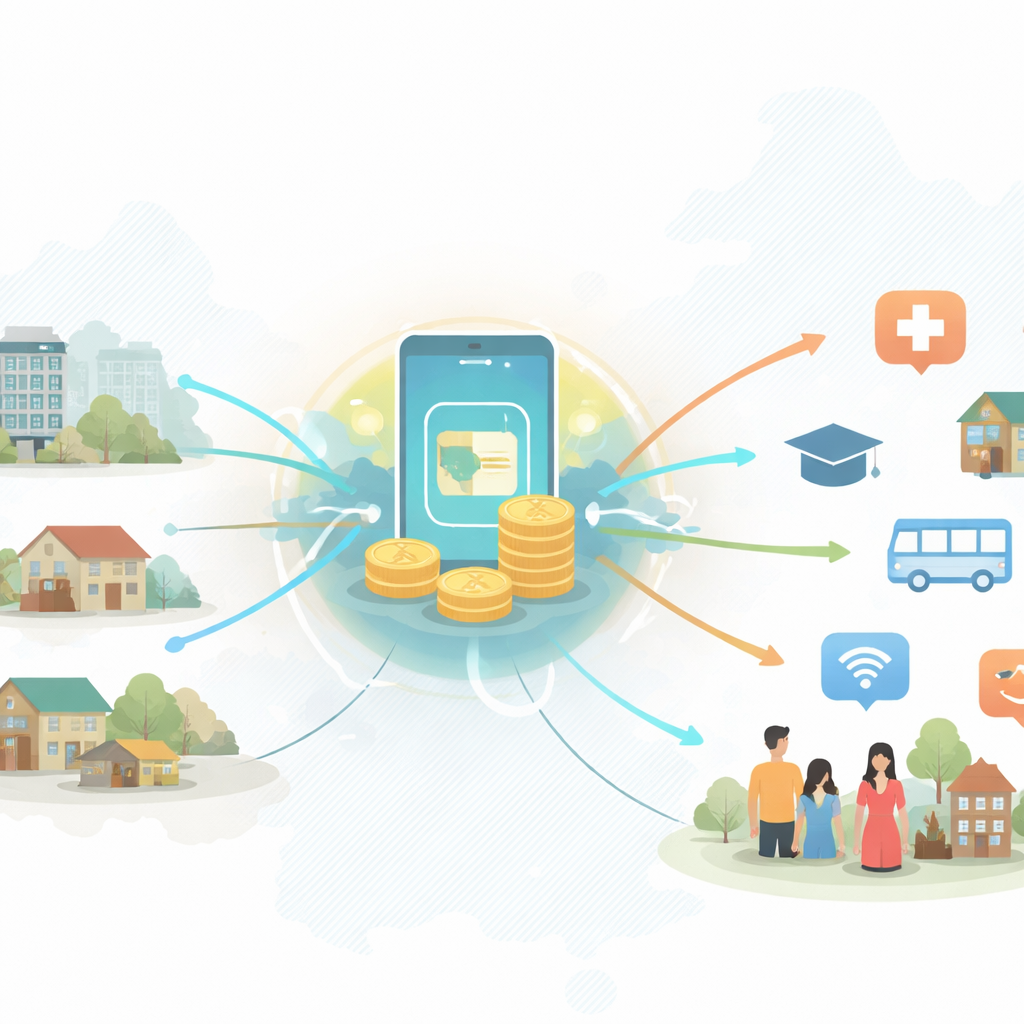
From Cash and Counters to Digital Gateways
The researchers focus on digital inclusive finance—services like mobile payments, online loans, digital savings, and insurance that reach people traditional banks often overlook. Using data from 31 Chinese provinces between 2011 and 2022, they track both the growth of these digital tools and how household spending changes over time. Instead of just looking at how much people spend, the study examines how the mix of spending changes: do families devote more of their budgets to things that build skills, improve health, and enrich daily life, rather than just food and shelter?
Following the Money into New Kinds of Spending
To capture this shift, the authors measure the share of household budgets going to what they call development and enjoyment spending—items such as education, medical care, transport, communication, cultural activities, and other services. They then compare this with a detailed index of digital finance that reflects how widely these services are available, how often they are used, and how deeply they are embedded in everyday transactions. After accounting for differences in income, urbanization, industry structure, trade, government spending, and the strength of traditional banking, they find a clear pattern: provinces with stronger digital finance see a larger share of household spending devoted to higher-level goods and services.
How Digital Tools Lift Incomes and Narrow Gaps
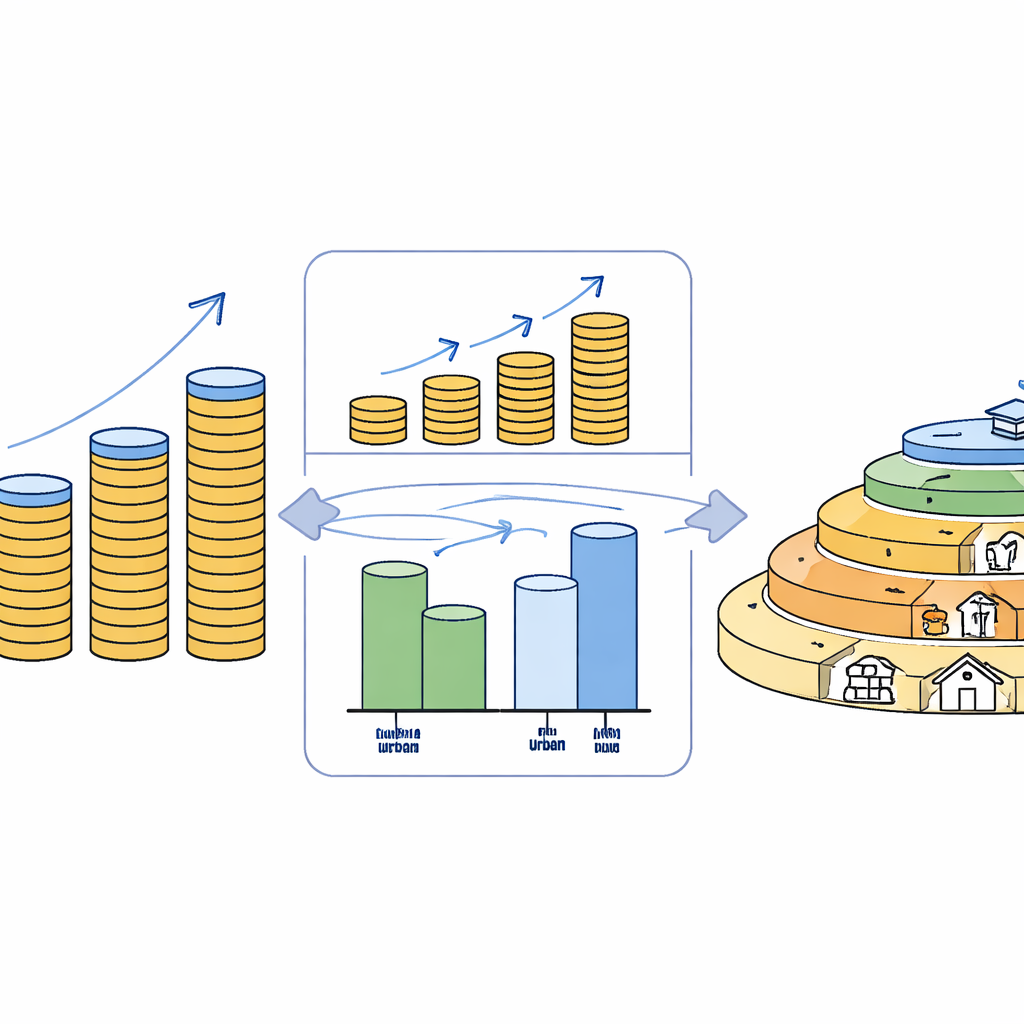
The team digs deeper to understand why this pattern appears. Their analysis shows that digital finance tends to raise average household incomes, in part by easing access to credit, supporting small businesses, and opening new earning opportunities. At the same time, it helps narrow the income gap between urban and rural residents, drawing more low-income households into the middle of the income distribution. When families have more stable and higher earnings, and when fewer people are left far behind, they are more willing and able to spend on education, health, and leisure rather than saving every spare yuan for emergencies. In other words, digital finance not only makes payments easier; it also reshapes the economic foundation that supports better living standards.
Why Networks and Location Still Matter
However, digital finance does not work in a vacuum. The study shows that its positive impact on spending patterns is significantly stronger in regions with better digital infrastructure—reliable internet, mobile networks, and information technology services. Where networks are weak or patchy, people cannot fully benefit from online payments, credit, or insurance, and the shift toward higher-quality consumption slows. The researchers also find that urban residents gain more than rural residents, and eastern provinces—China’s more developed coastal belt—benefit more than central and western regions. These gaps reflect differences not only in technology and income, but also in financial skills and the maturity of local markets.
What This Means for Households and Policymakers
Put simply, the study concludes that expanding well-designed digital financial services can help families move beyond bare-bones spending toward choices that improve health, skills, mobility, and enjoyment of life. Yet this promise is only fully realized when it is paired with good digital infrastructure, measures that raise incomes broadly, and efforts to narrow urban–rural divides. For readers, this means that the apps on their phones are part of a larger economic shift: if guided carefully, digital finance can support fairer growth and better living standards, not just faster payments.
Citation: Fan, S., Zhang, L., Wang, Q. et al. Digital financial inclusion and household consumption structure upgrading. Sci Rep 16, 13776 (2026). https://doi.org/10.1038/s41598-026-46808-z
Keywords: digital finance, household consumption, financial inclusion, income inequality, China economy