Clear Sky Science · en
Mega-floods over the past 30,000 years in western yunnan, southwest China
Why ancient floods matter today
For people living near rivers and lakes, flooding is a familiar and growing worry in a warming world. Yet our modern records of extreme floods cover only a short slice of Earth’s history, making it hard to know how unusual today’s events really are. This study looks back 30,000 years using mud from a small mountain lake in western Yunnan, southwest China, to uncover a hidden history of giant floods and what drove them. These long-term clues can help us better understand future risks in monsoon regions where both nature and people are highly exposed to heavy rain.
A lake that remembers big storms
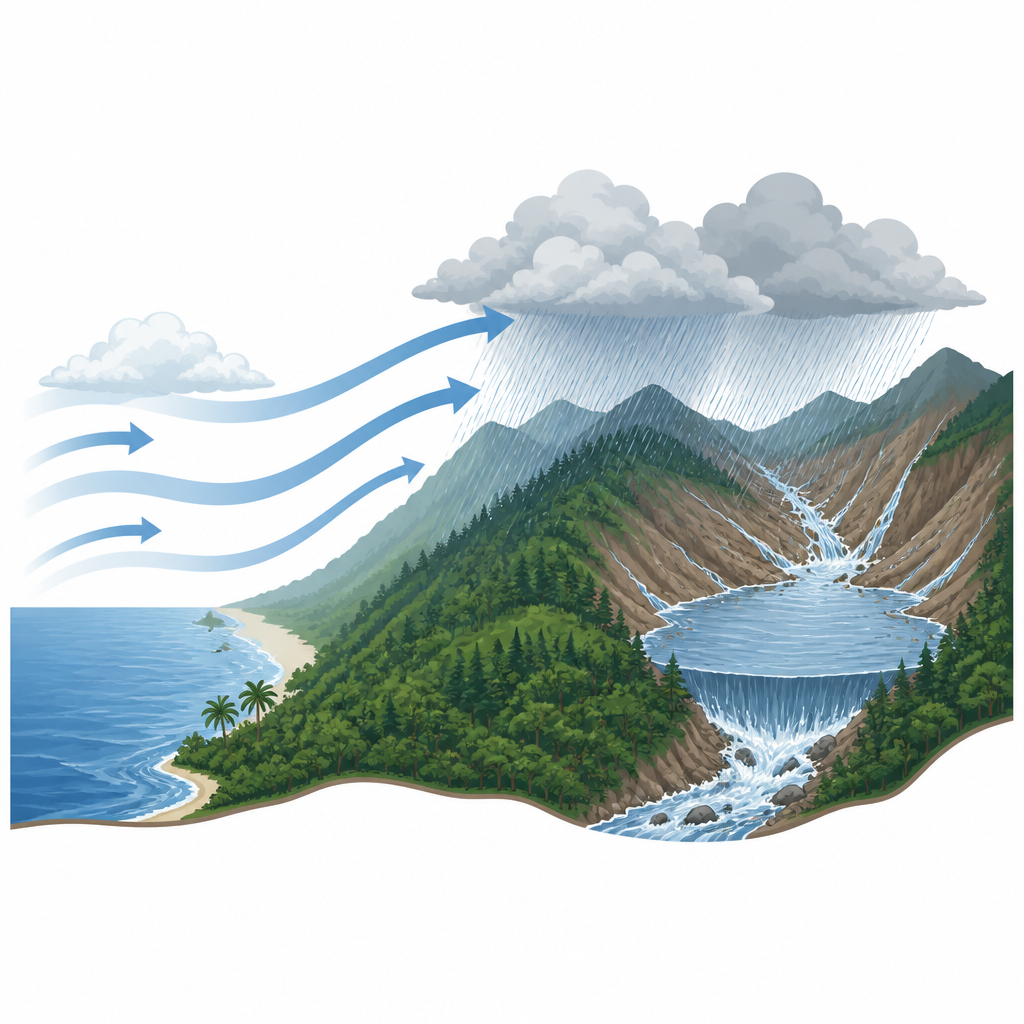
Lake Yunlong Tianchi sits in a steep, forested valley that drains into a major river system. When intense rainstorms hit the surrounding slopes, soil and rock are washed into the lake, changing its depth, chemistry, and the tiny animals that live in its waters. Over thousands of years, these changes are preserved as layers of sediment at the lake bottom, much like pages in a book. The research team recovered a nearly 19-meter-long core of these sediments and dated them back 30,000 years, covering the last ice age, the transition out of it, and the current warm period.
Tiny crustaceans as flood witnesses
The scientists focused on fossil remains of cladocerans, microscopic crustaceans that live either in open water or near the lake shore. When the lake suddenly deepens during a mega-flood, shoreline habitats shrink and open water expands, favoring free-swimming species. By tracking how the balance between open-water and shoreline species changed through time, along with their overall numbers, the team reconstructed past water level swings. They then compared these biological signals with geochemical markers in the same layers, such as elements linked to erosion, how fast sediments accumulated, and indicators of how much land-derived material washed into the lake.
Seven episodes of extreme flooding
Across the 30,000-year record, the team identified seven mega-floods that stood out as short-lived but powerful shocks to the lake system. At about 20,400, 16,940, 15,340, 13,930, 11,540, 3,730, and 1,270 years before present, the sediments show abrupt jumps in open-water cladocerans, higher sedimentation rates, and sharp spikes in erosion-related elements. These signals point to sudden deepening of the lake, heavy inflow from the catchment, and strong disturbance of the ecosystem. Statistical tools, including rate-of-change analysis and a machine learning model, confirmed that these were real, exceptional events rather than gradual shifts or noise in the record.
Monsoon swings, vegetation loss, and human impact
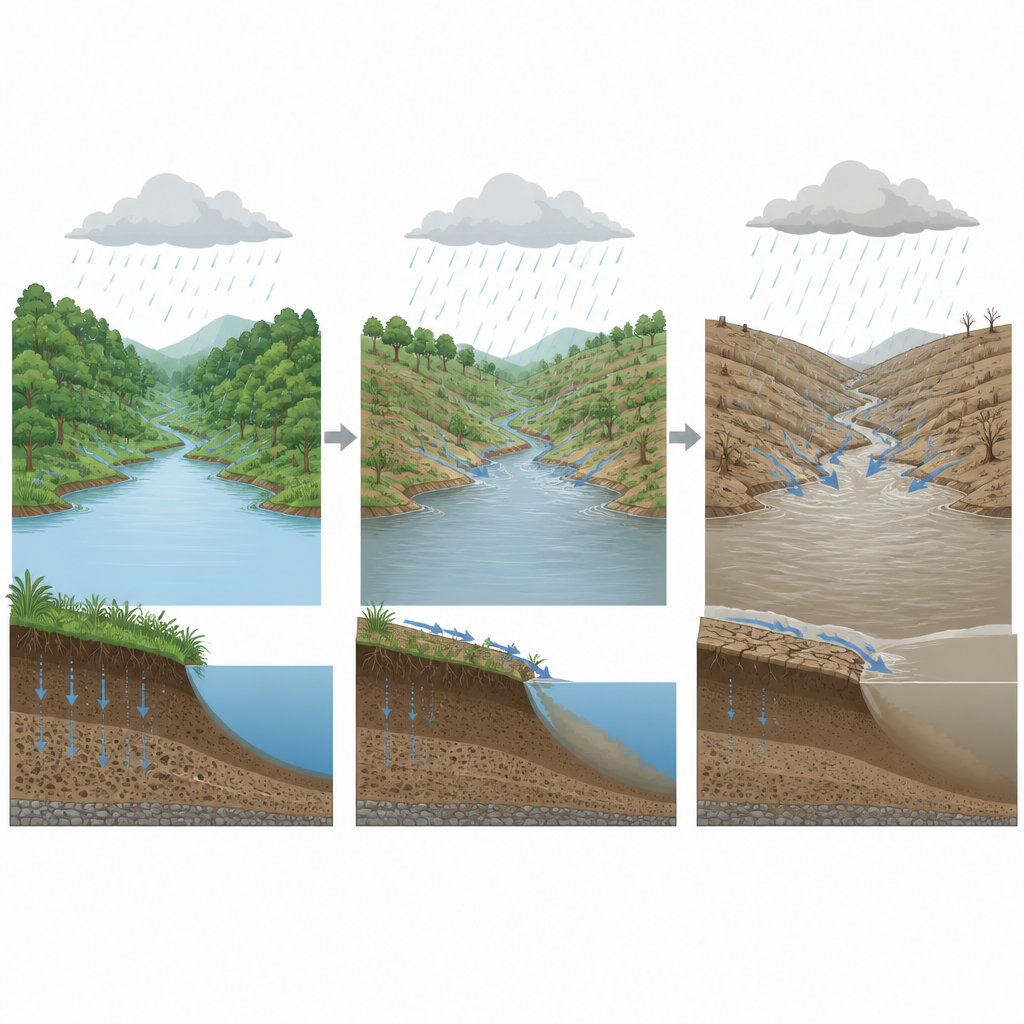
The timing of the mega-floods lines up with known periods of unstable South Asian summer monsoon rains. During the last deglaciation and early Holocene, when the monsoon strengthened and fluctuated sharply, mega-floods became more frequent. In contrast, the last glacial maximum and the middle part of the Holocene, both marked by more stable climate, saw fewer such events, even when average rainfall was relatively high. Vegetation cover in the lake’s catchment acted as a second key player. When forests were sparse, or later when farming and metalworking accelerated soil disturbance, heavy rains more easily turned into destructive runoff. In the late Holocene, human land use combined with monsoon instability and periods of drought to produce large floods despite an overall weakening of monsoon rainfall.
Lessons for a warming, wetter future
To a lay reader, the main message is that it is not just how much it rains that matters, but how that rain falls and what the landscape looks like when it does. Over 30,000 years, the lake’s mud shows that the biggest floods tended to occur when monsoon rainfall was jumpy and extreme, and when vegetation or soil conditions made it easier for water to rush off the land instead of soaking in. Today, global warming is expected to intensify heavy rainfall in many monsoon regions, while deforestation, agriculture, and soil degradation continue. The ancient record from Lake Yunlong Tianchi suggests that this combination can greatly raise the odds of rare but very large floods, highlighting the value of protecting land cover and improving catchment management as part of flood adaptation strategies.
Citation: Suo, Q., Sun, Q., Shi, Q. et al. Mega-floods over the past 30,000 years in western yunnan, southwest China. Sci Rep 16, 15531 (2026). https://doi.org/10.1038/s41598-026-46783-5
Keywords: mega-floods, South Asian monsoon, paleoclimate, lake sediments, Yunnan