Clear Sky Science · en
Reduced dental caries incidence in rats with hydrogel-encapsulated fructose-glucose sports-fuel
Why sports fuel and teeth matter
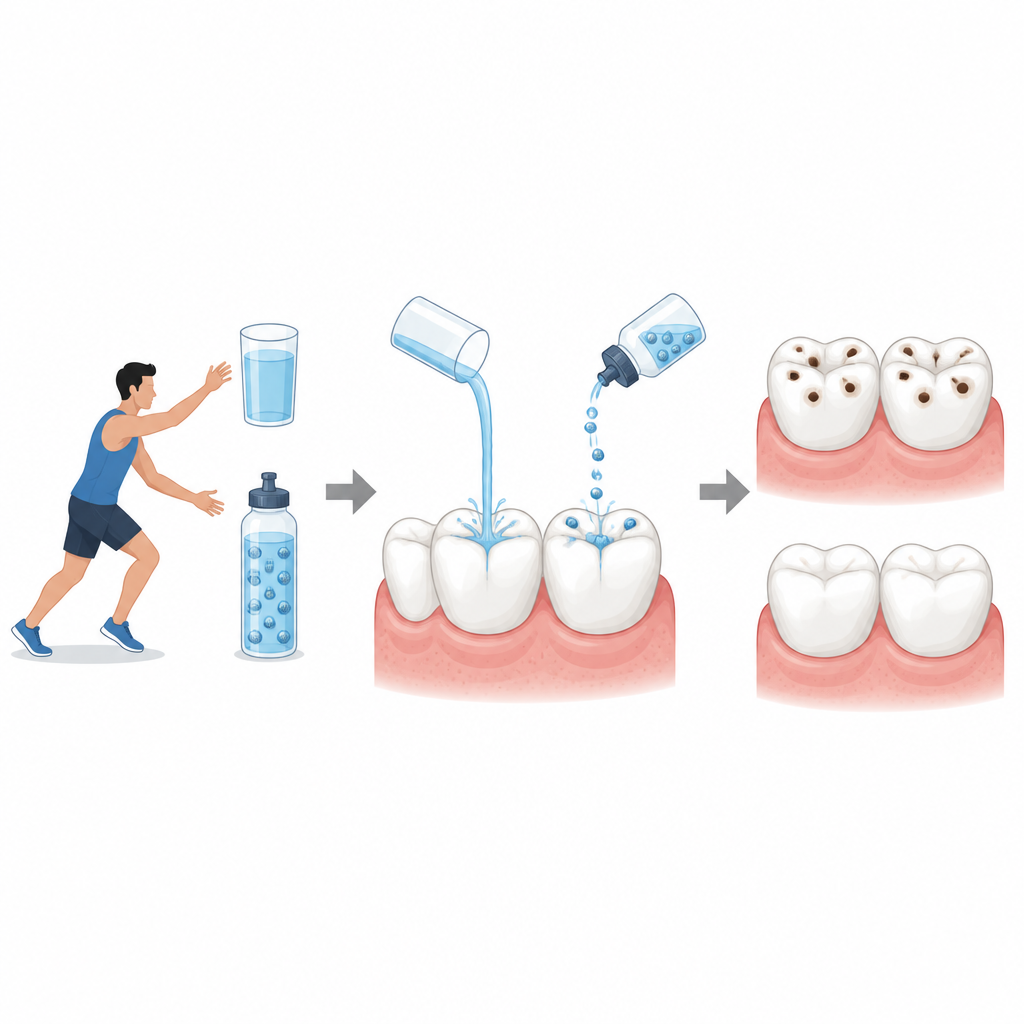
Athletes often rely on sugary drinks and gels to keep going during long runs or rides, but that quick energy can come at a cost to their teeth. This study explores a new kind of sports fuel in which sugars are packed inside a soft gel structure and asks a simple question with big everyday relevance: can we get the same energy while causing less tooth decay, at least in an animal model?
A new way to package sugar
The researchers focused on a sports fuel made from fructose and glucose, two common simple sugars. Instead of being dissolved in a liquid like a typical sports drink, these sugars were trapped inside a jelly-like material called a hydrogel made from alginate and calcium. The team tested two versions of this hydrogel fuel: small bead-shaped pieces and a smooth gel. Both contained the same amount and mix of fructose and glucose as a control sugar blend that was not fully crosslinked into a hydrogel but had a similar texture. The idea was that packaging sugar inside this gel might slow how mouth bacteria can get to it while still allowing the body to use it as an energy source.
How the rat experiment was set up
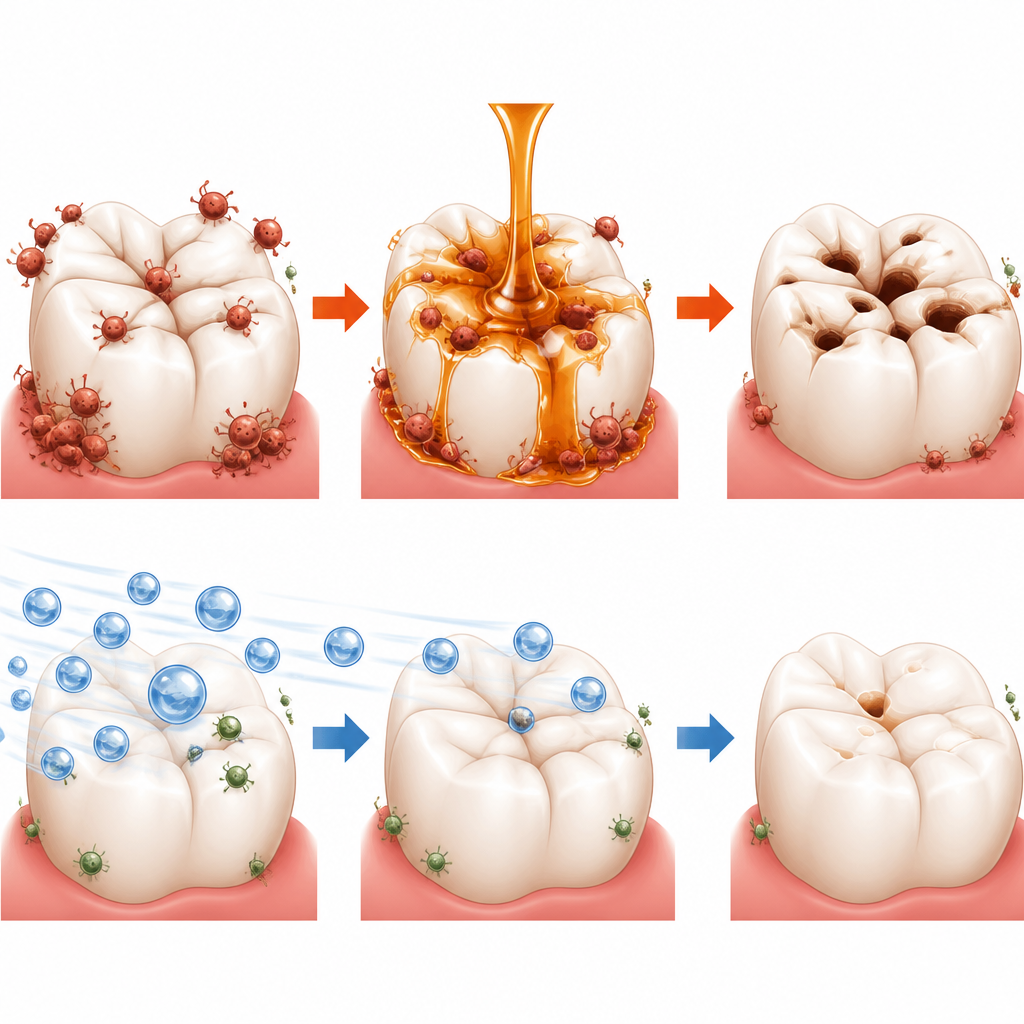
To see how these fuels affected tooth health, the scientists used young male rats, which are known to be prone to cavities. The animals were divided into three groups and given either hydrogel beads, hydrogel gel, or the control sugar every day for 12 weeks. All groups also had their mouths exposed to high levels of a cavity-causing bacterium called Streptococcus mutans, a common germ that thrives on sugar and produces acid that wears down tooth enamel. The sugars were delivered by syringe in controlled amounts, and the rats otherwise ate standard food and water so that only the sugar form, not the sugar dose, differed between groups.
Looking inside the teeth
At the end of the study, the researchers removed the rats’ molars and used high-resolution micro-CT scanning to look for cavities. This imaging method creates three-dimensional pictures of the teeth and can detect tiny regions where mineral has been lost. They classified damaged areas as either clear cavities, which appeared as obvious low-density spots, or suspected early cavities, which were smaller or less sharply defined but still showed measurable mineral loss. The team also measured the volume of the damaged regions in certain teeth and counted how many molars were affected in each animal.
What happened to cavity rates
Even though all groups consumed the same amounts of fructose and glucose and gained similar body weight, the pattern of tooth damage differed. In the control sugar group, about four in ten molars developed clear cavities. In contrast, only about two in ten molars in each hydrogel group showed such damage. When early, less certain lesions were included, the number of affected teeth rose in all groups, but the bead formulation in particular still showed significantly fewer problem teeth than the control. Most of the damage occurred in the deep grooves on the chewing surfaces, where sugar and bacteria can collect. Once a cavity started, however, its size was similar regardless of which sugar form the rats had received, suggesting that the gel mainly influenced how often decay began, not how fast it spread.
What this could mean for everyday athletes
To a non-specialist, the takeaway is that how sugar is delivered to the mouth may be as important as how much is consumed. In this rat model, sugars wrapped in a hydrogel structure led to fewer cavities than the same sugars without full encapsulation, likely because the bacteria could not access the sugar as easily or for as long. The study does not show what will happen in humans using sports fuels, and rat teeth differ from ours in shape and structure, but it suggests that reformulating sugary products could help reduce their impact on dental health while still supporting endurance performance.
Citation: Nakamura, K., Shirato, M., Shishido, S. et al. Reduced dental caries incidence in rats with hydrogel-encapsulated fructose-glucose sports-fuel. Sci Rep 16, 15642 (2026). https://doi.org/10.1038/s41598-026-46781-7
Keywords: sports drinks, dental caries, hydrogel sugar, fructose glucose, endurance athletes