Clear Sky Science · en
Optimizing drilling fluid rheology with hybrid nanoparticles boron nitride and graphene nanosheets: an experimental study
Why drilling mud matters to daily life
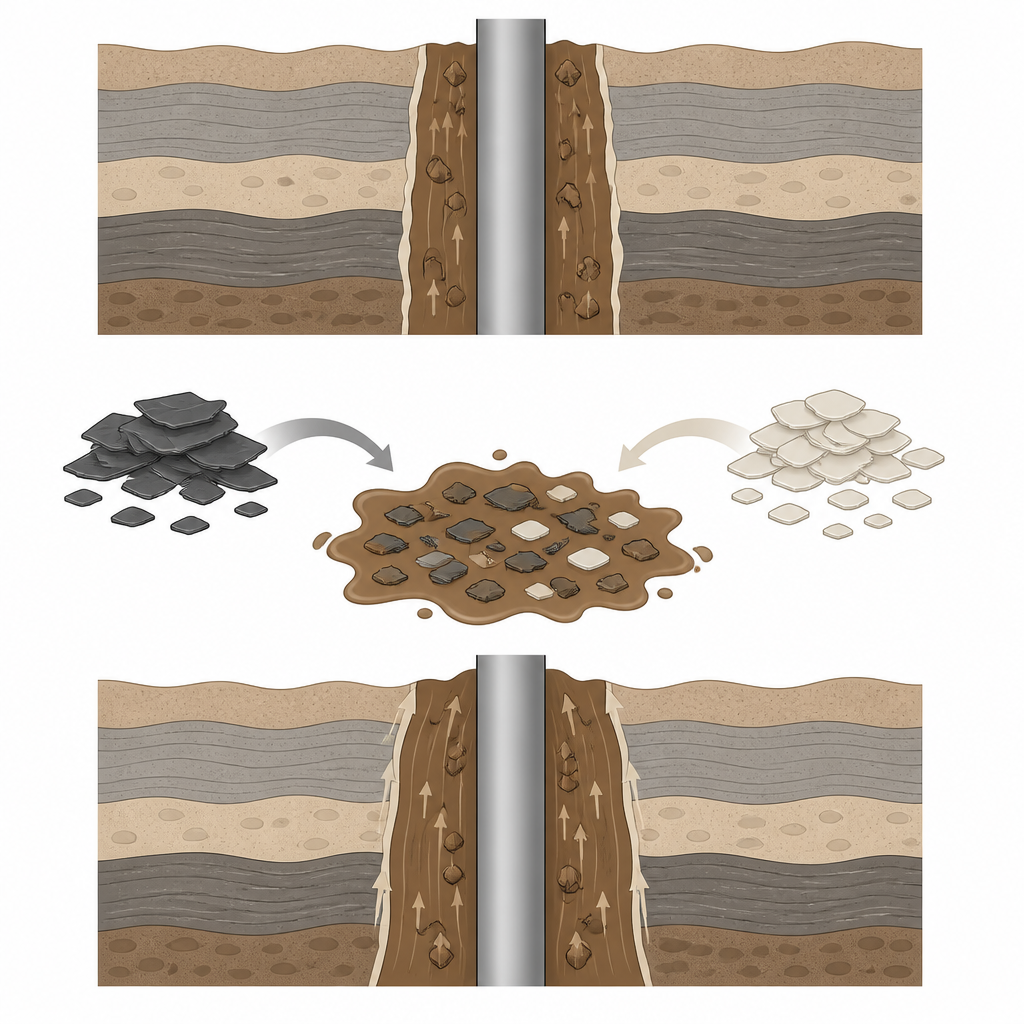
Modern life runs on oil and gas pulled from deep beneath the ground. To reach these hidden reservoirs, engineers drill wells that can stretch several kilometers through hot, high pressure rocks. Drilling relies on special "mud" that cools the drill bit, carries rock chips to the surface, and protects the well walls from collapse. When this mud thins out at high temperature, it can fail at all of these jobs, wasting time and money. This study explores how tiny additives called nanoparticles can make drilling mud thicker and more reliable in hot wells.
Tiny helpers in a harsh environment
Conventional oil based drilling fluids already offer good heat resistance and lubricating ability, which is why they are favored in difficult wells. But as the fluid heats up, it tends to run thinner, much like cooking oil in a pan. That makes it harder to lift crushed rock to the surface and to keep the well stable. The authors turned to nanotechnology, adding ultra small solid particles to the mud. Because these particles are only tens of nanometers across, they have enormous surface area and can interact strongly with the surrounding liquid, changing how easily it flows without significantly changing its weight.
What graphene and boron nitride bring to the mix
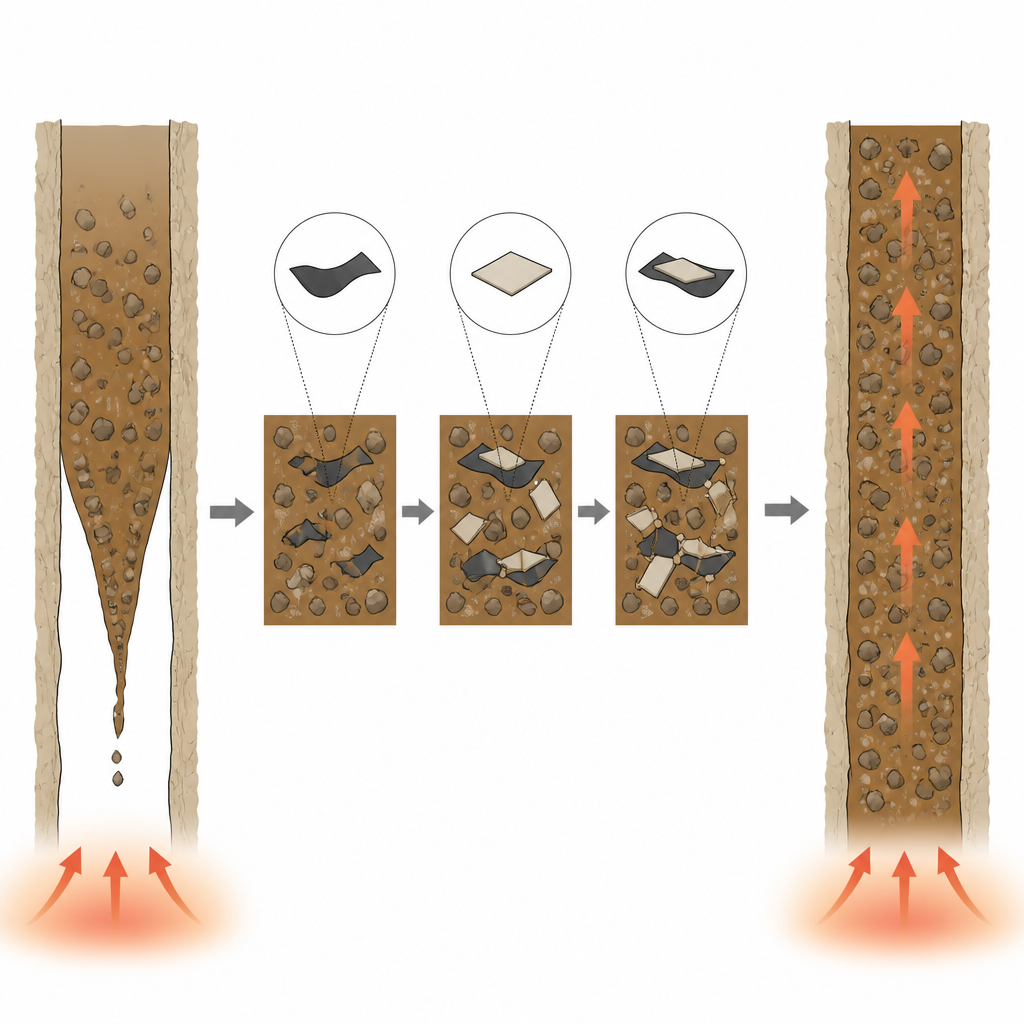
The team focused on two materials that look like stacks of ultra thin playing cards at the nanoscale: graphene, made of pure carbon, and hexagonal boron nitride, often called "white graphene" for its similar sheet like structure. Graphene sheets are flexible, wrinkled, and very large compared to most nanoparticles, giving them a high surface area that can form a web like network through the fluid. Boron nitride particles are smaller and stiffer platelets that tend to clump together, acting like tiny spacers or beams. Microscopy images confirmed these shapes, while separate tests showed that both types of particles stayed well dispersed in the oil based mud, a key requirement for consistent behavior downhole.
How the mud changes with nanoparticles
First, the researchers measured how the base mud behaved as it was heated from 140 to 240 °F. As expected, its thickness, or viscosity, dropped sharply at higher temperatures. When they added only graphene nanosheets, the mud became much thicker across the whole temperature range, with apparent viscosity rising by up to about 90 percent and a related measure called plastic viscosity more than doubling at certain doses. Importantly, the mud did not get heavier, so it could still be used without changing the overall well design. The graphene network resisted the normal heat driven thinning of the fluid, helping the mud keep its strength in hotter sections of the well.
A surprising twist from the hybrid blend
The most interesting behavior came from muds that contained a 50–50 blend of graphene and boron nitride. At low doses of this hybrid mix, the fluid actually became a bit thinner than the base mud, likely because the rigid boron nitride platelets disturbed the early graphene network. But at higher doses, the trend flipped. The two types of particles began to work together, forming a more robust internal framework. At the highest tested level, the hybrid mud showed apparent viscosity increases of up to about 164 percent and plastic viscosity gains of around 71 percent at the hottest temperature. These changes were far larger than either material could achieve alone and held up well when the mud was heated.
What this means for drilling in tough wells
For non specialists, the takeaway is simple: by carefully choosing and blending nanosized solid particles, engineers can fine tune how drilling mud behaves under heat without making it heavier. In this study, graphene alone made the mud steadily thicker and more stable, while the graphene and boron nitride hybrid created a tunable system that first softened then greatly stiffened the fluid as more particles were added. In real wells, such fluids could carry rock cuttings more efficiently, reduce friction on drill pipes, and cut down on costly delays, especially in deep or sideways wells where heat and distance strain conventional muds. The authors suggest using higher hybrid doses in the hottest parts of a well and lower doses in cooler sections, and they note that future work should test these designs under even more extreme pressures and examine their environmental impact.
Citation: Pourrajab, R., Behbahani, M. & Moosavi, S.N. Optimizing drilling fluid rheology with hybrid nanoparticles boron nitride and graphene nanosheets: an experimental study. Sci Rep 16, 15658 (2026). https://doi.org/10.1038/s41598-026-46779-1
Keywords: drilling fluids, nanoparticles, graphene, boron nitride, rheology