Clear Sky Science · en
Propolis nanoemulsion and mesenchymal stem cell conditioned medium promote osteoblastogenesis against lipopolysaccharide-induced osteolysis in hyperglycemic rats
Why this matters for bone health
People with diabetes and chronic infections face a double threat to their bones: high blood sugar weakens repair, while bacterial toxins trigger bone breakdown. This study in rats explores a gentle, cell-free therapy that combines natural bee products with signals from umbilical cord stem cells. The goal is to see whether this pairing can tip the balance back toward healthy bone building, even in a body primed for inflammation and damage.
The problem of fragile, inflamed bone
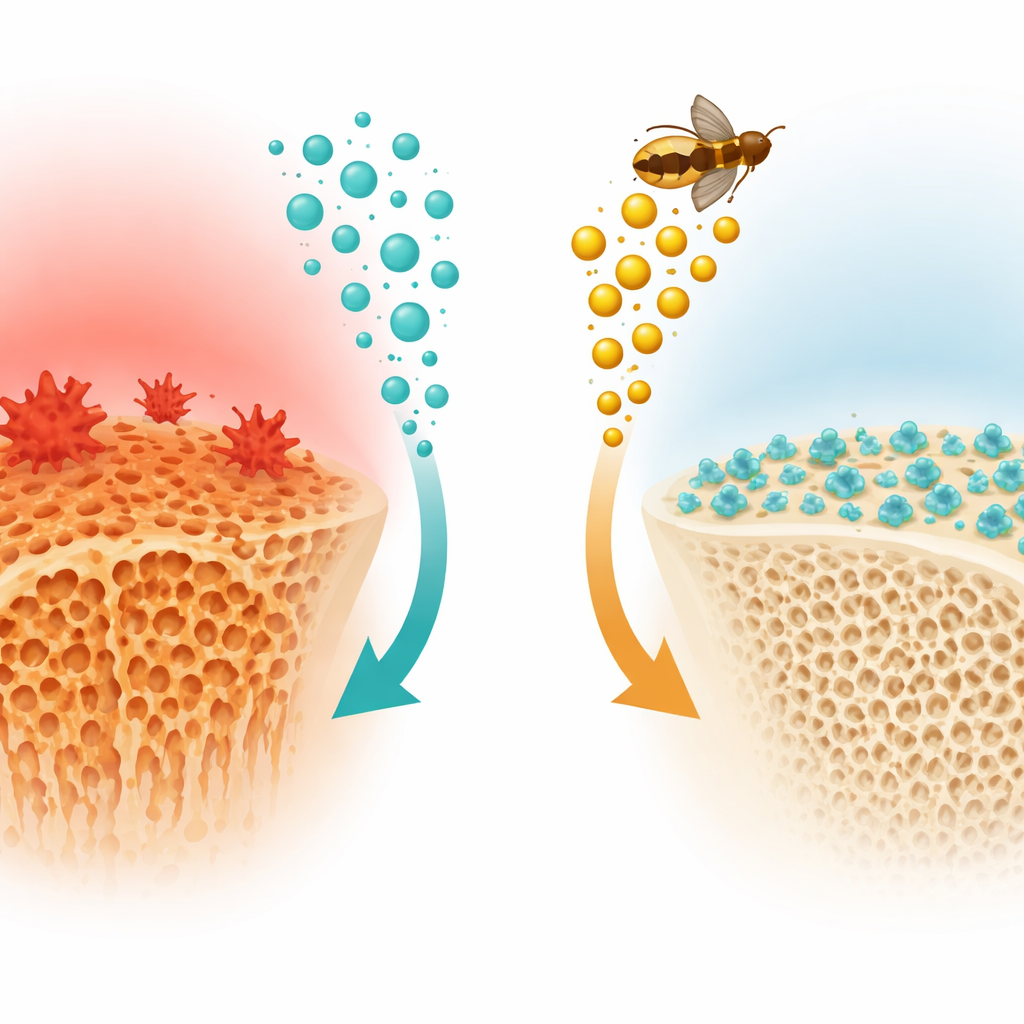
Bone stays strong because two types of cells stay in balance: one set removes old bone, and another builds new bone. When strong, long-lasting inflammation is present, that balance is lost. A bacterial molecule called lipopolysaccharide, or LPS, is known to provoke intense inflammation and spur on bone-eating cells, while slowing bone-forming cells. High blood sugar makes things worse, further disturbing immune cells and bone metabolism. Together, LPS and hyperglycemia can drive a process called osteolysis, in which bone tissue is gradually eroded.
A natural shield and a regenerative boost
The researchers focused on two promising tools. The first is propolis, a resin-like material made by stingless bees, here packaged as a nanoemulsion so that its particles are extremely small and more active. Propolis has anti-inflammatory and antioxidant properties and has already been shown to help protect bone in other animal models. The second is the “conditioned medium” from human umbilical cord mesenchymal stem cells. Instead of transplanting the cells themselves, scientists collect the soup of growth factors, signaling molecules, and tiny vesicles that the cells release. This cell-free mixture can calm inflammation and encourage tissue repair, and may be easier to store and deliver than living cells.
Testing the combination in a challenging model
To mimic infection-related bone loss in poorly controlled diabetes, the team used young male rats and exposed the bones on the top of their skulls to LPS from bacteria to trigger local osteolysis. They then induced high blood sugar with a compound called streptozotocin. Rats were assigned to different groups: normal controls, LPS alone, high blood sugar alone, both insults together, or those same harmful conditions plus either the stem cell conditioned medium, the propolis nanoemulsion, or the combination of both. The treatments were injected just under the skull bone for one week before the animals were examined.
Signs that bone building switches back on
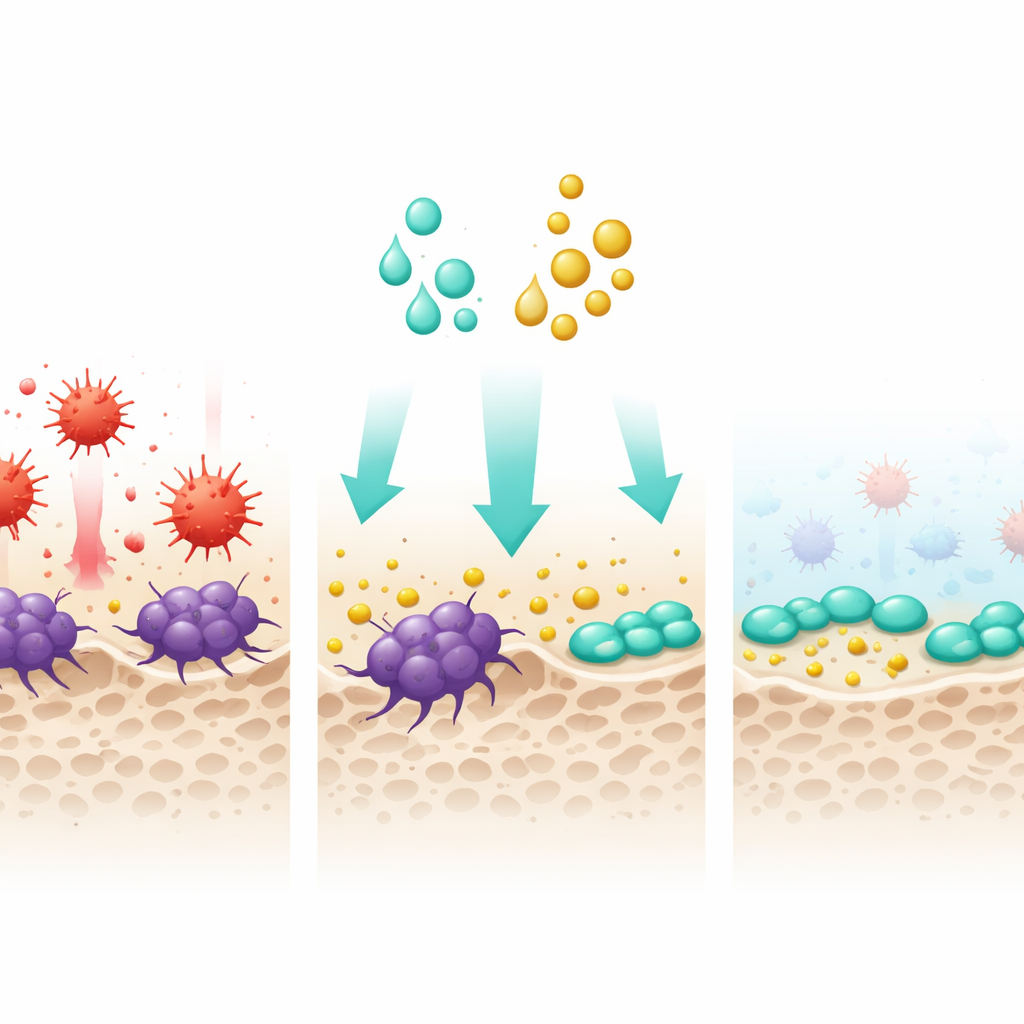
After treatment, the scientists measured molecules in the rats’ blood and bone tissue that signal active bone formation. These included structural proteins such as type I collagen and several marker proteins produced by bone-forming cells as they mature. Using staining techniques on thin bone slices, they counted how many cells showed these markers, and they used a sensitive blood test to measure marker levels in the circulation. Rats exposed to both LPS and high blood sugar had the lowest levels of these bone-building signals, confirming that their bones were under attack. By contrast, rats receiving either the stem cell medium or the propolis preparation showed higher levels of these indicators, and the group that received both together showed the strongest rise of all.
A potential two-pronged therapy for complex bone loss
To a lay reader, the key message is that pairing a natural bee-derived nanoemulsion with a cocktail of helpful factors from umbilical cord stem cells helped bone-building cells recover, even in rats whose bones were being damaged by both infection and high blood sugar. The propolis mixture seems to calm the hostile, inflamed environment, while the stem cell medium provides growth signals that push bone cells to rebuild. Although this work is still at the animal stage and over a short time frame, it suggests that future treatments for conditions like diabetes-related jaw bone loss might use smart combinations of natural products and cell-derived factors to restore bone health without needing full stem cell transplants.
Citation: Alhasyimi, A.A., Nugraha, A.P., Farmasyanti, C.A. et al. Propolis nanoemulsion and mesenchymal stem cell conditioned medium promote osteoblastogenesis against lipopolysaccharide-induced osteolysis in hyperglycemic rats. Sci Rep 16, 10612 (2026). https://doi.org/10.1038/s41598-026-46778-2
Keywords: bone regeneration, stem cell secretome, propolis nanoemulsion, diabetes and bone loss, inflammatory osteolysis