Clear Sky Science · en
A strategic roadmap for construction automation in indonesian mass housing projects
Why faster home building matters
Many countries struggle to provide enough safe, affordable homes for their people. Indonesia is a striking example: it aims to build three million houses every year, yet its building industry can currently deliver only about one million. This article explores how smarter planning and automation, not just more machines on building sites, could help close that gap and offer lessons for other growing nations.
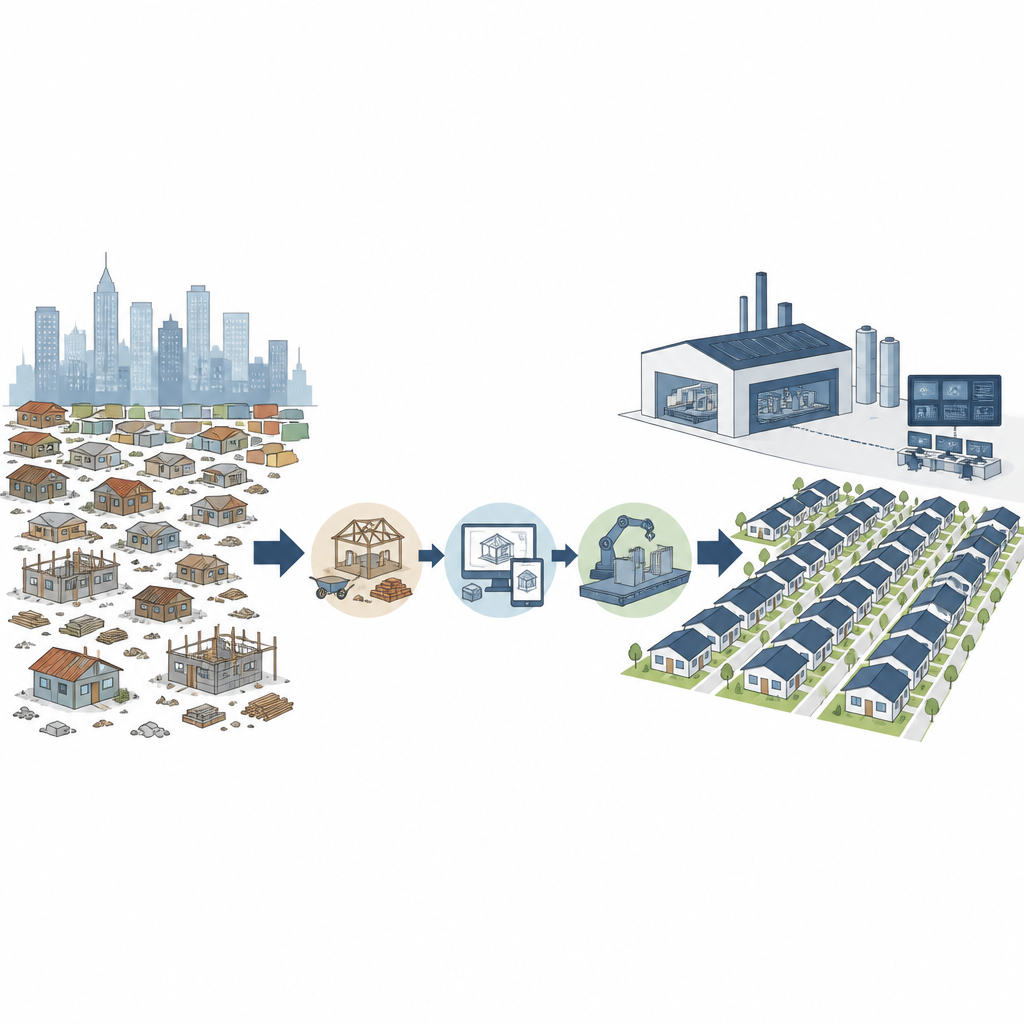
A big goal with a big shortfall
Indonesia faces a housing backlog affecting around 40 percent of its national demand, driven by population growth, aging buildings, and rapid urbanization. Traditional building methods, which rely heavily on manual labor and on-site work, are too slow and fragmented to meet the target of three million homes per year. Similar patterns appear across many developing regions in Asia, Africa, and Latin America, where limited funds, weak supply chains, and low productivity keep affordable housing out of reach for many families.
Looking beyond robots on the job site
Automation in construction is often pictured as robots and heavy machines doing the work of people. This study takes a wider view. It looks at ten different aspects of automation, from how houses are designed and materials delivered, to how decisions are made and projects tracked. Using a structured approach that combined a literature review, a survey of 50 professionals, and detailed comparisons by a panel of nine experts, the researcher ranked which of these aspects matter most for large housing programs in a country like Indonesia.
The hidden backbone of smart building
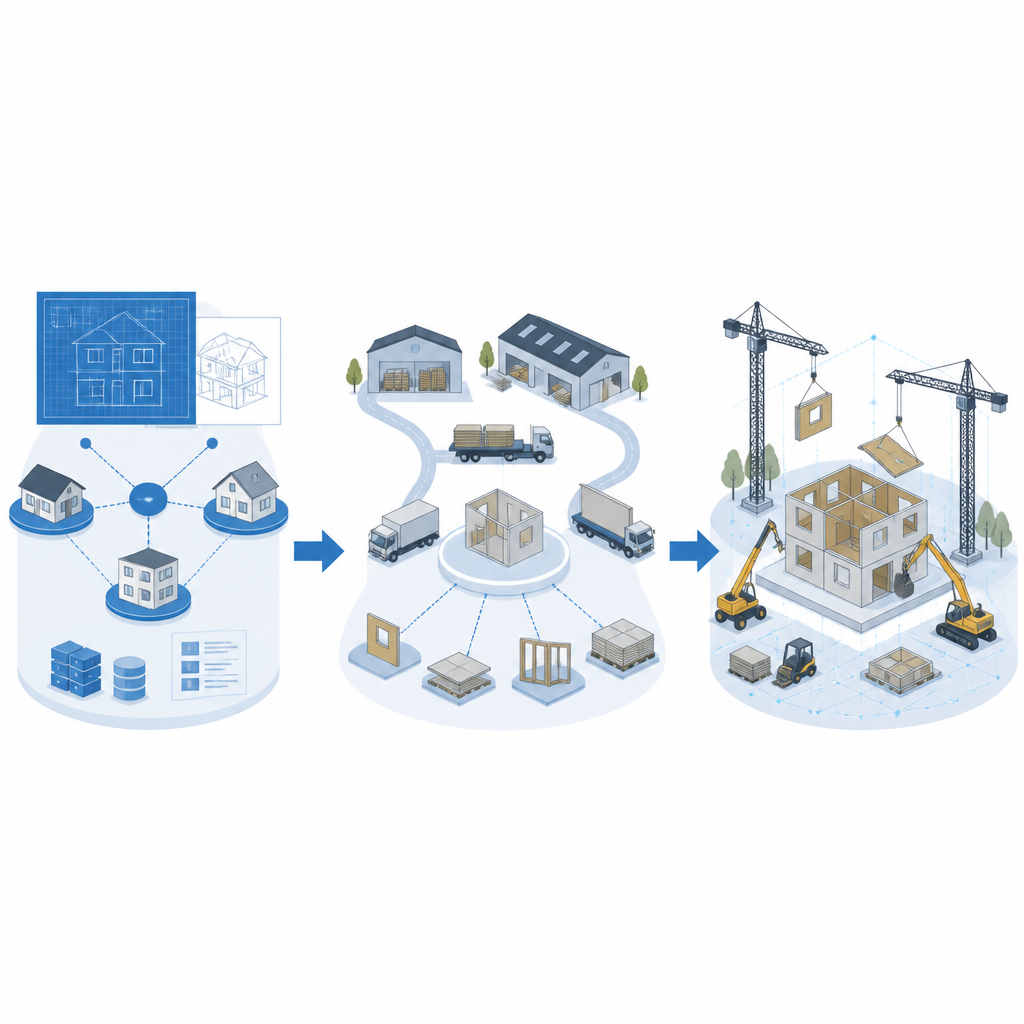
The findings overturn a common assumption. The most important steps are not flashy on-site machines, but the less visible “backbone” of the system. Three items clearly lead the list: standardizing building designs, introducing strong management information systems, and tightening the material supply chain. Together, these account for nearly two thirds of the total priority weight. In simple terms, experts believe that having repeatable house plans, shared digital project tools, and reliable flow of materials are far more critical than immediately investing in advanced site equipment.
Building in the right order
Based on these rankings, the study proposes a step-by-step roadmap. In the first two years, the focus should be on design rules and digital tools that give everyone a common language and clear view of project progress. Only once that base is in place should the country rapidly expand factory-made housing parts and modern logistics, supported by digital checks for permits and quality. In later years, when data and processes are mature, more advanced site machines, automated scheduling, digital land management, online training, and smart maintenance systems can be added without wasting money or creating isolated, inefficient projects.
Lessons for long lasting homes
The article also warns that high-tech tools for maintaining homes after they are built currently receive very low attention, even though neglecting upkeep can cause houses to age quickly and raise costs in the long run. Overall, the study concludes that for Indonesia and similar countries, the fastest path to more and better housing is to first get designs, data, and deliveries right. By treating digital systems and clear standards as the foundation, and heavy machinery as the final layer, governments and builders can make smarter choices, reduce risk, and move closer to providing safe, decent homes for millions.
Citation: Musyafa, A. A strategic roadmap for construction automation in indonesian mass housing projects. Sci Rep 16, 15419 (2026). https://doi.org/10.1038/s41598-026-46773-7
Keywords: construction automation, mass housing, Indonesia, digitalization, supply chain