Clear Sky Science · en
Two years of SARS-CoV-2 genomic surveillance capacity development in Guinea
Why this story matters
When the coronavirus pandemic began, many countries scrambled not only for masks and tests, but also for a powerful but less visible tool: the ability to read the virus’s genetic code. This paper tells the story of how scientists and health workers in Guinea, a low-income country in West Africa, built that capacity almost from scratch during COVID‑19—while the crisis was still unfolding. Their experience shows how local laboratories can help the world spot dangerous variants faster, and what it takes to make such systems work in places with limited resources.
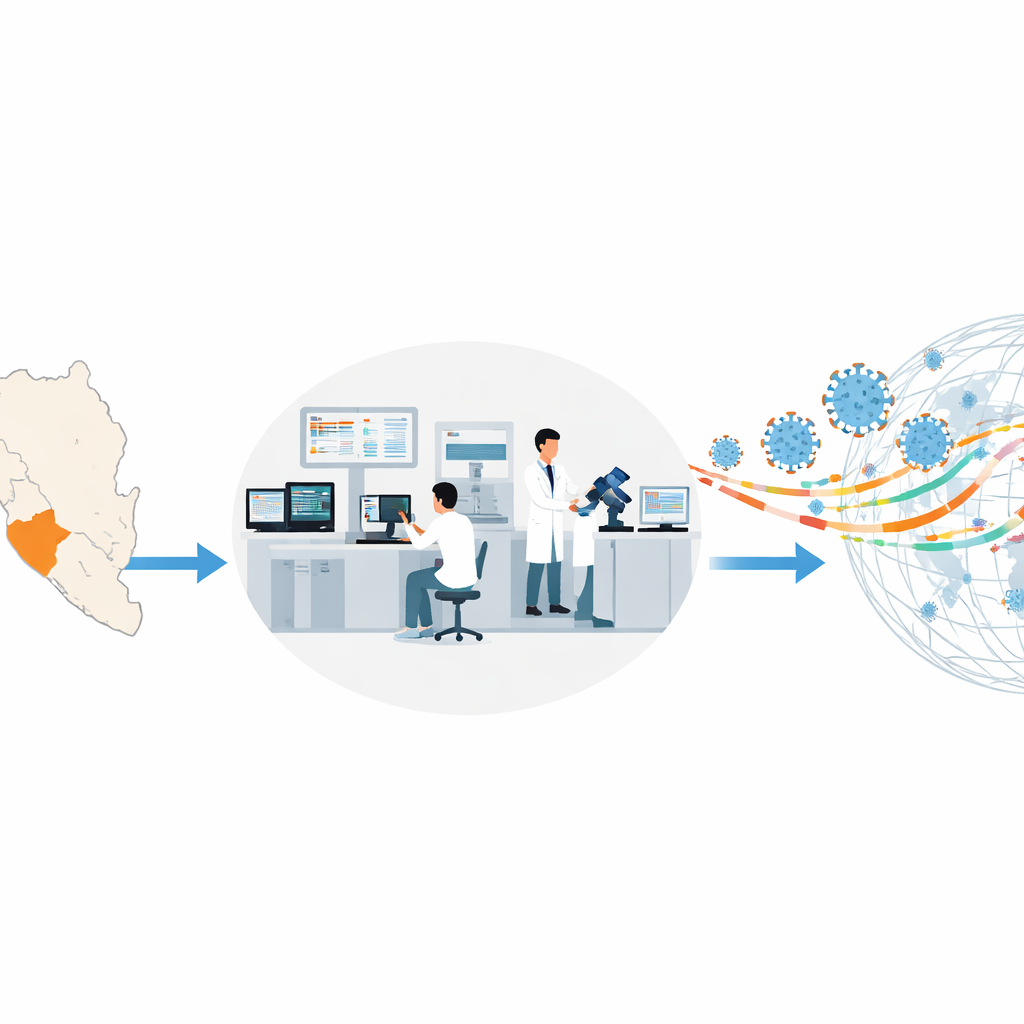
Starting from almost nothing
Guinea detected its first COVID‑19 case in March 2020, but at that time it had no facility able to sequence the virus’s genome. All the country could do was confirm who was infected; it could not see which versions of the virus were circulating or how they changed over time. One year into the pandemic, the national health authorities asked the country’s reference virology lab in Conakry to go further. With support from international partners, including a mobile laboratory network and the World Health Organization, a two‑year training and equipment program began in 2021 to create a small but fully functioning virus sequencing unit on site.
Building a lab in the middle of a crisis
Setting up this new capacity was far from simple. Expert teams travelled repeatedly to Conakry over two years, training six local staff members in both the “wet” side of the work (handling patient samples and running the sequencer) and the “dry” side (using computers to analyze the data). The group had to cope with irregular supplies of test kits and reagents, frequent power cuts, and the need to reorganize the laboratory to avoid contamination. Early tests of two standard sequencing protocols produced poor-quality genomes, good enough only to give rough clues about which variants were present. After switching to a newer method designed for the portable Nanopore sequencer, the team finally achieved high‑quality results, with almost complete viral genomes in most cases.
What the virus genomes revealed
By July 2022, the Guinean laboratory had generated 238 reliable SARS‑CoV‑2 genomes, covering four waves of the country’s epidemic between mid‑2020 and mid‑2022. Although this represented less than one percent of all recorded infections, it was enough to sketch a clear picture of how the virus evolved locally. Early cases matched the same lineages that were spreading across West Africa in 2020. Later, the Alpha and Eta variants appeared during the second wave. The third and fourth waves were dominated by the globally important Delta and Omicron variants, together accounting for more than four‑fifths of all genomes in the study. By comparing Guinea’s sequences with thousands from other regions, the researchers inferred multiple introductions of Delta and Omicron into the country, most likely from neighboring parts of Africa and roughly in step with their spread elsewhere.
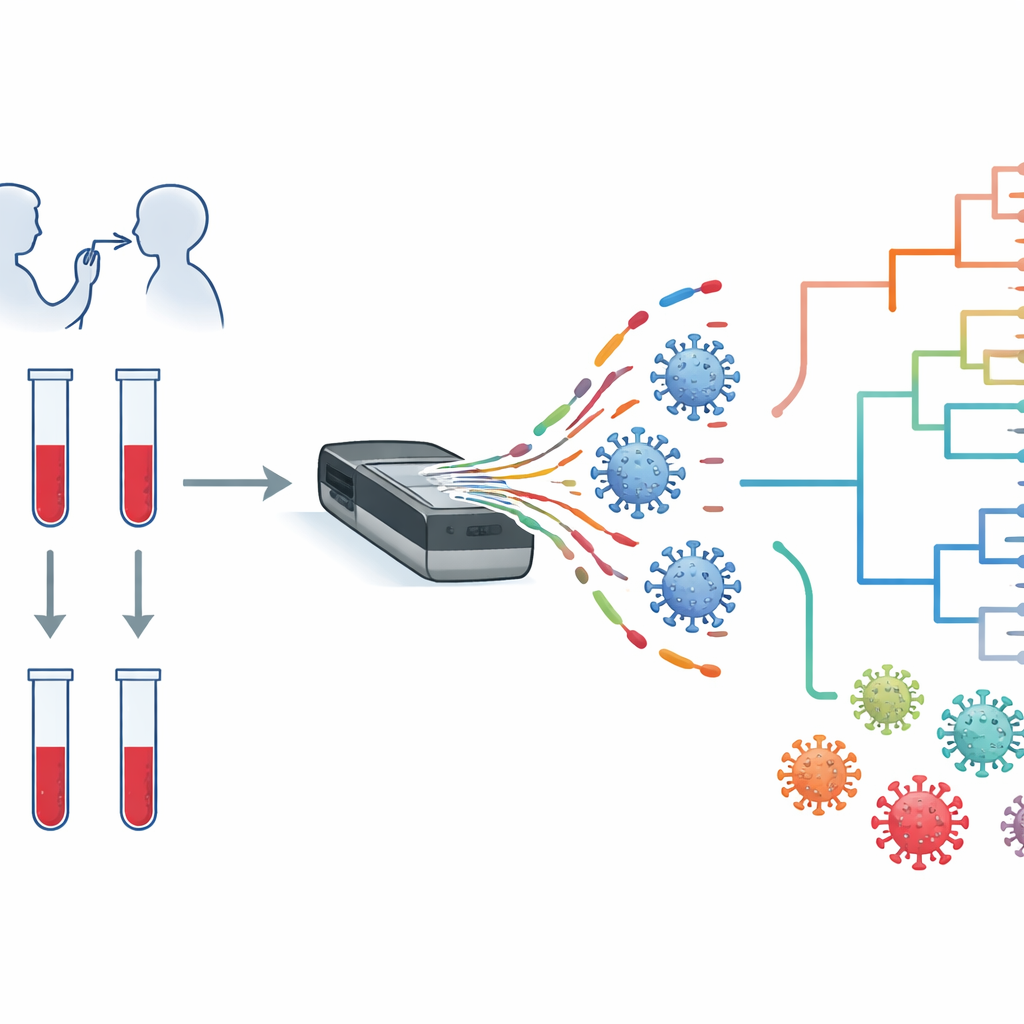
Beyond Guinea’s borders
The new sequencing unit quickly became more than a local tool. Other Guinean laboratories began sending positive samples to Conakry for variant identification, and the team issued regular reports to the Ministry of Health, helping officials understand which variants were circulating. The lab’s sequences were also shared with the global GISAID database, contributing to worldwide tracking of the pandemic. Importantly, the center evolved into a regional training hub: scientists from Nigeria came to Guinea to learn how to run similar equipment in a setting that closely matched their own working conditions, creating a “train the trainers” effect for West Africa.
Lessons for future outbreaks
From a layperson’s perspective, the main message of this article is that reading a virus’s genetic code locally—even in small numbers—can make a big difference during an outbreak. The Guinean experience shows that it is possible to establish such a system in a low‑resource environment, but only with sustained funding, strong partnerships, skilled staff, reliable power and internet, and careful planning for logistics and training. While the sequencing data mainly provided descriptive insights and came too slowly to transform national policy in real time, the work created a lasting platform. Today, Guinea has a functioning genomic surveillance lab that can be used not only for COVID‑19 but also for future threats like Ebola, Marburg, or new respiratory viruses, making both the country and the wider region better prepared for whatever comes next.
Citation: Magassouba, N., Gustani-Buss, E., Ifono, K. et al. Two years of SARS-CoV-2 genomic surveillance capacity development in Guinea. Sci Rep 16, 11225 (2026). https://doi.org/10.1038/s41598-026-46736-y
Keywords: genomic surveillance, SARS-CoV-2 variants, Guinea, nanopore sequencing, global health capacity