Clear Sky Science · en
Genetic associations of corneal astigmatism in Hong Kong Chinese children
Why children’s blurry vision matters
Astigmatism is a common cause of blurry sight in children, and if it is not picked up early it can interfere with learning and healthy eye development. This study looked at whether tiny differences in DNA help explain why some Hong Kong Chinese children are more likely to have a misshapen cornea, the clear front window of the eye, which can lead to astigmatism.
What is special about the cornea
Astigmatism happens when the eye does not focus light evenly, often because the cornea is steeper in one direction than another, like a rugby ball instead of a soccer ball. The corneal part of this blur, called corneal astigmatism, is especially important in childhood because it is present from birth and can raise the risk of lazy eye and poorer school performance if left uncorrected. As children grow, their corneas usually reshape toward a more regular curve, but this study asked why some children keep higher levels of corneal astigmatism than others of the same age.
How the study was carried out
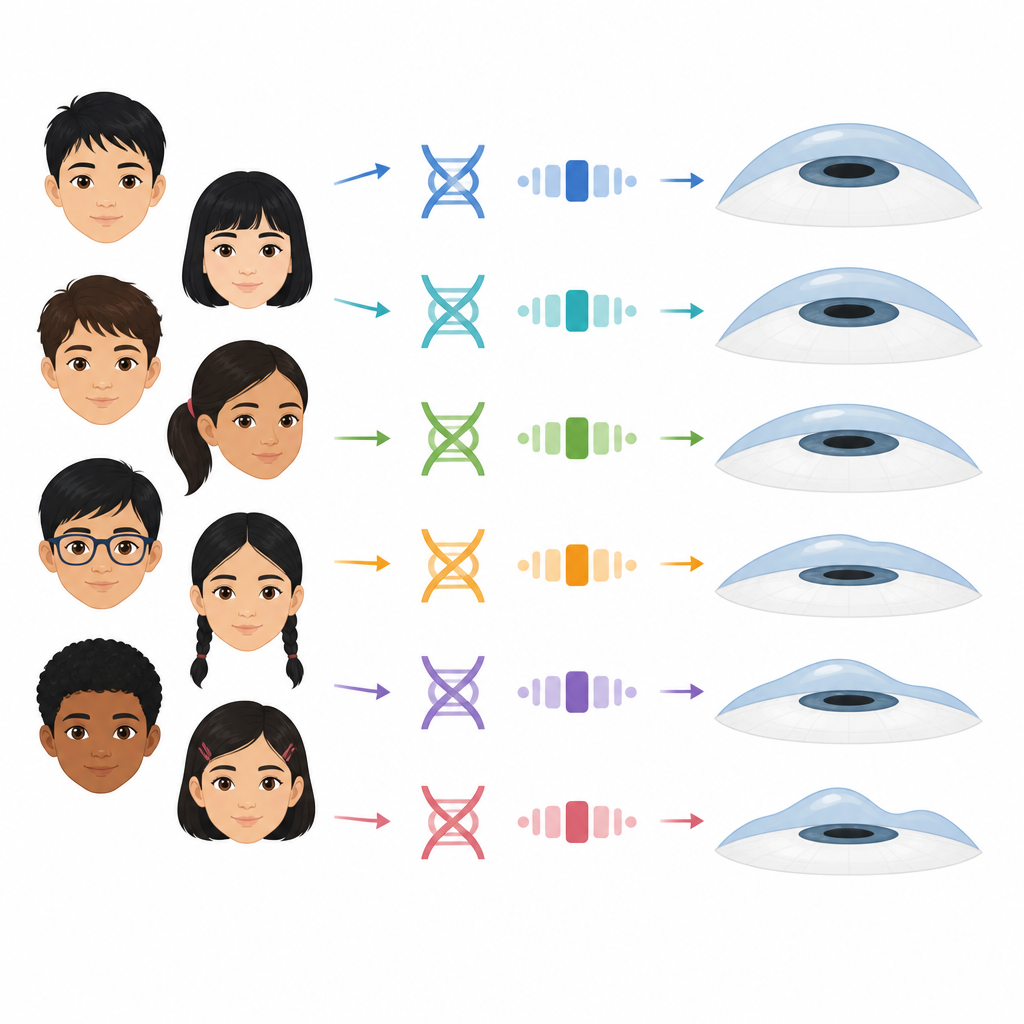
Researchers examined 2,167 Hong Kong Chinese children between 4 and 11 years old who took part in the Hong Kong Children Eye Study. After using eye drops to relax the focusing muscles, they measured how curved each child’s cornea was in the flattest and steepest directions and calculated corneal astigmatism from the difference. They then analyzed 14 selected spots in the children’s DNA, each known as a single letter change, in genes that earlier work in adults had linked to astigmatism or related eye traits. Using statistical models that took age and sex into account, they tested whether particular DNA versions were tied to having significant corneal astigmatism or to having a higher amount of it.
Genes linked to stronger or changing blur
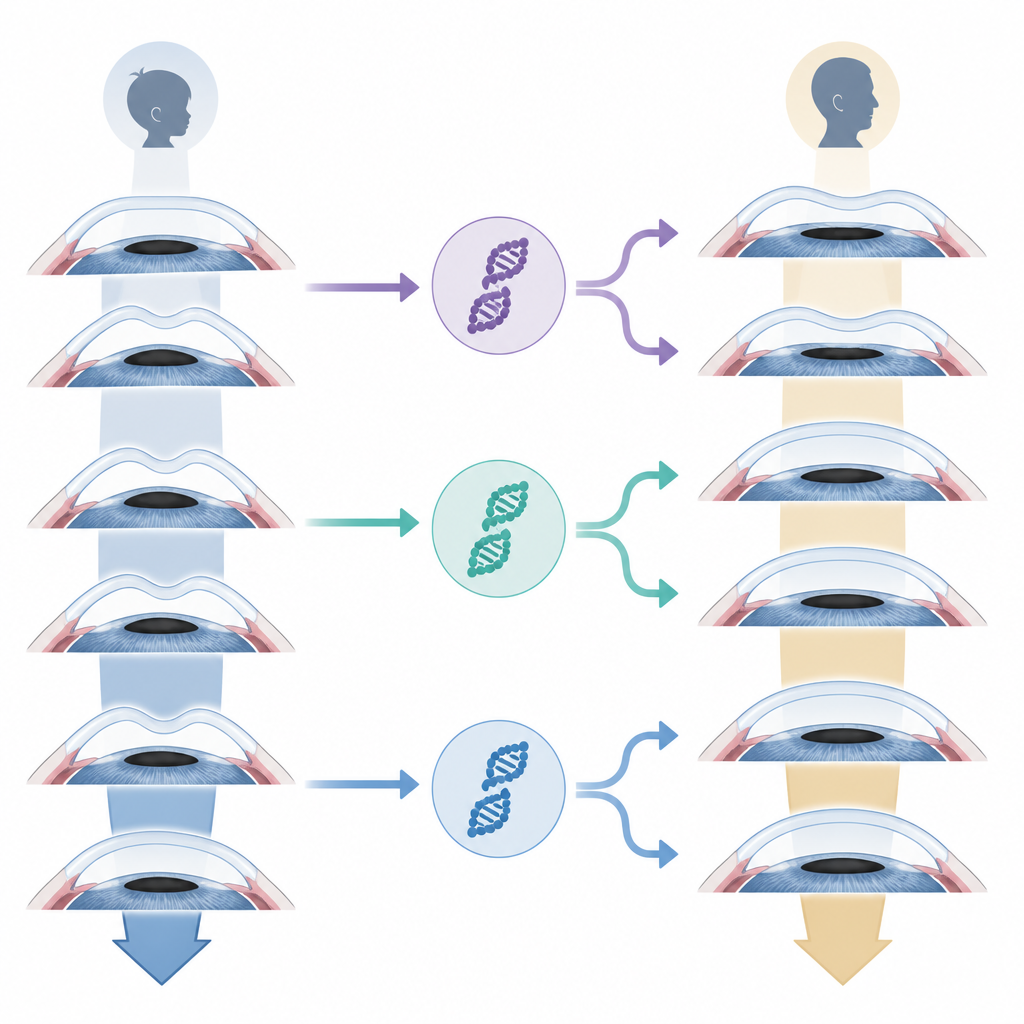
The team found that one DNA variant in a gene called FMNL2 was linked to the strength of corneal astigmatism in these children. Children carrying the effect version of this variant tended to have a slightly higher degree of corneal astigmatism. When the researchers split the children into age groups, this link was strongest in the oldest quartile, suggesting that the impact of this gene may become more obvious as children grow. They also saw hints that this variant might raise the chance of having astigmatism above the usual level that needs glasses, although this result was just short of their strict cut off after correcting for multiple tests.
Genes that track change with age
Two other DNA variants, in genes called PDGFRA and ZC3H11B, were not tied to a higher overall level of corneal astigmatism but were associated with how that blur changed across ages. Versions of these variants were linked to a steady drop in astigmatism as children moved from younger to older age groups. This pattern fits with the natural reshaping of the cornea known as emmetropization, in which the eye gradually settles into a shape that gives clearer focus. The findings suggest that some genes may help guide how quickly or completely a child’s cornea flattens toward a more regular curve.
What this means for children’s eyes
For parents and clinicians, these results reinforce that astigmatism is not just about screen time or reading habits but is also shaped by subtle genetic differences. The study points to three genes that may influence how strong a child’s corneal astigmatism is and how it evolves with age, although each effect is small on its own. While more work in larger and more diverse groups is needed, this kind of research lays the groundwork for future tools that could combine age and genetic information to flag children at higher risk so their vision can be checked and corrected early.
Citation: Shing, E., Kam, K.W., Wang, Y.Y. et al. Genetic associations of corneal astigmatism in Hong Kong Chinese children. Sci Rep 16, 15536 (2026). https://doi.org/10.1038/s41598-026-46723-3
Keywords: corneal astigmatism, child eye health, genetics, Hong Kong Chinese, refractive error