Clear Sky Science · en
Assessment of advanced glazing systems for building energy efficiency in hot-arid climates
Why windows matter in hot cities
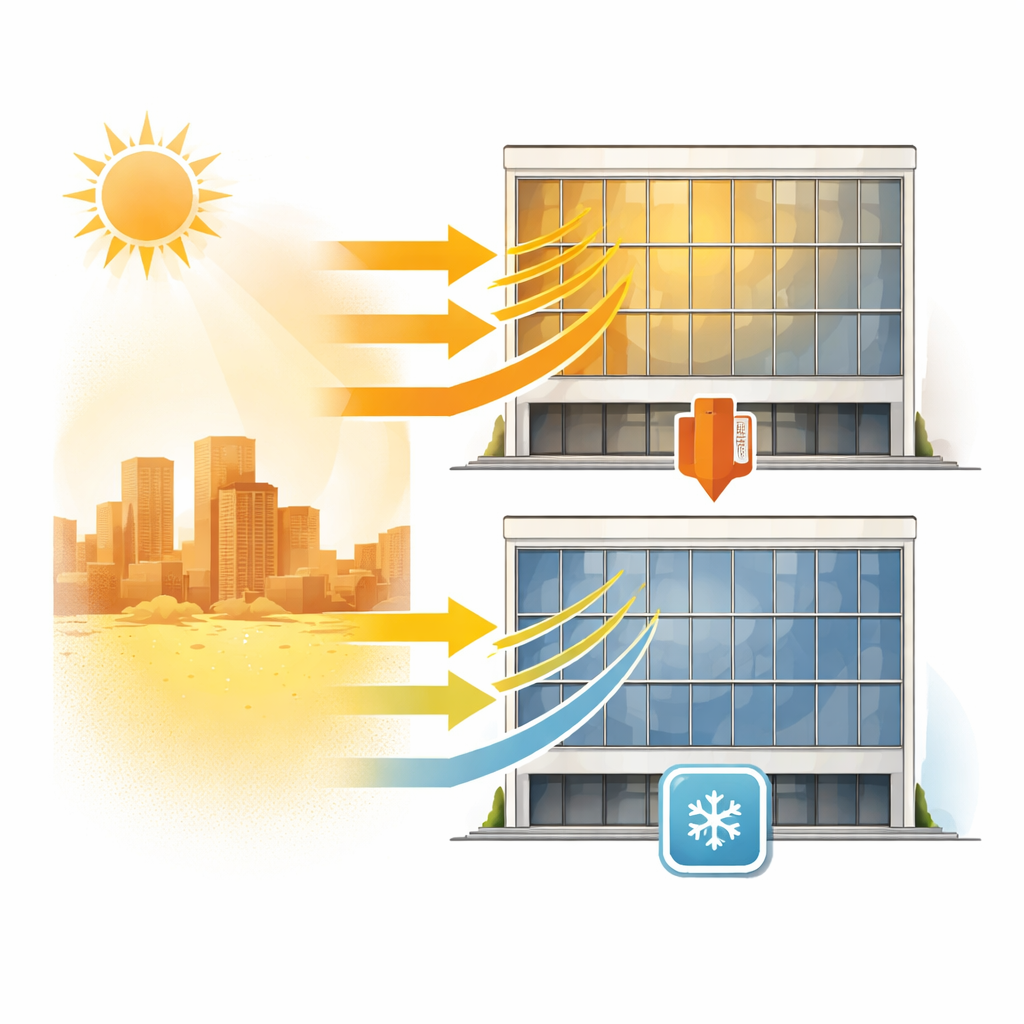
In hot, sunny cities, air conditioners often work overtime just to keep offices bearable. Much of that unwanted heat sneaks in through the windows. This study, carried out on an office building in Cairo, Egypt, asks a simple but powerful question: can smarter glass on our facades slash electricity use, tame indoor temperatures, and cut climate-warming emissions without sacrificing comfort?
From simple glass to smart glass
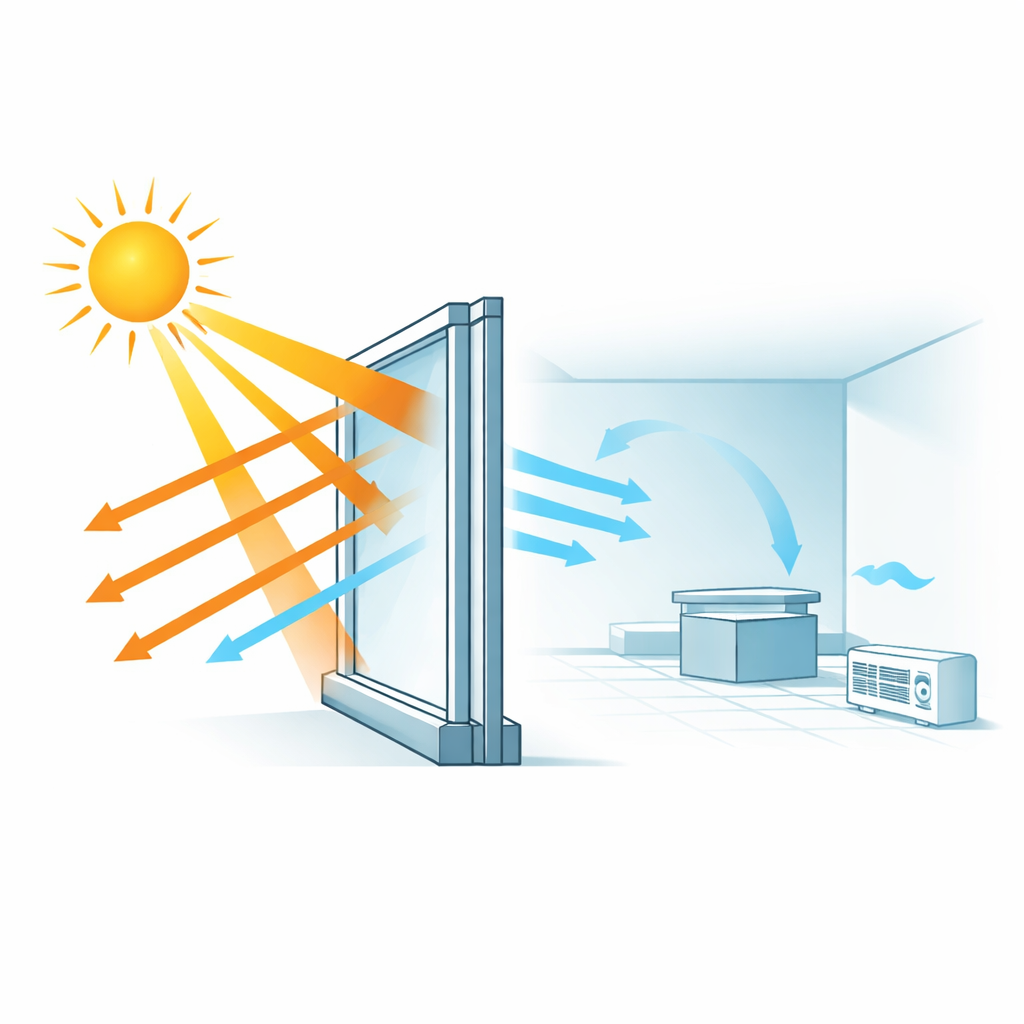
The researchers focused on the building’s “skin,” especially its windows, because transparent facades let in not only daylight and views but also a lot of heat. They compared four kinds of glazing: ordinary single-pane clear glass; standard double-pane clear glass; a blue-tinted low-emissivity glass that reflects invisible heat; and an advanced solar-control glass called Stopray Smart 30. In simple terms, the last two aim to let in light while bouncing away much of the sun’s heating power, which is crucial in a hot-arid climate like Cairo’s where cooling dominates energy bills.
Testing small rooms to measure heat
To see how each glass behaves in real conditions, the team built small brick-and-cement chambers, each fronted by one of the four window types. They installed temperature sensors linked to a logging device and left the chambers exposed to the same outdoor conditions for full day–night cycles. The results were striking. The chamber with basic single glass soared to about 58 °C, while double glass lowered the peak to around 48 °C. Adding a low-emissivity coating (the blue-tinted glass) cut the peak further to about 45 °C. The best performer, the solar-control glass, capped the peak near 41 °C—about 17 °C cooler than the single-pane chamber and with a thermal efficiency improvement of up to 29%.
Simulating a full office building
Small boxes are useful, but real decisions are made at building scale. The researchers therefore recreated the experiment in a computer model using TRNSYS building-energy software. First, they modeled the test chambers and compared simulated indoor temperatures with their measurements. The two agreed within about 9%, giving them confidence in the model. Next, they built a virtual version of a seven-story office building in Cairo, swapping only the window type between standard double clear glass and the solar-control glass. Over a full simulated year, the clear double glazing allowed summer indoor temperatures to climb toward 45 °C when cooling was not actively applied, whereas the solar-control glass kept peaks around 33 °C, indicating a 22% improvement in thermal performance.
Energy bills and climate impacts
Lower indoor temperatures translate directly into less work for air conditioners. During the peak summer months of July and August, the model showed that an office with conventional clear double glazing would use about 2650 kWh of electricity for cooling, while the same building fitted with solar-control glazing would need only about 1200 kWh—a reduction of more than 50% in cooling energy. Even the blue-tinted low-emissivity glass cut cooling electricity substantially. Using a typical emissions factor for Egypt’s power grid, the team estimated that switching from clear glass to solar-control glazing would trim carbon dioxide emissions by roughly 54.7% during these peak months, with the low-emissivity glass still achieving about a 41.5% cut. The study also notes a trade-off: the strongest solar-control glass admits less visible light, potentially increasing the need for artificial lighting, but in energy-hungry offices the cooling savings generally outweigh this added lighting demand.
What this means for future buildings
For people living and working in hot, sun-drenched regions, the message is clear: choosing the right window glass can dramatically reduce indoor heat, shrink air-conditioning loads, and slash both energy bills and emissions. In the Cairo case study, advanced solar-control glazing halved cooling electricity use and significantly narrowed the range of indoor temperatures, easing thermal stress on occupants and equipment. While designers must balance daylight, views, and glare against energy savings, this work shows that smart glass is a powerful, passive tool for making buildings more comfortable, more affordable to operate, and more climate-friendly.
Citation: Elshamy, A.I., Elgefly, Y., El-Metwally, Y. et al. Assessment of advanced glazing systems for building energy efficiency in hot-arid climates. Sci Rep 16, 12204 (2026). https://doi.org/10.1038/s41598-026-46722-4
Keywords: smart glazing, building energy efficiency, hot-arid climate, solar control windows, cooling energy savings