Clear Sky Science · en
Biodiminution of lithium in forest floor food webs
Lithium, Batteries and the Hidden Life in Soil
Lithium powers our phones, laptops and electric cars, yet much less is known about where this metal ends up in nature. This study looks beneath the forest floor, into the maze of soil, fallen leaves and tiny animals, to see how lithium moves through land food webs. Understanding this hidden journey matters because rising lithium use can increase pollution in soils that support wildlife, forests and ultimately the food and water people rely on.
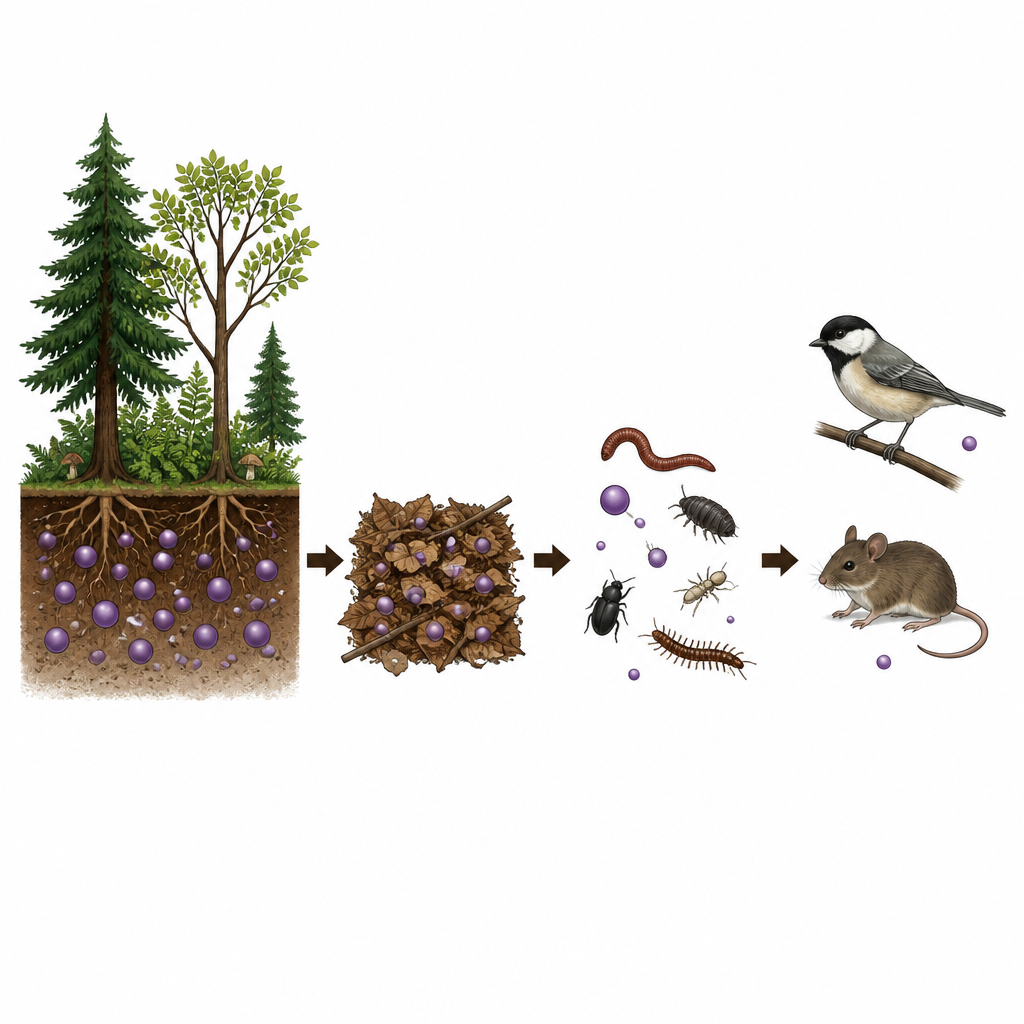
Following Lithium from Soil to Forest Creatures
The researchers examined four relatively undisturbed temperate forests in the United States and two subtropical forests in Hong Kong. At each site, they sampled soil, freshly fallen leaves, partly decomposed old leaves and a wide range of ground-dwelling invertebrates such as earthworms, millipedes, beetles, moths and spiders. They also used natural chemical tracers called stable isotopes of carbon and nitrogen to map who eats what and to place each animal in the local food web. This allowed them to connect lithium levels to feeding habits instead of just listing concentrations.
Two Main Pathways into the Food Web
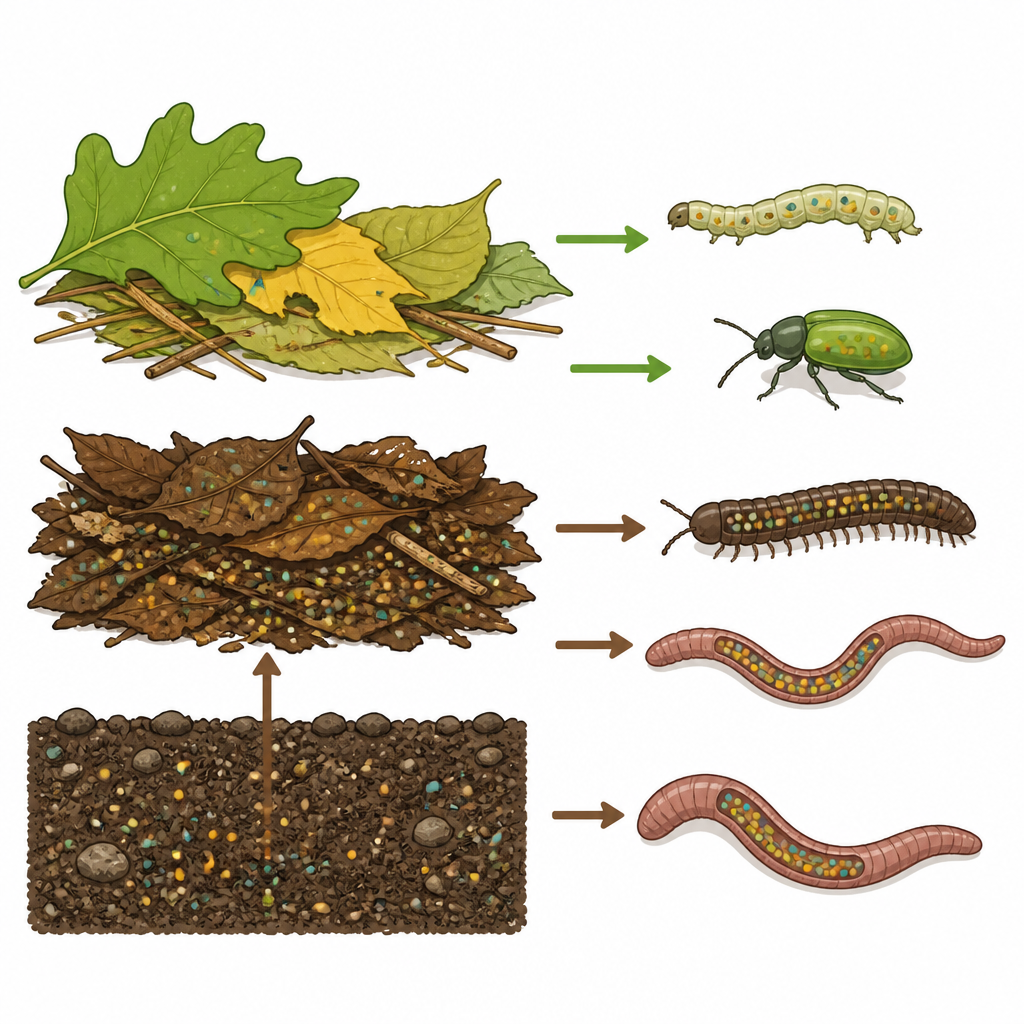
The team found that lithium was most abundant in soil, lower in fresh leaf litter and higher again in old, decomposing leaves. Old litter in the Hong Kong forests held about five to ten times more lithium than fresh litter, suggesting a steady exchange of lithium between leaves and surrounding soil as microbes break material down. Invertebrates that feed on dead material and soil, known as detritivores, consistently carried the highest lithium levels, with earthworms showing typical values in the thousands of nanograms per gram of dry tissue. Herbivores that mainly eat fresh leaves, such as many caterpillars and grasshoppers, tended to have much lower lithium in their bodies.
Why Lithium Shrinks Rather Than Grows up the Chain
Across the different forests, the authors looked for signs that lithium builds up as it moves from plants to plant-eaters to predators, a process known as biomagnification. Instead they saw the opposite pattern. Statistical measures of trophic transfer showed that lithium generally declines from lower to higher levels in the food web. This “biodiminution” fits with what is known about lithium chemistry: it does not dissolve into fats, is relatively easy for organisms to excrete and tends not to bind strongly inside tissues. Even in species with higher body burdens, such as earthworms, lithium levels were well below known lethal thresholds for uncontaminated soils.
The Special Role of Detritus Feeders
Feeding style turned out to be more important than position in the food chain. Detritivores such as earthworms and millipedes, and the predators that eat them, often showed elevated lithium compared with similar-level herbivores or dung beetles. The study also hints that life stage matters: larvae of some moths contained more lithium than adults from the same species, likely because caterpillars feed heavily on fresh leaves while adults rely more on nectar and other dilute food sources. These patterns suggest that lithium exposure in forests depends strongly on which part of the litter and soil system animals tap into.
What This Means for Forests and People
Taken together, the findings show that near-pristine forest floors act as both a source and a filter for lithium. Soils and decomposing leaves supply lithium to the base of the food web, but the metal does not build up toward larger animals. Instead, the greatest long-term exposure falls on detritivores that continually process old litter and soil. As global demand for lithium continues to rise and contamination risks increase, these humble decomposers may serve as early warning sentinels for soil health and as key players in keeping lithium cycling within the ground layer rather than climbing the food chain.
Citation: Muisa, N., Cheng, M.LH. & Tsui, M.TK. Biodiminution of lithium in forest floor food webs. Sci Rep 16, 15907 (2026). https://doi.org/10.1038/s41598-026-46717-1
Keywords: lithium pollution, forest soil, food webs, earthworms, detritivores