Clear Sky Science · en
Platelet-rich plasma enhances post-conditioning recovery from testicular ischemia–reperfusion injury: a novel experimental approach
Why this matters for future fertility
Testicular torsion—a sudden twisting of the spermatic cord—is a medical emergency that mostly strikes boys and young men. Even when surgeons quickly untwist the testis and restore blood flow, hidden damage from the injury can quietly undermine sperm production and future fertility. This study in rats explores whether combining a simple surgical maneuver with a substance made from the body’s own blood platelets can better protect the testis during this critical window of recovery.
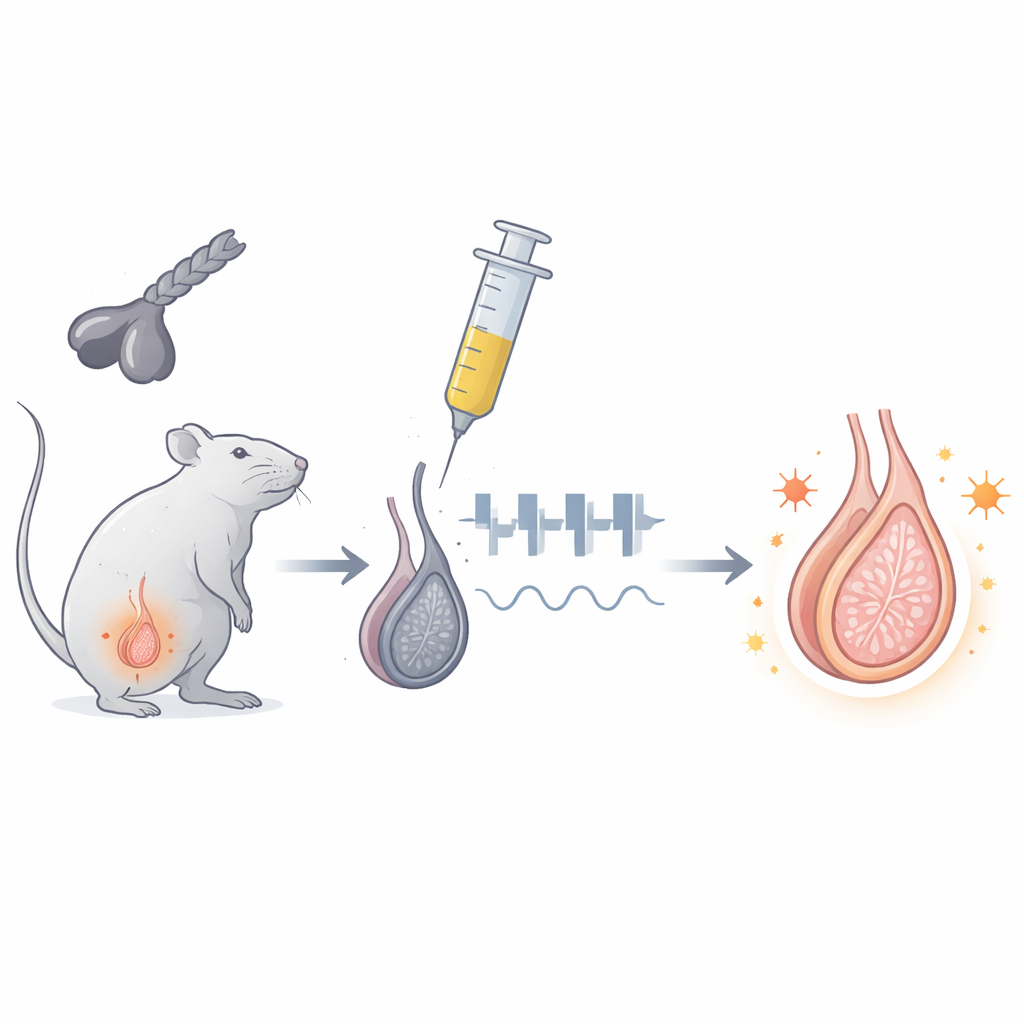
A dangerous twist and its hidden aftermath
When a testis twists, its blood supply is cut off, starving tissue of oxygen and energy. Ironically, much of the damage occurs not during the blockage, but when blood rushes back in. This “reperfusion” phase triggers bursts of harmful molecules known as reactive oxygen species, along with swelling and inflammatory reactions that kill developing sperm cells and disrupt the testis’s delicate architecture. In people, these changes can mean fewer sperm, poorer sperm movement, and a higher risk of infertility—even if the testis is surgically saved and left in place.
Two protective ideas: gentle re-start and healing plasma
Researchers have been searching for ways to soften this reperfusion blow. One promising approach is post-conditioning: instead of fully restoring blood flow all at once, surgeons allow a series of very short interruptions and releases right after detorsion. These brief cycles appear to “train” the tissue to handle the return of oxygen more safely. A second idea uses platelet-rich plasma, or PRP, which is made by concentrating platelets from blood. Platelets are best known for clotting, but they also carry growth factors that encourage new blood vessel formation, calm inflammation, and support tissue repair.
How the rat experiment was done
In this study, 32 male rats had one testis removed so that the remaining one could be closely monitored. The animals were divided into four groups. One group had only a small scrotal incision, serving as a healthy comparison. A second group underwent three hours of testicular torsion followed by a full day of restored blood flow, modeling the classic injury. A third group received the same torsion, but immediately after detorsion the surgeons applied ten rapid cycles of brief clamping and unclamping of blood flow as post-conditioning. The final group received an injection of PRP directly into the testis just before the same post-conditioning protocol. After 24 hours of recovery, the scientists collected blood and testicular tissue to examine hormone levels, signs of oxidative damage, inflammatory and cell-death markers, and detailed microscopic structure.
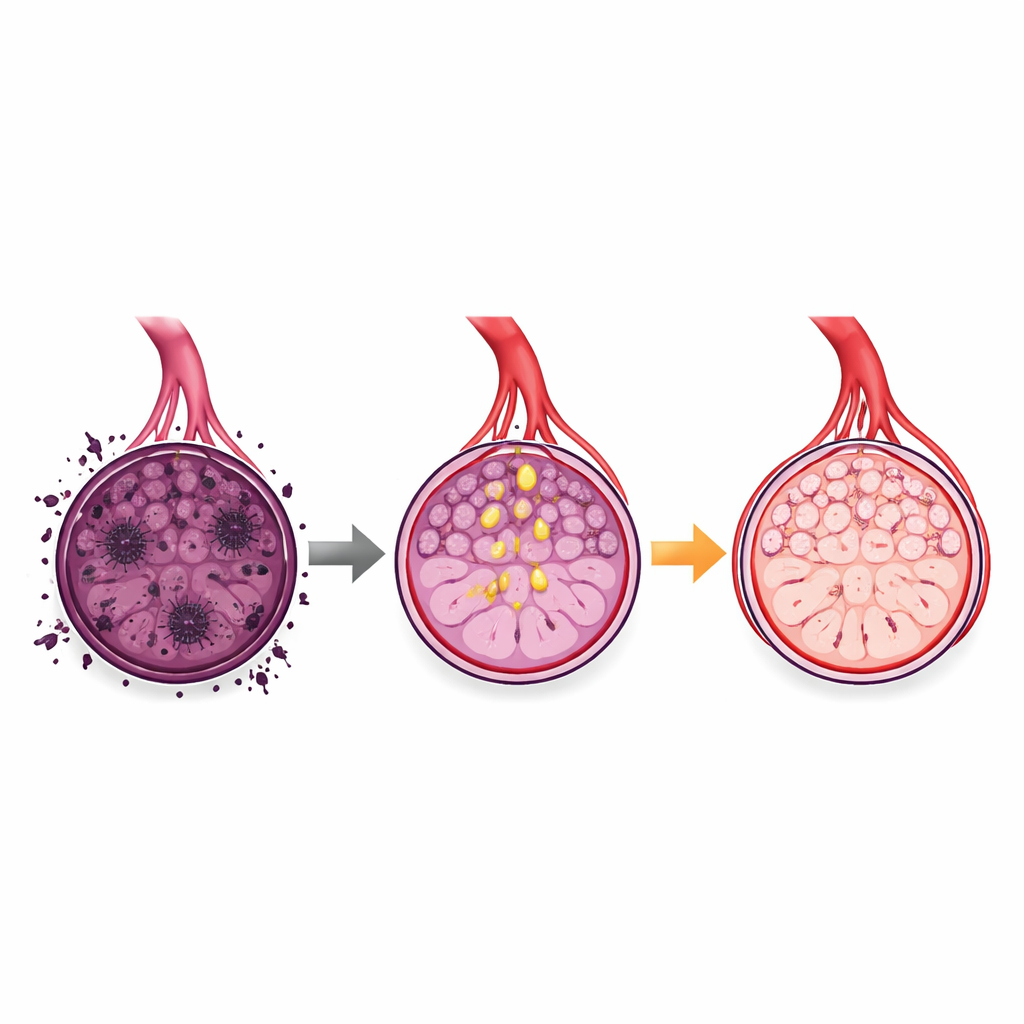
What the team saw inside the testes
Rats that experienced torsion and simple reperfusion showed clear injury: higher levels of oxidative stress molecules, strong inflammatory signals, and more activity of proteins linked to programmed cell death. Under the microscope, their seminiferous tubules—the coiled structures where sperm develop—looked depleted and distorted, with poor scores on a standard scale of sperm-producing health. Both post-conditioning alone and the combination of PRP with post-conditioning reduced many of these harmful signals and improved antioxidant defenses. Testes from treated animals more often preserved recognizable layers of developing germ cells, and blood tests showed partial recovery of reproductive hormone patterns. However, the PRP-plus-post-conditioning group also showed some heightened signals associated with cellular stress and uneven tissue remodeling, suggesting that the healing response was complex and not uniformly beneficial across all microscopic regions.
Early help, but not a complete fix
Overall, the findings suggest that carefully timed post-conditioning, with or without a boost from platelet-rich plasma, can soften the early wave of oxidative and inflammatory damage after testicular torsion in rats and help preserve the basic structure needed for sperm production. At the same time, the treatments did not fully restore normal tissue appearance or hormone balance within a day, and the study did not measure actual sperm counts or fertility. For lay readers, the takeaway is that there may be relatively simple ways to better protect the testis during emergency surgery—potentially improving future fertility—but these strategies are still at an experimental stage and need more work, especially in human patients.
Citation: Amena-Elmongy, Gannah-Samy, Samy, A. et al. Platelet-rich plasma enhances post-conditioning recovery from testicular ischemia–reperfusion injury: a novel experimental approach. Sci Rep 16, 12709 (2026). https://doi.org/10.1038/s41598-026-46712-6
Keywords: testicular torsion, fertility protection, platelet-rich plasma, ischemia reperfusion, post-conditioning