Clear Sky Science · en
Prior pathogen exposure augments inter-individual heterogeneity in antibody levels and reinfection loads in a songbird-pathogen system
Why some birds get sicker than others
Anyone who has seen a cold sweep through a school or workplace knows that some people are laid low while others barely sniffle. The same is true for wild animals. This study looks at house finches and a common eye infection to understand how past exposure to a germ shapes not only how protected birds are, but also how different they become from one another in their immune defenses and infection levels.
A bird and its eye infection
House finches across North America are plagued by a bacterium that infects the thin tissue around their eyes, often causing red, swollen lids and crusty discharge. Sick birds may struggle to avoid predators or find food. Once the infection arrived in wild finches from poultry in the 1990s, it spread widely and is now a regular part of finch life, with new waves of sickness appearing each year. Because birds encounter the germ many times over their lives, this system offers a natural way to ask how earlier infections change later ones.
Designing a controlled re-exposure test
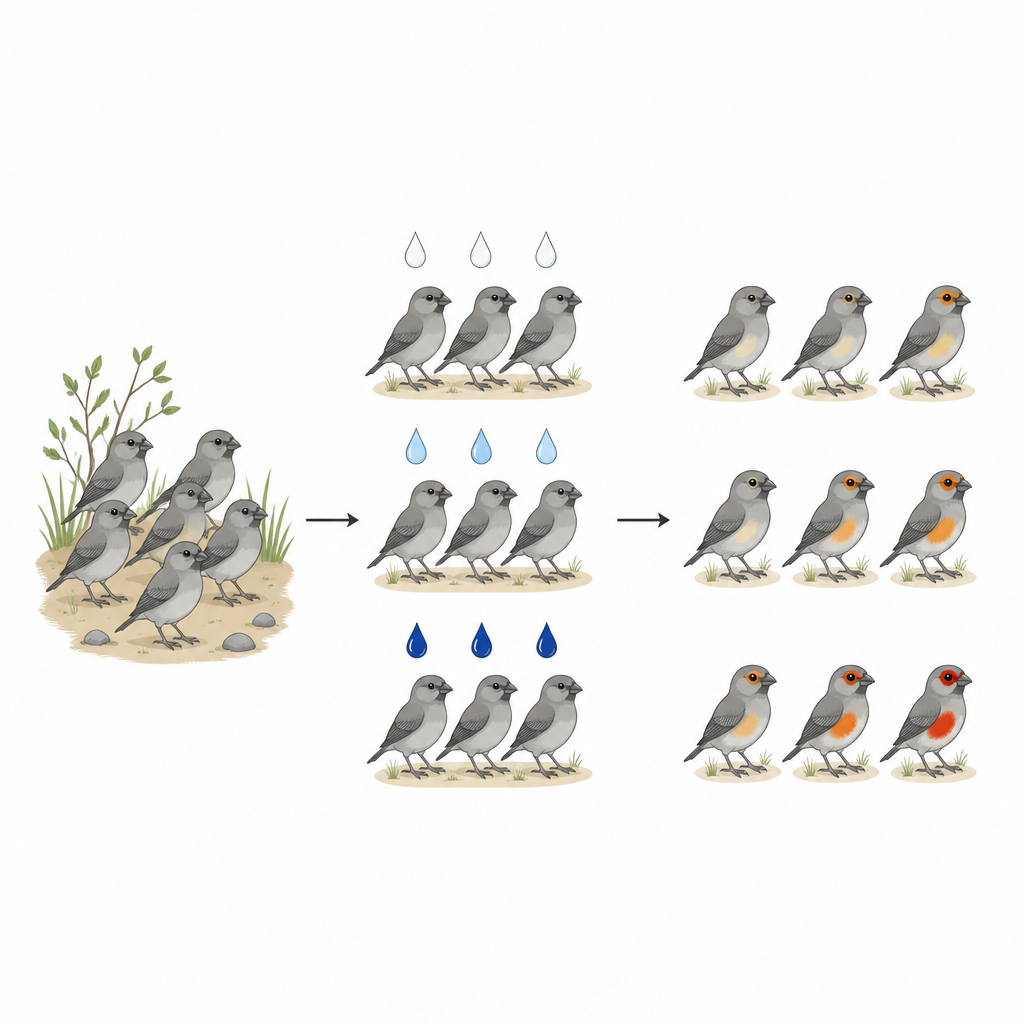
The researchers captured young, wild house finches that had never been infected and assigned them to three groups. One group received a harmless treatment, one a low dose of the bacterium, and one a high dose, simulating different histories of past exposure. After birds recovered, the team measured levels of antibodies in the blood, which act as a marker of prior immune response. They then re-exposed the birds to one of several doses of the bacterium and tracked two key outcomes that matter for spread in the wild: how many germs built up in the eyes and how severe the visible eye disease became.
Uneven antibodies and uneven risk
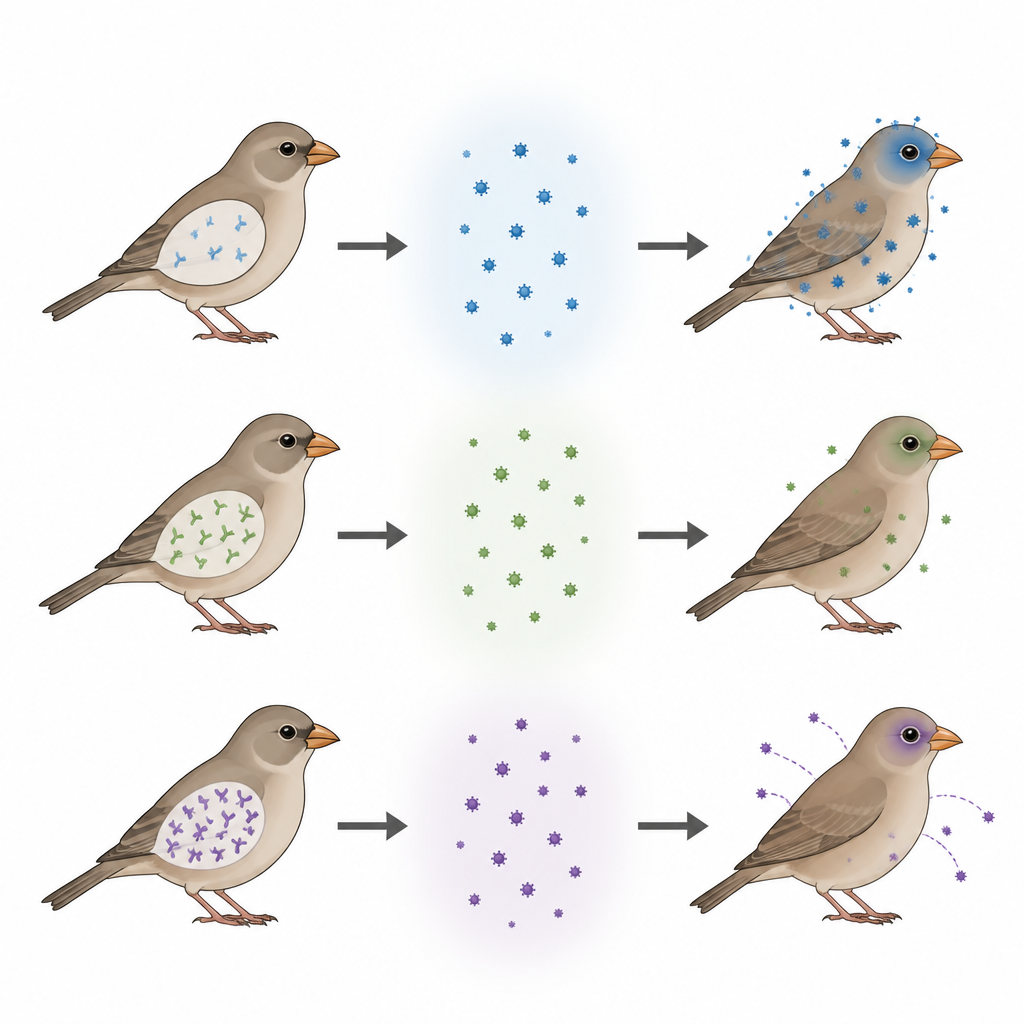
Prior infection made birds, on average, more resistant to getting sick again, but it also made them more different from one another. Birds that had been exposed, especially at the higher initial dose, showed both higher and more variable antibody levels before the second challenge. Some had strong apparent protection while others had much weaker responses. These antibody levels were not just laboratory numbers. Birds with higher antibody levels were less likely to be reinfected, even after accounting for how much bacteria they were given the second time.
Hidden variation in infection and disease
When the team looked at all birds that received the highest second dose, those with prior exposure tended to carry fewer bacteria overall than totally naive birds, and the amount of bacteria varied more widely among them. However, once the analysis was restricted to only the birds that actually became reinfected, this difference in average bacterial load and its spread mostly disappeared. This suggests that prior exposure mainly acts like an all-or-nothing filter: some primed birds resist reinfection strongly, while those that do get infected can reach bacterial levels similar to birds with no history of exposure. In contrast, strong prior exposure reduced both the average severity of eye disease and the differences in eye damage among birds, hinting that protection against visible illness may be more uniform than protection against infection itself.
What this means for disease spread
By linking blood antibodies, chances of reinfection, bacterial build-up, and eye damage in the same birds, the study shows that previous infections can increase the variety of immune strength within a population. This increased variety can, under some conditions, help slow outbreaks by ensuring that more individuals resist reinfection. The authors also find that simple antibody measurements mirror the pattern of how uneven susceptibility is in the group, suggesting that such tests could offer a practical way to estimate variation in risk without running large infection trials. In short, the history of who has been infected, and how strongly, is a key part of predicting which birds will fuel the next wave of disease.
Citation: Garrett-Larsen, J.N., Pérez-Umphrey, A.A., Fleming-Davies, A.E. et al. Prior pathogen exposure augments inter-individual heterogeneity in antibody levels and reinfection loads in a songbird-pathogen system. Sci Rep 16, 15762 (2026). https://doi.org/10.1038/s41598-026-46682-9
Keywords: house finch disease, prior infection, antibody variability, reinfection risk, wildlife epidemiology