Clear Sky Science · en
The role of CUEDC1 in suppressing JAK1/STAT3 signaling pathway in esophageal cancer
Why this research matters for patients and families
Esophageal cancer is a fast growing and often deadly disease that can make swallowing difficult and shorten lives. This study looks inside cancer cells to ask a simple but important question: what natural brakes exist in these cells, and how might they be strengthened to slow the disease? Understanding these inner controls may help doctors one day predict how aggressive a tumor will be and design treatments that better match each patient.
A quiet protector inside esophageal cells
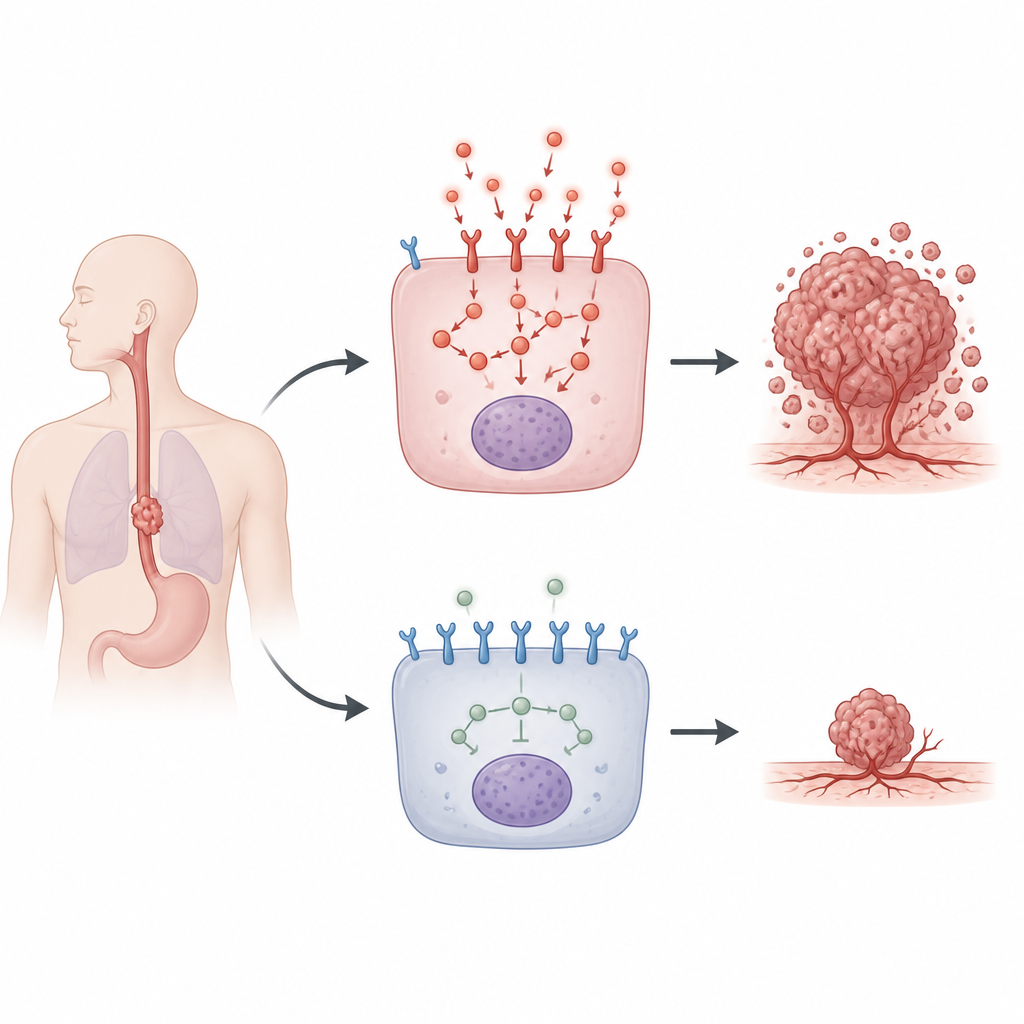
The researchers focused on a little known protein called CUEDC1, which is present in many kinds of cells. By examining patient data and cancer cell lines, they found that CUEDC1 levels are much lower in esophageal cancer tissue than in healthy esophageal tissue. Patients whose tumors had less CUEDC1 tended to have more advanced disease and shorter survival. This pattern suggested that CUEDC1 may act as a quiet protector that helps keep cell growth in check, and that losing it could give cancer cells a growth advantage.
Turning cancer cell growth down or up
To test this idea, the team used laboratory grown esophageal cancer cells and artificially raised or lowered CUEDC1 levels. When they forced cells to make more CUEDC1, the cells divided more slowly, formed fewer colonies, moved less, and had a harder time invading through a barrier that mimics tissue. Many more cells underwent programmed death, the natural way the body removes damaged cells. When CUEDC1 was reduced, the opposite happened: cells grew faster, spread more easily, and resisted death signals. These experiments showed that CUEDC1 can act like a dial that turns cancer cell growth and survival down or up.
Short circuiting a powerful growth signal
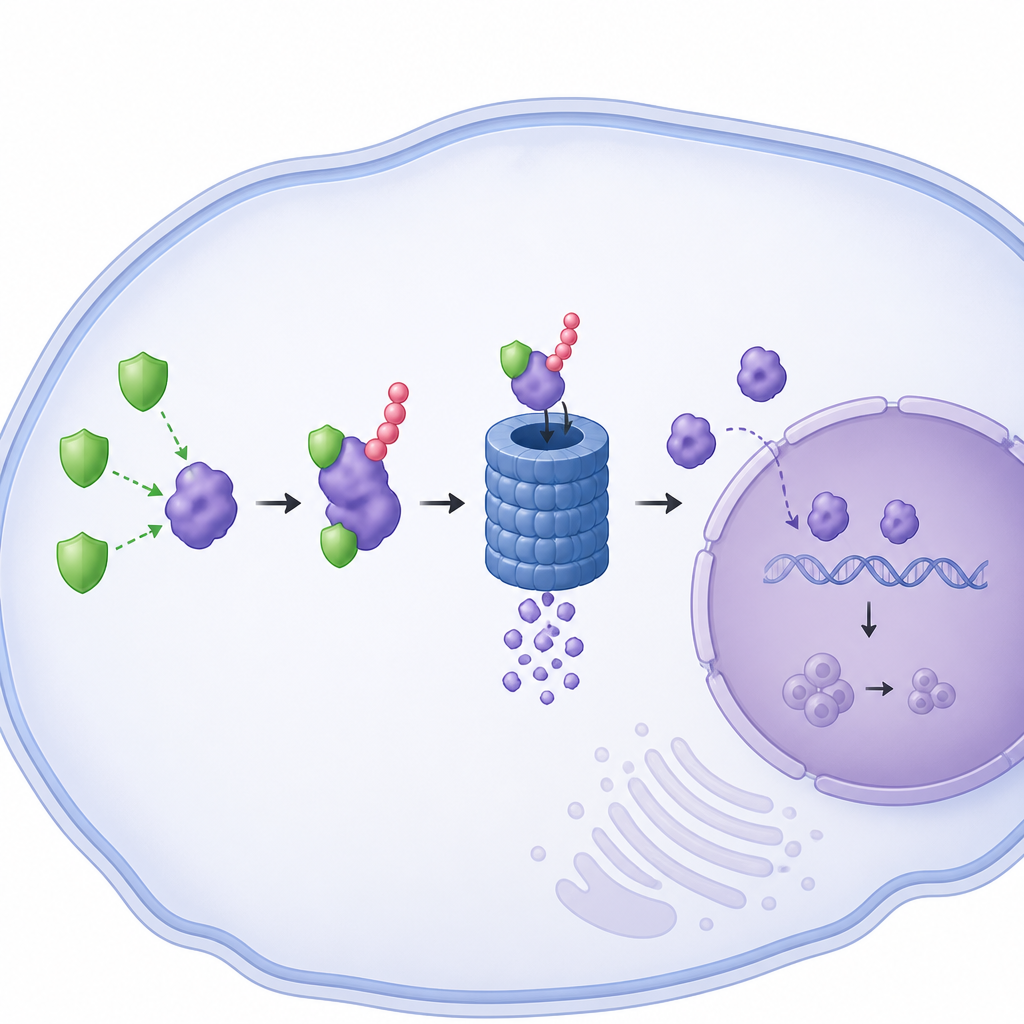
The next step was to understand how CUEDC1 exerts this control. The team found that changing CUEDC1 levels strongly affected a well known growth pathway inside cells called JAK1/STAT3. This pathway normally carries signals from outside the cell to the nucleus, where genes that promote growth and survival are switched on. In cancer, this pathway is often stuck in the "on" position. When CUEDC1 was increased, both the key messenger protein STAT3 and its activated form dropped sharply, along with JAK1, and many growth related genes became less active. When CUEDC1 was reduced, the pathway became more active. This suggested that CUEDC1 somehow weakens the JAK1/STAT3 signal and, in doing so, restrains tumor behavior.
Tagging a messenger for disposal
Digging deeper, the scientists discovered that CUEDC1 physically binds to STAT3 inside the cell. CUEDC1 carries a special region that can recruit small molecules called ubiquitin, which act like tags telling the cell to send a protein to its recycling machinery. The study showed that boosting CUEDC1 increased these tags on many proteins and sped up the breakdown of STAT3 in particular. When the researchers blocked the cell’s protein disposal system, STAT3 levels bounced back even in the presence of high CUEDC1. Microscopy and binding tests confirmed that CUEDC1 and STAT3 occupy the same places in the cell and interact directly, supporting the idea that CUEDC1 helps mark STAT3 for removal.
What this could mean for future care
By revealing CUEDC1 as a natural brake on a major growth signal in esophageal cancer cells, this study adds a new piece to the puzzle of why some tumors behave more aggressively than others. In simple terms, when CUEDC1 is low, the JAK1/STAT3 pathway runs hotter, helping cancer cells grow, spread, and survive. When CUEDC1 is high, this pathway is cooled by faster removal of its key messenger, and cancer cells are less hardy. While more work is needed, especially in animal models and different tumor types, CUEDC1 may one day help doctors estimate prognosis and guide treatments that target this signaling route.
Citation: Li, Z., Pan, Z., Su, X. et al. The role of CUEDC1 in suppressing JAK1/STAT3 signaling pathway in esophageal cancer. Sci Rep 16, 15275 (2026). https://doi.org/10.1038/s41598-026-46681-w
Keywords: esophageal cancer, STAT3 signaling, tumor suppressor protein, protein degradation, cancer cell survival